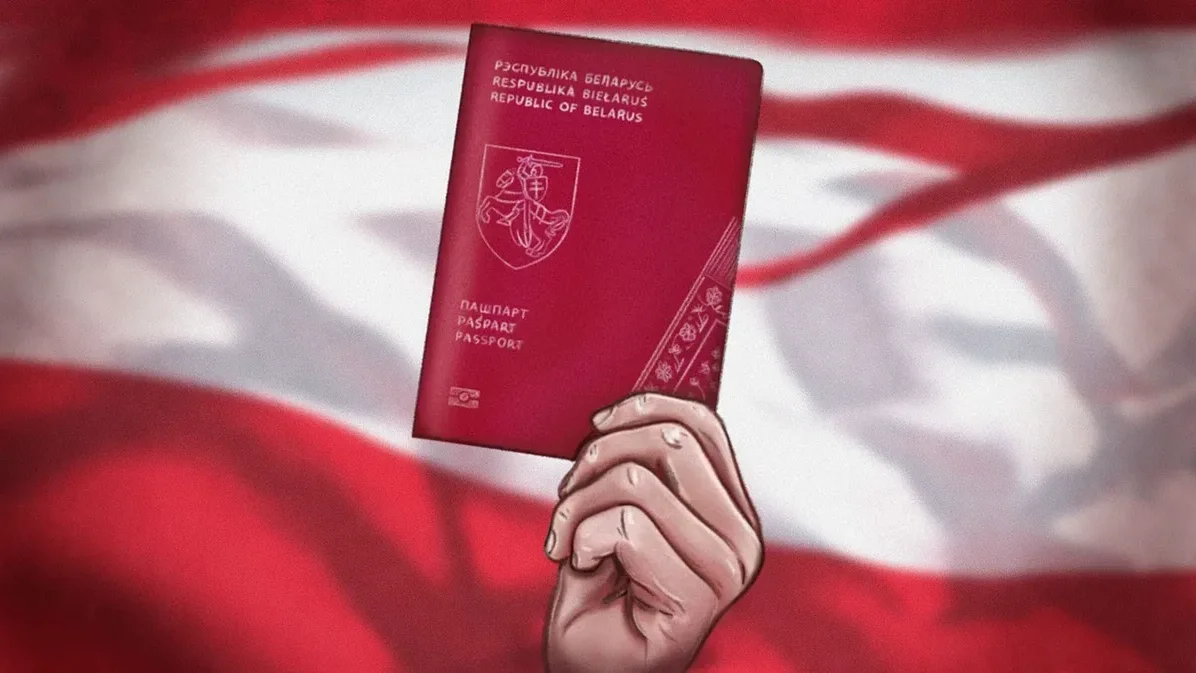
Members of the Belarusian opposition in exile began discussing alternative passports back in 2020. If they can successfully implement the scheme, the so-called New Belarus passport would offer those whose documents have been lost or have expired a lifeline.

Belarusians first began having document trouble more than three years ago. Against a backdrop of the protests after the presidential elections, the country’s citizens began leaving the country in large numbers fearing a crackdown. There are currently almost 1,500 political prisoners in Belarus.

Some left the country without any documents, others have lost them in the process of moving. For the families of children born outside the country, the issue is particularly acute: consulates have refused to issue passports, again requiring families to make potentially dangerous visits home.

The passport is the brainchild of the office of opposition leader, Sviatlana Tsikhanouskaya, and was initially a somewhat symbolic premise, she admitted in an October interview with Novaya-Europe. Her team began looking into the idea more seriously after the outbreak of the war in Ukraine.

Alexander Lukashenko soon showed why such a document was necessary. In early September, he decreed that new passports would only be issued within the country, ending consulates abroad issuing documents.

“Lukashenko played into our hands to some extent, because recognising this document has become a matter of urgency and so it’s a good thing that we had already prepared for it,” Tsikhanouskaya said last month.

‘Lukashenko has made it clear that there’ll be no free passes’
читайте также

‘Lukashenko has made it clear that there’ll be no free passes’

Belarusian opposition leader Sviatlana Tsikhanouskaya on her proposed alternative passport scheme, collective responsibility for the war and beating Alexander Lukashenko at the ballot box

Talks on recognition

Tsikhanouskaya’s team has to solve two fundamental issues if the New Belarus passport is to become an official document: gaining political recognition and ensuring the passport is produced to international security standards.

On the latter issue, significant progress has been made. A Lithuanian company has agreed to produce the document, according to Valery Kavaleuski, the foreign minister for the United Transitional Cabinet, an alternative government for Belarus that was formed in exile last August.

An independent team of experts in heraldry, history and philology have helped design the passport. The final version displays national symbols and architectural monuments. The passport will be in Belarusian and English.

The video shows the design for the New Belarus passport.

Political recognition is a thornier issue, however, and will depend on the good will of individual countries. Some European countries have already made positive noises about the project, including Lithuanian MEP Juozas Olekas, who called on EU member states to recognise the passports in an address to the European Parliament in Strasbourg on 12 September.

Belarusian opposition politicians have managed to elicit some guarantees, though not on paper. An undisclosed European country has agreed to share its three-letter country code with holders of the document. “The country code was critical, because we couldn’t use BLR,” Kavaleuski explained. “We consulted European Commission experts and it turned out we could use the country code of a third state.”

At first glance, the idea of a new passport for Belarusians may seem pointless: there are states that issue an alien’s passport, a laissez-passer and other travel documents. But Tsikhanouskaya’s team say such documents cannot completely replace a national passport as they are often insufficient for basic legal services, such as opening a bank account. Furthermore, obtaining an alien passport in a particular country can require a number of documents confirming residency rights.

Stumbling blocks

Experts say the most complex and fundamental issue facing the New Belarus passport will be getting it recognised, because the process is subject to a whole series of bureaucratic intricacies and agreements. Belarusian political analyst and former diplomat, Pavel Slunkin, is sceptical about the project, but wishes it success.

He also admits he was a sceptic when Sviatlana Tsikhanouskaya first created her head office, but events have changed his mind. “She is still meeting international leaders, three years on,” Slunkin reflects. “That’s unique. The Belarusian opposition is more united than ever. So scepticism is a good thing, but politicians need to keep working to show us that we were wrong.”

The creation of this document could become an inconvenient precedent for other countries hosting undocumented migrants.

“Belarus isn’t the only dictatorial regime,” Slunkin adds. “People might ask why Belarusians, and not everyone else?”
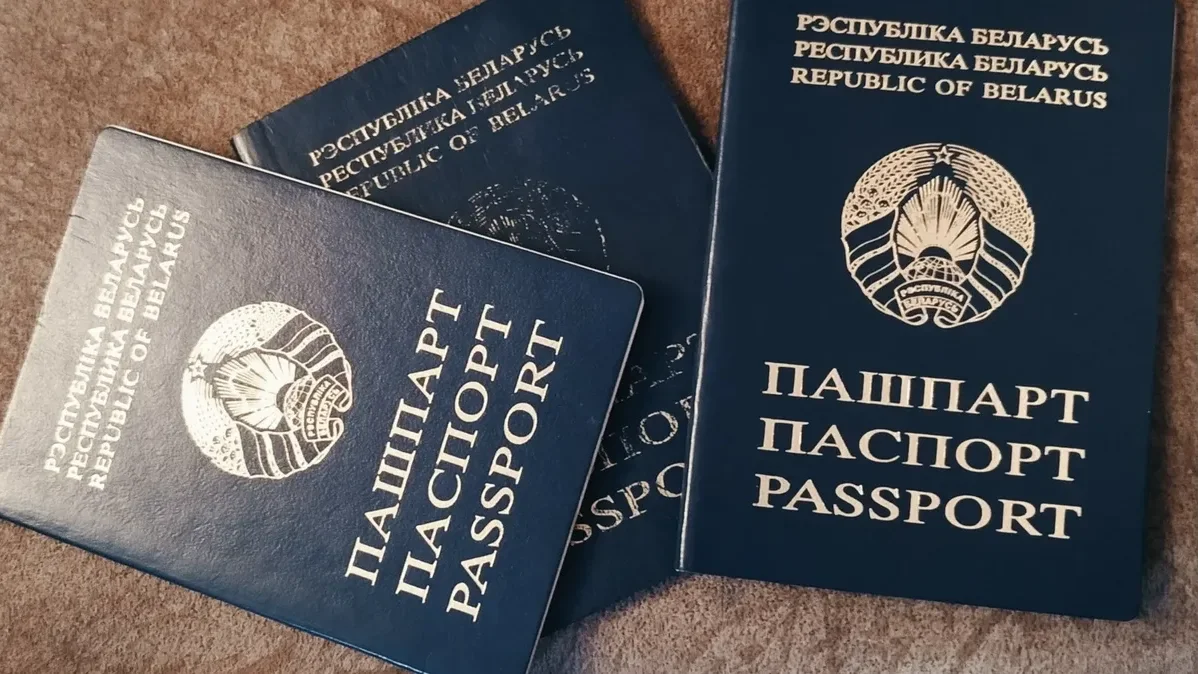
It also remains unclear how exactly accepting applications and issuing passports will work. The final decision can be announced at a later stage, says Kavaleuski. According to Tsikhanouskaya’s team, the United Transition Cabinet would create a network of offices where Belarusians would be able to apply for the new passport.

The Lukashenko factor

The team has, in addition to support from some European countries, another unexpected “supporter” — Alexander Lukashenko himself. By stopping Belarusians obtaining documents at consulates and embassies, he reminds European politicians yet again that Belarusian remains a critical issue.

“I wouldn’t rule out the Lukashenko factor. To me, it seems he is the main spur behind the project,” says Slunkin. “He has repeatedly strengthened the document’s position with the decisions he has made.”

An autocrat’s revenge
читайте также

An autocrat’s revenge

No longer permitted to renew their passports from abroad, Belarusians who fled Alexander Lukashenko’s brutal regime may soon face a choice of going undocumented or returning home to face political persecution

One way for Lukashenko to potentially “take revenge” on Belarusians supporting the new passport may be to make obtaining one illegal, Belarusian political scientist Andrei Kazakevich believes. Since Tsikhanouskaya’s political structures are recognised as extremist, obtaining a passport from them could be considered a criminal offence. Anyone obtaining a New Belarus passport will understand that there is no place for them in Lukashenko’s Belarus.

‘All they can do is accept their fate’

Pavel Slunkin considers that most Belarusians who have left the country believe in the idea of a new passport. Even those who are sceptical that the project can be put into practice still want it to work.

“Belarusians living abroad hope that this idea will be put into effect and allow them to solve issues around their legal status,” says Slunkin. “Belarusians currently have almost no control: they can’t elect the local government, they can’t elect the government in Minsk, they can’t have much influence on what is happening within the democratic movement. All they can do is accept their fate.”

Support for Sviatlana Tsikhanouskaya among the Belarusian diaspora as a whole is quite high, according to Kazakevich. “An increasing number of organisations, both within the old and the new diaspora, now work with Tsikhanouskaya, participating regularly in meetings and visits. They see it as worthwhile.”

Поделиться
Темы
Больше сюжетов
Таксисты против «Яндекса»

Таксисты против «Яндекса»

Забастовка прошла сразу в нескольких постсоветских странах. Водители борются за условия труда

Дело Долиной: квартиру оставили покупательнице Полине Лурье

Дело Долиной: квартиру оставили покупательнице Полине Лурье

Решение Верховного суда определяет, как будут решаться похожие споры

Почему декабристы были обречены

Почему декабристы были обречены

Восстанию — 200 лет. «Новая-Европа» разбирается, актуален ли тот протест до сих пор

«Крылья вырастают, когда есть те, кто может помочь»

«Крылья вырастают, когда есть те, кто может помочь»

«Вывожук» прекратил эвакуировать преследуемых россиян. Мы поговорили с теми, кого успели спасти

В Подмосковье школьник с ножом напал на школу, погиб ребенок

В Подмосковье школьник с ножом напал на школу, погиб ребенок

Девятиклассника задержали после штурма. Он снимал действия на камеру и спрашивал учеников о национальности

«Да, я пятая колонна»

«Да, я пятая колонна»

История бывшего военного из Новосибирска, который попытался вступить в украинскую армию и попался ФСБ

Драка на фоне храма

Драка на фоне храма

Протесты жителей Краснодара против «храмостроя» в парке оживили затяжную битву телеканала РПЦ «Спас» с КПРФ

«Поднакоплю денег — куплю себе орден Мужества»

«Поднакоплю денег — куплю себе орден Мужества»

Зачем полицейские едут на фронт и как это влияет на всю систему МВД

В Украине прошла пресс-конференция освобожденных белорусских политзаключенных

В Украине прошла пресс-конференция освобожденных белорусских политзаключенных

«Новая-Европа» рассказывает о главном с места событий