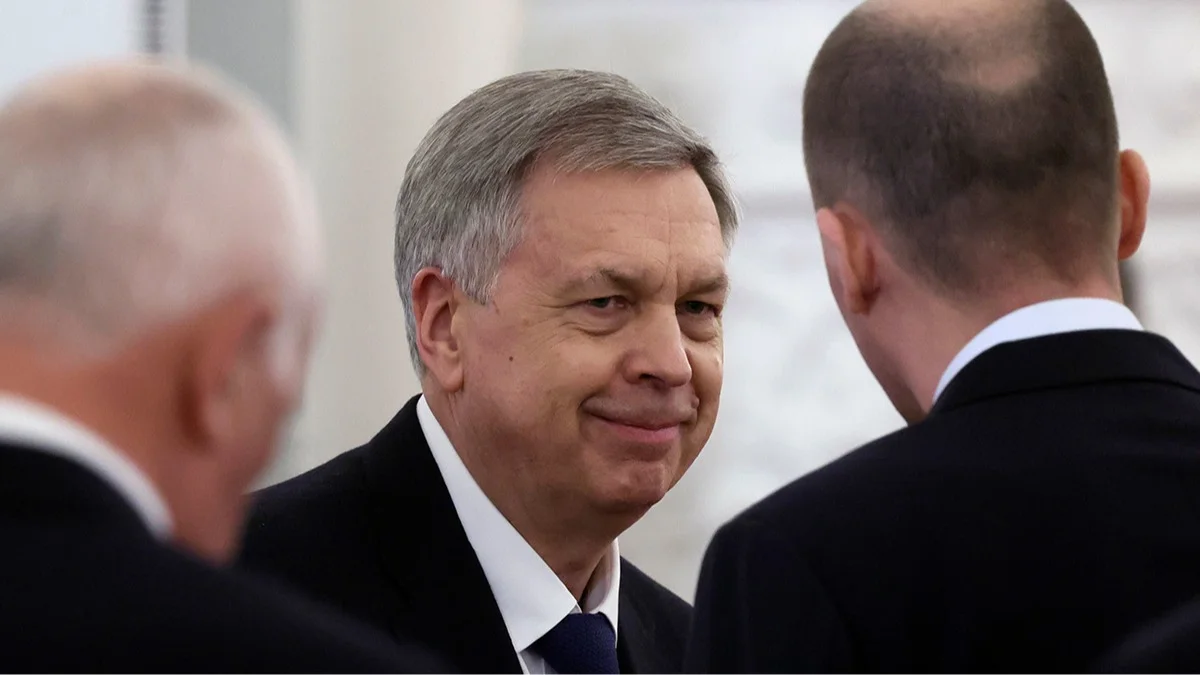
Those campaigning for the preservation of Russia’s minority languages were caught off guard by a recent comment made by Chechen leader Ramzan Kadyrov, in which he said he would fire any of the republic’s officials whose children don’t speak Chechen.

While his fondness for his mother tongue might be expected, Kadyrov’s support for Russia’s linguistic diversity in the face of growing Russification certainly wasn’t, diverging markedly from the general line taken by the authorities on the languages of the country’s smaller ethnic groups.

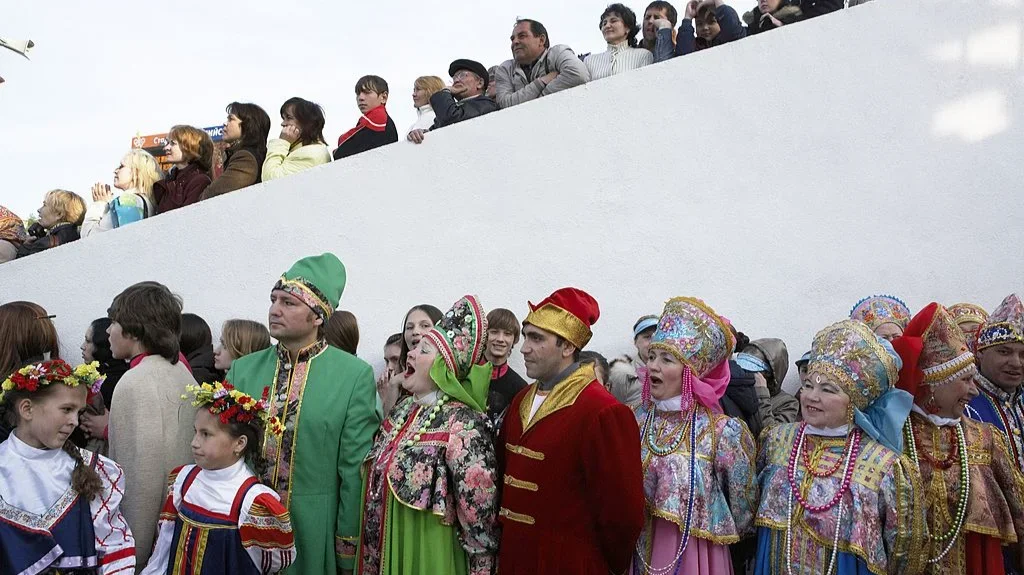
According to statistics from the Institute of Linguistics at the Russian Academy of Sciences, 155 languages are currently spoken in Russia, of which only slightly more than half ― 81 ― are taught in schools.
The Kremlin created the Foundation for the Preservation and Study of Native Languages in 2018, only to shut it down in 2021. Since then, the authorities have done everything they can to undermine the status of minority languages. On 19 October, Russian President Vladimir Putin signed a law denouncing the Council of Europe Convention for the Protection of National Minorities, effectively signalling his support for large-scale Russification.

Desperate measures

On the morning of 10 September 2019, Udmurt academic and activist Albert Razin staged a one-man protest outside the State Council of Udmurtia in the regional capital, Izhevsk, 1,200 km east of Moscow. Udmurt is a Uralic language with an estimated 300,000 native speakers.

Holding a placard featuring a quote from Russian poet Rasul Gamzatov, saying “And if my language disappears tomorrow, I am ready to die today”, Razin doused himself in petrol and set himself alight. His shocking public suicide subsequently drew comparisons to the Finno-Ugric ritual of tipshar, according to which self-immolation summons up a curse on one’s enemies.

The Russian authorities now display an openly hostile attitude towards minority languages. In 2018, legal amendments meant that in 22 Russian republics, it was no longer compulsory to study the native language, despite protests from both linguists and teachers.

The abolition of compulsory language learning began in earnest a year earlier, when Putin declared that it was wrong to make learning any language other than Russian mandatory, and instructed the Prosecutor General’s Office to ensure that the study of minority languages was conducted on an optional basis. Local authorities saw grounds for potential conflict. In Komi, another republic with an indigenous Uralic language, study of the native language remained compulsory.

However, activists and linguists had their worst fears confirmed when instead of supporting linguistic and cultural identity, the law only led to parents choosing Russian as the language of instruction at school, and teaching in minority languages decreased.

As a result, even minority languages that were previously not believed to be endangered have begun to suffer. For example, only eight pupils in Tatarstan opted to sit the Tatar version of the Unified State Exam, which is necessary to enter university, this year. In neighbouring Bashkortostan, only 20% of schoolchildren now study in their native Bashkir, and this number is steadily decreasing. In Komi, just 1,500 schoolchildren attend classes in their native language, their number decreasing fourfold in just 10 years. The number of pupils studying Chuvash decreased by almost half — from 84% — between 2017 and 2021.

Russification is also gaining momentum in the territories occupied since the full-scale invasion of Ukraine, where studying Ukrainian has become optional, and textbooks for teaching the language are 20 years out of date. Ukrainian is also effectively banned in everyday life, despite the fact that, according to official data, more than a million people in Russia speak Ukrainian.

Indigenous and other small-population groups are dying out: according to independent Russian news outlet iStories, the population in 67% of such groups has decreased in the past 10 years. Despite this, the national republics have been hardest hit by mobilisation. Members of low-population ethnicities are usually able to perform alternatives to military service, but this is not the case during mobilisation. There are fewer than 1,500 Udege people living in the Far East. Yet in some Udege villages, all the young men have been conscripted.

According to Alexey Bessudnov, a Professor of Sociology at the University of Exeter in the UK, the percentage of the population conscripted is higher on average among minorities than ethnic Russians, and ethnic non-Russians are five times more likely to die in the war than ethnic Russians.

Yet war and mobilisation haven’t just brought with them unprecedented pressure on ethnic minorities. They have also provoked a rise in grassroots linguistic resistance.

Language of resistance

Language activism in Russia began before the war, but the full-scale invasion of Ukraine has re-energised the movement. Activists use their languages to protest against the war, trying ― albeit not always successfully ― to circumvent freedom of speech restrictions by flying under the radar of the authorities.

Yumzhana Sui, a Buryat-Chinese artist living in Mongolia, creates anti-war artworks in her native Buryat. “Despite everything, I think that people [in Buryatia] will start to open their eyes. Buryatia is quite small; people know each other. When you start to find out that your friends, their brothers, nephews and acquaintances were sent to their deaths as cannon fodder, something switches in your mind,” Sui says.

Beyond Kadyrov’s unexpected intervention, however, it would be naive to expect progress on preserving minority languages in Russia any time soon. However, the effort to defend minority voices in Russia is gradually becoming a protest language of its own.

Поделиться
Темы
Больше сюжетов
Домовые чаты переезжают в Max

Домовые чаты переезжают в Max

Госдума обязала управляющие компании общаться с жильцами через госмессенджер. Что это значит для россиян?

Газ, который лопнул

Газ, который лопнул

Как живет непризнанная Приднестровская республика без украинского транзита российского газа

Таксисты против «Яндекса»

Таксисты против «Яндекса»

Забастовка прошла сразу в нескольких постсоветских странах. Водители борются за условия труда

Дело Долиной: квартиру оставили покупательнице Полине Лурье

Дело Долиной: квартиру оставили покупательнице Полине Лурье

Решение Верховного суда определяет, как будут решаться похожие споры

Почему декабристы были обречены

Почему декабристы были обречены

Восстанию — 200 лет. «Новая-Европа» разбирается, актуален ли тот протест до сих пор

«Крылья вырастают, когда есть те, кто может помочь»

«Крылья вырастают, когда есть те, кто может помочь»

«Вывожук» прекратил эвакуировать преследуемых россиян. Мы поговорили с теми, кого успели спасти

В Подмосковье школьник с ножом напал на школу, погиб ребенок

В Подмосковье школьник с ножом напал на школу, погиб ребенок

Девятиклассника задержали после штурма. Он снимал действия на камеру и спрашивал учеников о национальности

«Да, я пятая колонна»

«Да, я пятая колонна»

История бывшего военного из Новосибирска, который попытался вступить в украинскую армию и попался ФСБ

Драка на фоне храма

Драка на фоне храма

Протесты жителей Краснодара против «храмостроя» в парке оживили затяжную битву телеканала РПЦ «Спас» с КПРФ