Following the Crocus City Hall terror attack, citizens of Tajikistan have faced increasing levels of xenophobia, both from ordinary citizens and the Russian state. But for many, Russia remains the only place they can earn enough money to provide for their families.

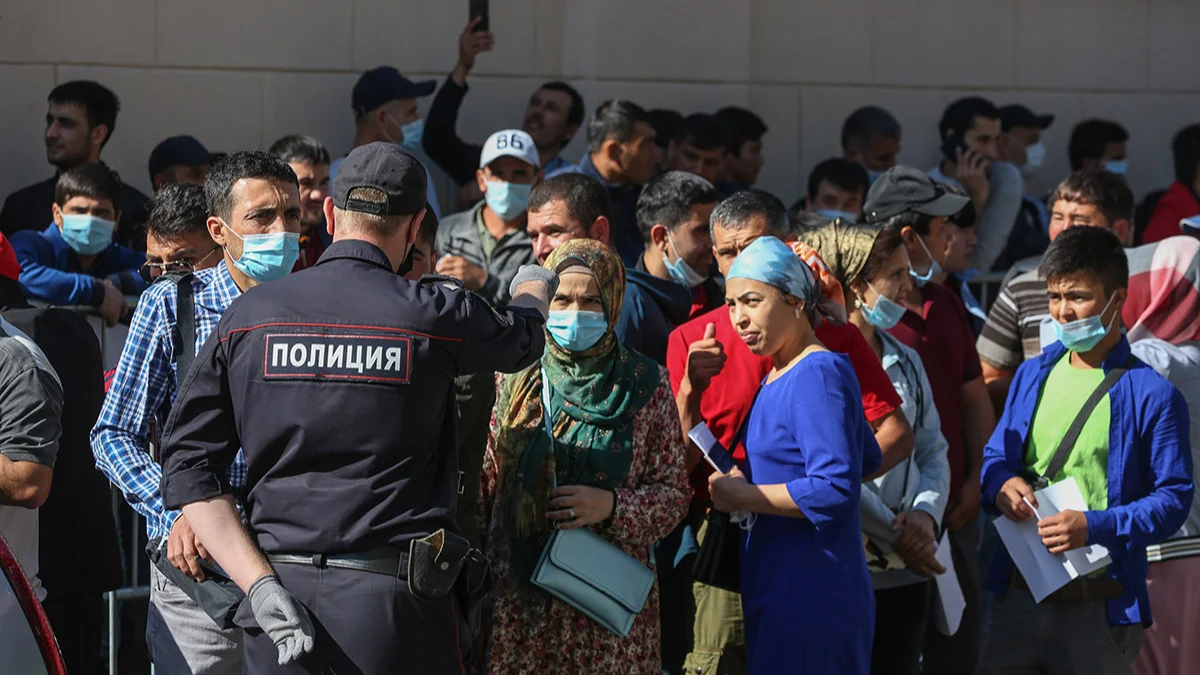
As of Sunday, up to 1,000 citizens of Tajikistan were being held in airports in Moscow “without proper sanitary conditions” as Russian border police refused to let them enter the country. At least 306 were being prepared for deportation.

This situation is not isolated to airports. Thousands of Tajik citizens were stuck at the Sagarchin border checkpoint between Russia and Kazakhstan, where around 180 cars were in limbo, independent news agency Asia Plus reported last week. The situation remains unresolved, with people stranded in their cars for days.

Over a month has passed since the terror attack at Crocus City Hall, a concert venue in the Moscow suburbs, that took the lives of 145 people and injured hundreds more. Since then, Russia has arrested 12 suspects, all but one from Tajikistan. Several suspects, including the alleged gunmen, were tortured by security forces, with one of the accused reportedly having his ear cut off and being forced to eat it.

Central Asian migrants living in Russia have faced increased prejudice since the Crocus City Hall attack due to an atmosphere of intimidation Russian law enforcement has done nothing to discourage.

Human rights activist Valentina Chupik told Russian independent news outlet Mediazona that in the first two days after the attack, over 2,500 people had contacted her organisation reporting unprovoked aggression, police checks and illegal detentions.

Tajikistan’s Foreign Ministry has repeatedly urged Tajik citizens to refrain from travelling to Russia “unless absolutely necessary”. However, many people have no choice but to risk it.

Shakhlokhon, a citizen of Tajikistan, has lived and worked in Moscow for the past 18 years to provide for her family. Before the attacks, she described life in Russia as “normal”, saying that they never had “any trouble”.

“We respect Russians, and they respect us,” Shakhlokhon said, before going on to reveal that the restaurant she worked in hadn’t paid her salary for six months and only reluctantly gave her the money after activists pleaded her case.

In May, Shakhlokhon returned to Tajikistan for her daughter’s wedding but now plans to move back to Moscow. When asked if she was afraid to return to Russia amid the wave of xenophobia, she replied that she had learnt to ignore the discrimination against her.

“We’re used to it. We’ve always been humiliated. What are we going to do? We have to work,” she said.

Shakhlokhon said she had “no choice” but to go to Russia and work as it is almost impossible to earn money to support her family in Tajikistan.

“You can live [in Tajikistan] but there’s no money here. My eldest daughter is already married, but I have two more children to feed and whose education I have to pay for,” Shakhlokhon added. She refuses to bring her children with her to Russia this year, however.

Batyr, 57, a father of seven, has lived with his family in Russia for the past 10 years, working as a builder, but after he and his son were attacked by unknown assailants in Gorky Park in Moscow, he sent his family back to Tajikistan while he decided to stay.

Batyr said he had “tried everything” to get a job in Tajikistan and live there, but had to move to Russia as there simply weren’t any jobs in his home country. “Do you think we don’t want to live at home? Everyone does,” he said.

He also pointed out the hypocrisy of Russians as he recognised that Tajik citizens in Russia did “all the dirty work” for “next to nothing”, yet Russians continued to treat them poorly.

Batyr expressed his frustration with Tajikistan’s Foreign Ministry urging its citizens not to travel to Russia, despite doing nothing to create jobs at home, nor doing anything to help those already in Russia facing discrimination and xenophobia. “It’s easy for them to say. But then what are we meant to live off?” he said.

His brother’s family is still stuck at the Sagarchin border checkpoint between Russia and Kazakhstan, Batyr said.

“They have small children. They’ve been forced to live in their car for days. You think they like it? No, they have no choice.”
Despite increasing pressure, migrants in Russia will not leave because they are willing to put up with discrimination in order to work and earn a living, a Tajik human rights activist who currently lives in Moscow told Novaya Gazeta Europe.

The activist, who wished to remain anonymous, stated that Tajik citizens were stuck between a rock and a hard place because of their disenfranchisement.

“On the one hand, Russia oppresses them, and on the other, Tajikistan has not lifted a finger to help its citizens,” the activist said, adding that Tajiks had become accustomed to the situation and were ready to tolerate anything to work and earn money.

But the human rights activist also warned that if Russia continued with its hard-line discriminatory practices towards migrants, its relationship with Tajikistan would sour further. “If this goes on, Tajikistan will become another enemy that Russia has created for itself.”

Поделиться
Темы
Больше сюжетов
Что такое платформа российских демократических сил при ПАСЕ?

Что такое платформа российских демократических сил при ПАСЕ?

Подробная инструкция от «Новой-Европа»

«Предприняли шаги, чтобы публично дистанцироваться»

«Предприняли шаги, чтобы публично дистанцироваться»

«Новая-Европа» связалась со школой, которую прорекламировал Невзоров сразу после убийства ребенка в Подмосковье. Она отрицает деловые отношения с публицистом

Взять и не обжечься

Взять и не обжечься

ЕС не может договориться, что делать с замороженными активами России. Где граница между поддержкой Украины и финансовыми рисками?

Домовые чаты переезжают в Max

Домовые чаты переезжают в Max

Госдума обязала управляющие компании общаться с жильцами через госмессенджер. Что это значит для россиян?

Газ, который лопнул

Газ, который лопнул

Как живет непризнанная Приднестровская республика без украинского транзита российского газа

Таксисты против «Яндекса»

Таксисты против «Яндекса»

Забастовка прошла сразу в нескольких постсоветских странах. Водители борются за условия труда

Дело Долиной: квартиру оставили покупательнице Полине Лурье

Дело Долиной: квартиру оставили покупательнице Полине Лурье

Решение Верховного суда определяет, как будут решаться похожие споры

Почему декабристы были обречены

Почему декабристы были обречены

Восстанию — 200 лет. «Новая-Европа» разбирается, актуален ли тот протест до сих пор

«Крылья вырастают, когда есть те, кто может помочь»

«Крылья вырастают, когда есть те, кто может помочь»

«Вывожук» прекратил эвакуировать преследуемых россиян. Мы поговорили с теми, кого успели спасти