Western leaders are becoming increasingly frustrated by China’s role in enabling the war in Ukraine. Some have even openly threatened to sanction the country if it continues to provide Russia with the materials it needs to build more weapons.

 Renaud Foucart
Renaud Foucart
Senior lecturer in economics, Lancaster University

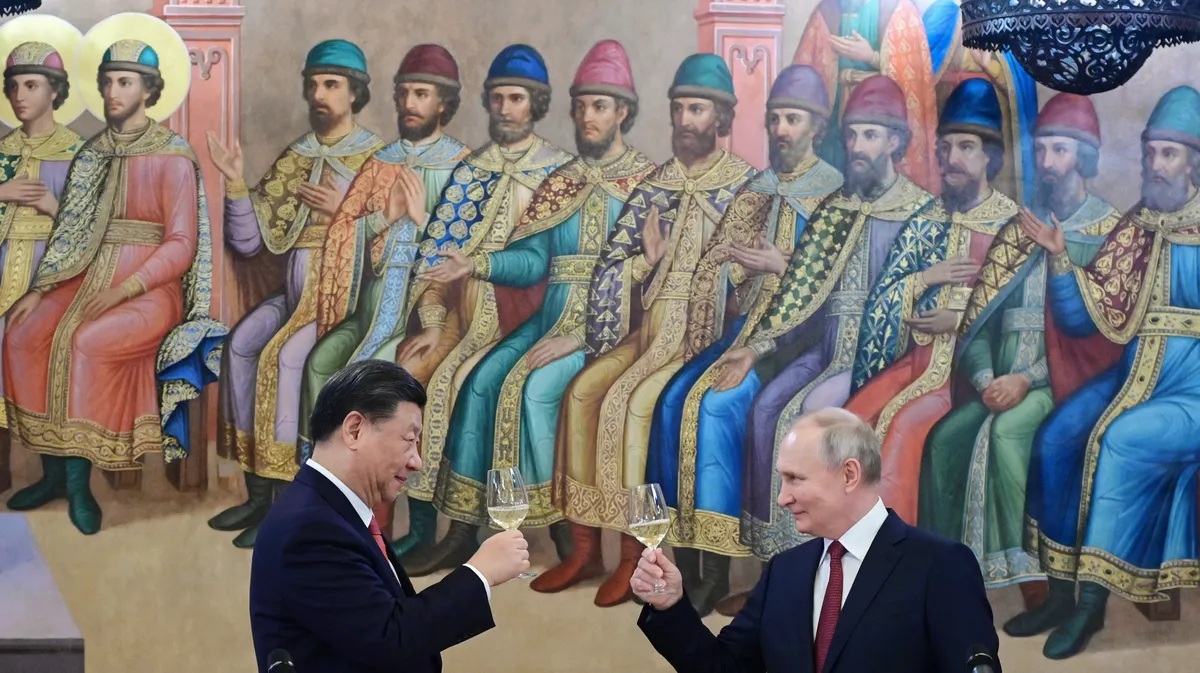
They are right to focus on China’s position of power. Russia is now so dependent on the only major economy still taking the risk to support its regime, that China could effectively force Vladimir Putin to end the conflict.

The extent of Russia’s economic dependence became apparent fairly quickly after its full-scale invasion of Ukraine in February 2022. Just a few months later, things were not going to plan.

In the hope of putting pressure on European countries supporting Ukraine, Russia decided to cut almost all of its exports of gas to the West. Before the war, Russia had provided about 40% of Europe’s gas.

While at first that decision provoked an energy crisis and a surge in bills across the continent, Europe eventually managed to wean itself from Russia’s supply. They did this in part by replacing gas with other sources of energy, but also by substituting Russian imports with gas from other countries, including the US.

For the first time in over 20 years, the Russian state-owned energy giant Gazprom sustained a financial loss in 2023. Until then, the company contributed around 10% of the country’s budget.
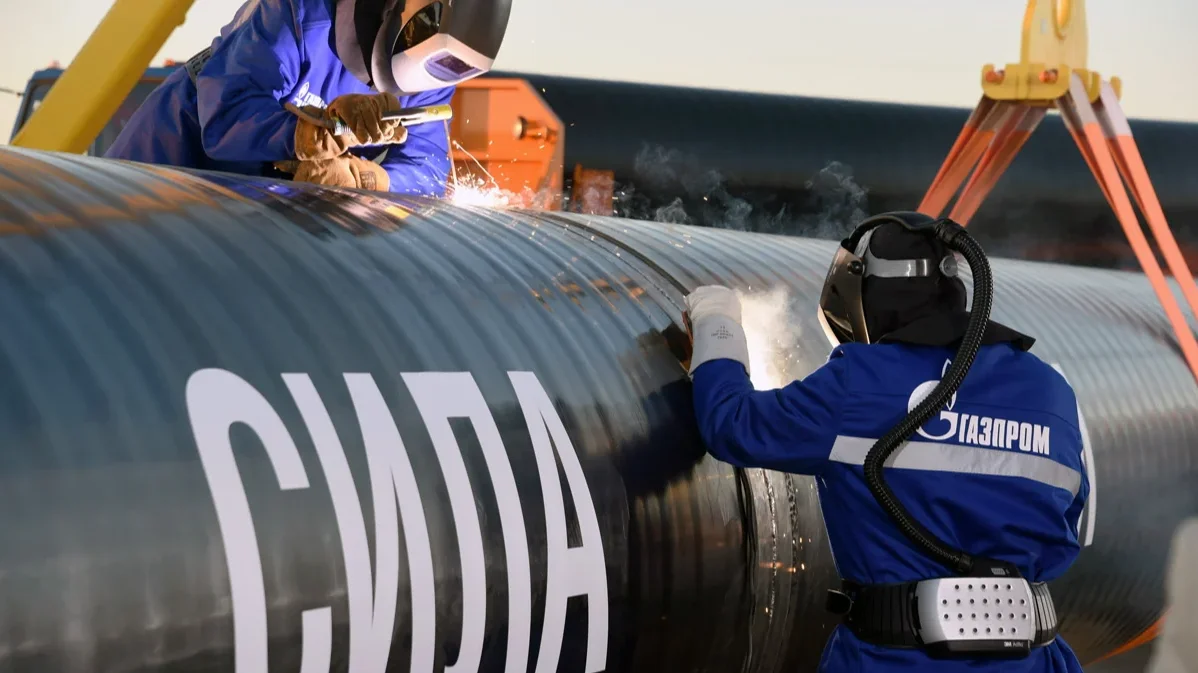
Electricity prices in Europe are now roughly back to pre-war levels. And while gas prices are still high, they have dropped, with storage facilities expected to be almost full later this year.

So now Russia faces a massive problem of its own: selling its gas.

For the first time in over 20 years, the Russian state-owned energy giant Gazprom sustained a financial loss in 2023. Until then, the custom and tax revenues from the company contributed around 10% of the country’s budget.

Revenue from oil exports has also decreased. As Western countries have banned Russian oil, the country is forced to sell it for less, absorbing the additional costs of transporting production to the likes of China and India while mainstream transporters refuse to risk carrying it.

As for natural gas, geography makes things even worse for Russia. China is the only potential customer large enough to justify a new pipeline to replace the ones which used to deliver to Europe. But given this privileged position, China feels able to demand the gas at a huge discount.

In this kind of bargaining situation, China has the upper hand.

China can buy gas from anywhere in the world, but Russia can only sell it (at the volumes it needs) to China. Then there is the question of urgency — Russia needs to finance a war now, while China has no pressing energy need it cannot fulfil.

A two pipe problem
читайте также

A two pipe problem

Moscow and Beijing are no closer to agreeing terms for the Power of Siberia 2 gas pipeline

Russia’s dependence on China applies to other sectors of the economy too. The Chinese yuan now accounts for 54% of trades in Russia’s stock exchange since it was cut off from the global banking system in 2022. It has no credible alternative to replace that money if China started to apply similar sanctions.

Even more crucial for the war, China is responsible for around 90% of Russia’s import of “high priority” dual-use goods — electronic components, radars, sensors — without which it could not build advanced military hardware. Again, there is no alternative supplier.

It is hard to win a war with only North Korea and Iran — two countries themselves subject to heavy economic sanctions — on your side. In short, this means that China is now in a position to demand anything from Russia.

And in potential negotiations between China and the West, both have much to gain — and a similar bargaining position to each other.

For example, China is facing considerable domestic economic problems of its own. One of these stems from industrial overcapacity and the need to find buyers for all the products it manufactures.

But the US has just imposed a 100% border tax on electric cars from China, and 50% on solar cells. The EU is doing something similar and considering asking Chinese firms to make electric vehicles in Europe, sharing their technology.

The West wants to avoid becoming too dependent on China, for the same bargaining reasons that make Russia’s current position so weak.
Taxing cheap products which could reduce carbon emissions may seem like a self-defeating strategy given the urgent need to finance the energy transition. So perhaps the West wants to avoid becoming too dependent on China, for the same bargaining reasons that make Russia’s current position so weak.

But the balance is not the same. China needs Western markets, and the West need China’s green industrial capacity and know-how, as the country now installs more renewable markets every year than the rest of the world combined.

Europe is still facing difficult economic times, and a tariff is essentially an extra tax burden on European consumers. Everyone would benefit from the trade war toning down, and China has something very valuable to offer. For to all intents and purposes, it now owns Russia, and could use this power to end the war in Ukraine.

This article was first published by The Conversation. Views expressed in opinion pieces do not necessarily reflect the position of Novaya Gazeta Europe.

Fragile fraternity
читайте также

Fragile fraternity

Vladimir Putin’s recent state visit to China was practically a mirror image of Mao Zedong’s visit to Moscow 75 years ago

Поделиться
Больше сюжетов
Что Украина и США обсуждали в Берлине

Что Украина и США обсуждали в Берлине

Компромисс по «мирному плану» до сих пор не найден: американская сторона требует, чтобы Киев уступил Донбасс, Зеленский это отвергает

Похищение игрока, провал Карпина и сенсация из ниоткуда

Похищение игрока, провал Карпина и сенсация из ниоткуда

Российский футбол даже в изоляции оказывается в центре внимания. Что в нем произошло за последние полгода?

Палачи и жертвы

Палачи и жертвы

В годы Большого террора чекистов, истязавших людей, часто тоже пытали и расстреливали. Это называется «экосистемой насилия»

Научный занавес

Научный занавес

Российским ученым усложняют сотрудничество с иностранными коллегами. Историк Рустам Александер вспоминает, как это работало в СССР

Евгения Хасис рассказала в интервью Собчак о подготовке к убийству Маркелова и Бабуровой, желании пойти на «СВО» и отношении к национализму сейчас

Евгения Хасис рассказала в интервью Собчак о подготовке к убийству Маркелова и Бабуровой, желании пойти на «СВО» и отношении к национализму сейчас

Главное из интервью

Великий выдумщик

Великий выдумщик

Умер Фрэнк Гери — один из самых известных современных архитекторов. Одни называли его работы революцией, другие — безумием

«Вежливые люди» захватывают Финляндию

«Вежливые люди» захватывают Финляндию

Сериал «Конфликт» о повторении крымского сценария вышел в России. В версии с цензурой нет упоминания армии РФ

На языке пламени

На языке пламени

«Литературная политика Третьего рейха» — исследование о том, как Гитлер вел войну с книгами и что из этого вышло

Между самодержавием и самовластием

Между самодержавием и самовластием

Академик Юрий Пивоваров рассуждает о маятнике русской истории