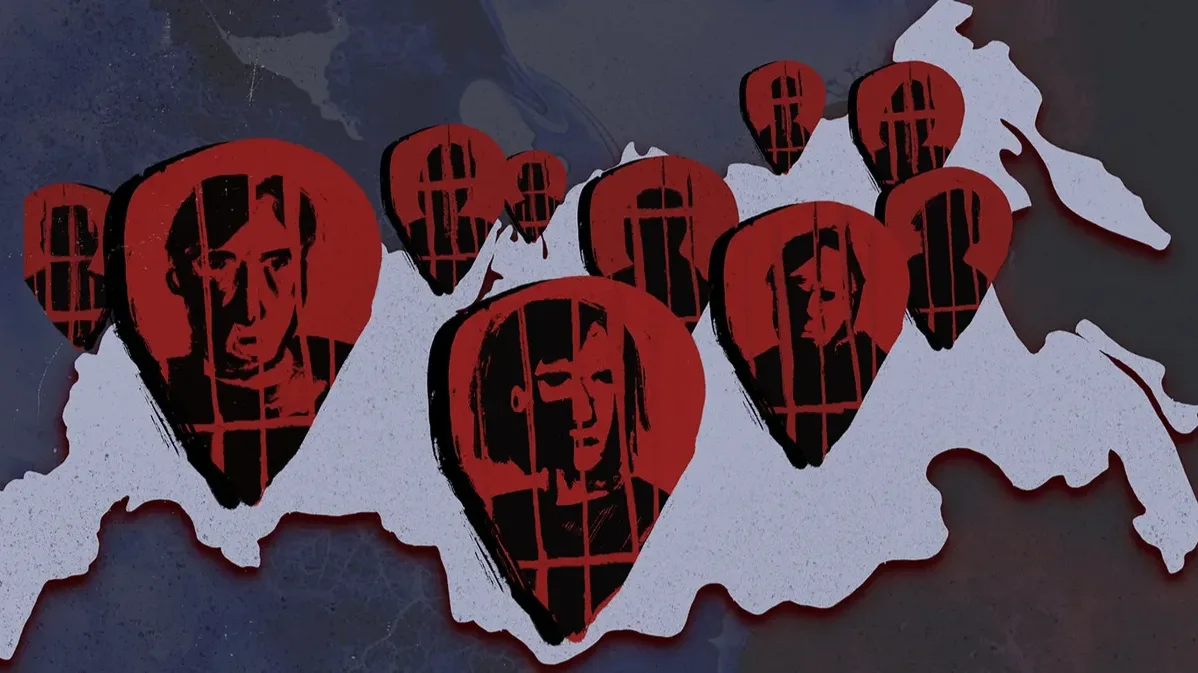
Novaya Europe’s interactive map shows where Russian political prisoners are serving their time and includes addresses if you wish to write them a letter.
Alexey Navalny’s death in the Arctic prison where he was serving a 30-year prison sentence last month understandably increased fears for the well-being of the dozens of other political prisoners whose health has deteriorated during their incarceration in Russia’s harsh prisons and penal colonies.

One better-known example is Sasha Skochilenko, the 33-year-old sentenced to seven years in prison for swapping supermarket labels with anti-war messages. Skochilenko suffers from multiple mental and physical conditions and her health has seriously deteriorated since she was first detained. Another is teenager Yegor Balazeykin, who suffers from incurable autoimmune hepatitis and was sentenced to six years in prison last autumn after he had attempted to set fire to two military enlistment offices. He has since been diagnosed with internal organ induration, in addition to an inflamed and eroded small intestine.

Despite their serious health conditions, neither Skochilenko nor Balazeykin has been allowed to serve their sentences under house arrest, which would permit them to receive medical treatment. On top of that, both must now endure the brutality of Russia’s penal colonies for years to come.

Russian prisons are even tougher for older inmates, even if they’re not dealing with serious health conditions. Igor Baryshnikov, a 64-year-old pensioner diagnosed with prostate cancer, and Zarema Musaeva, the 54-year-old mother of Chechen human rights activist Abubakar Yangulbaev who suffers from type 2 diabetes, are serving a seven and a half and a five and a half year sentences respectively, while Memorial co-chairman Oleg Orlov, at the age of 70, was recently sentenced to two and a half years in prison last month for “discrediting the Russian army”.

Novaya Europe has compiled the profiles of political prisoners whose families and lawyers say they need external medical attention because of their worsening physical and mental health.

Writing to these prisoners can make a world of difference. Each of our profiles contains an address you can send your letters to express support and sympathy. You can also subscribe to “Zekletter”, Novaya Europe’s weekly newsletter in Russian, which skips the prison censors so you can share it with inmates.

Поделиться
Темы
Больше сюжетов
Как хотят наказывать за «отрицание геноцида советского народа»

Как хотят наказывать за «отрицание геноцида советского народа»

«Новая-Европа» разбирается в новом законопроекте, жертвами которого могут стать журналисты, историки и учителя

Джей Ди Вэнс едет на Южный Кавказ

Джей Ди Вэнс едет на Южный Кавказ

Каковы интересы Америки и какие новые геополитические смыслы обретает регион?

Маменькин сынок

Маменькин сынок

История «сибирского потрошителя» Александра Спесивцева

Разведка в Абу-Даби

Разведка в Абу-Даби

Кто такой Игорь Костюков — начальник ГРУ, возглавивший российскую делегацию на переговорах по Украине

Друзьям — деньги, остальным — закон

Друзьям — деньги, остальным — закон

Кто получает путинские гранты: от больницы РПЦ до антивоенных активистов

Три миллиона файлов по делу Эпштейна

Три миллиона файлов по делу Эпштейна

Трамп и другие контакты: что удалось обнаружить в новом и, возможно, последнем крупном массиве документов?

Поймай меня, если сможешь

Поймай меня, если сможешь

«Марти Великолепный» с Тимоти Шаламе — один из лучших фильмов сезона, рассказывающий историю об игроке в пинг-понг как криминально-авантюрную сагу

«Отношение к ним в Европе жестче, чем в первый год войны»

«Отношение к ним в Европе жестче, чем в первый год войны»

Что сейчас происходит с российскими дезертирами?
Что известно о ПНИ Прокопьевска, где из-за вспышки гриппа умерли девять человек

Что известно о ПНИ Прокопьевска, где из-за вспышки гриппа умерли девять человек

Сотрудники там жаловались на условия содержания пациентов: холод, испорченную еду и отсутствие лекарств

Выбор читателей
Самые популярные материалы за две недели 20–3 февраля