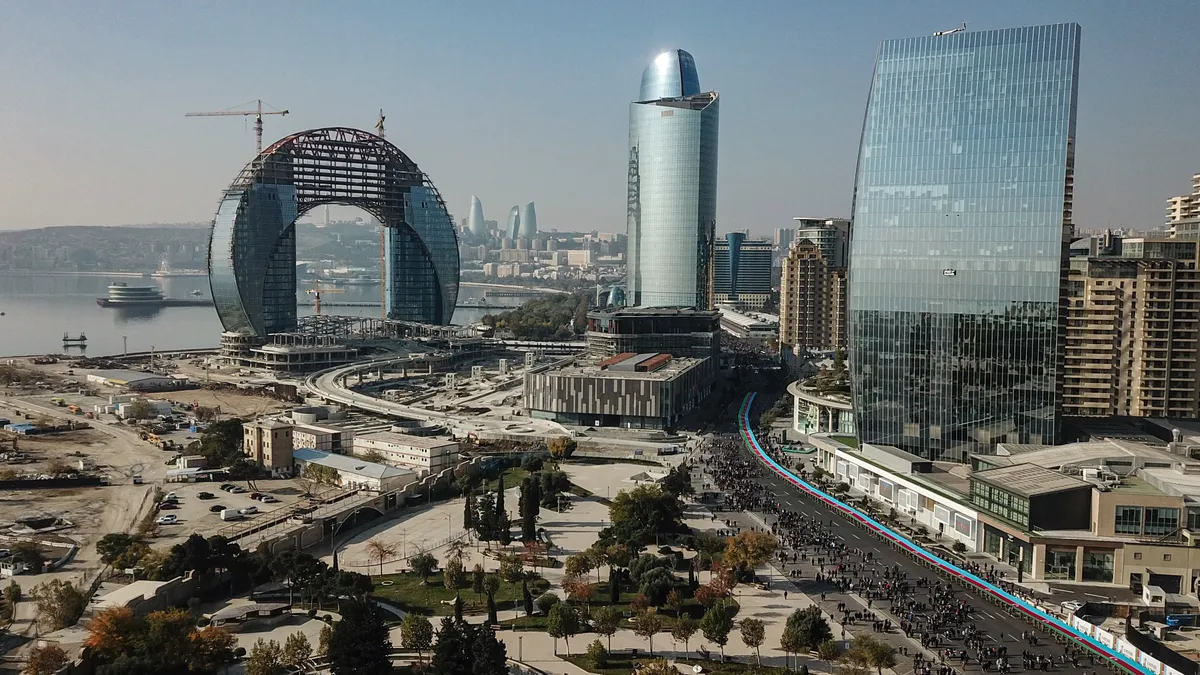
The geopolitical balance in the South Caucasus is shifting. Azerbaijan and Georgia, once clearly aligned with the West, have started drifting back toward Russia, while Armenia, which has been allied with the Kremlin since the Soviet Union’s disintegration, seems to be sidling up to the West.
Djoomart Otorbaev
Djoomart Otorbaev
Former prime minister of Kyrgyzstan and the author of Central Asia’s Economic Rebirth in the Shadow of the New Great Game

Since gaining independence, Azerbaijan, Armenia, and Georgia have all generally sought to distance themselves from their Soviet pasts and strengthen their relationships with the West. But each has moved at its own pace, with Azerbaijan and Georgia rejecting Russia much more quickly and definitively.

In fact, within a few years of the Soviet Union’s collapse, Azerbaijan and Georgia, together with Ukraine and Moldova, formed the GUAM Organisation for Democracy and Economic Development, aimed at bolstering their post-communist transitions and limiting Russia’s regional influence.

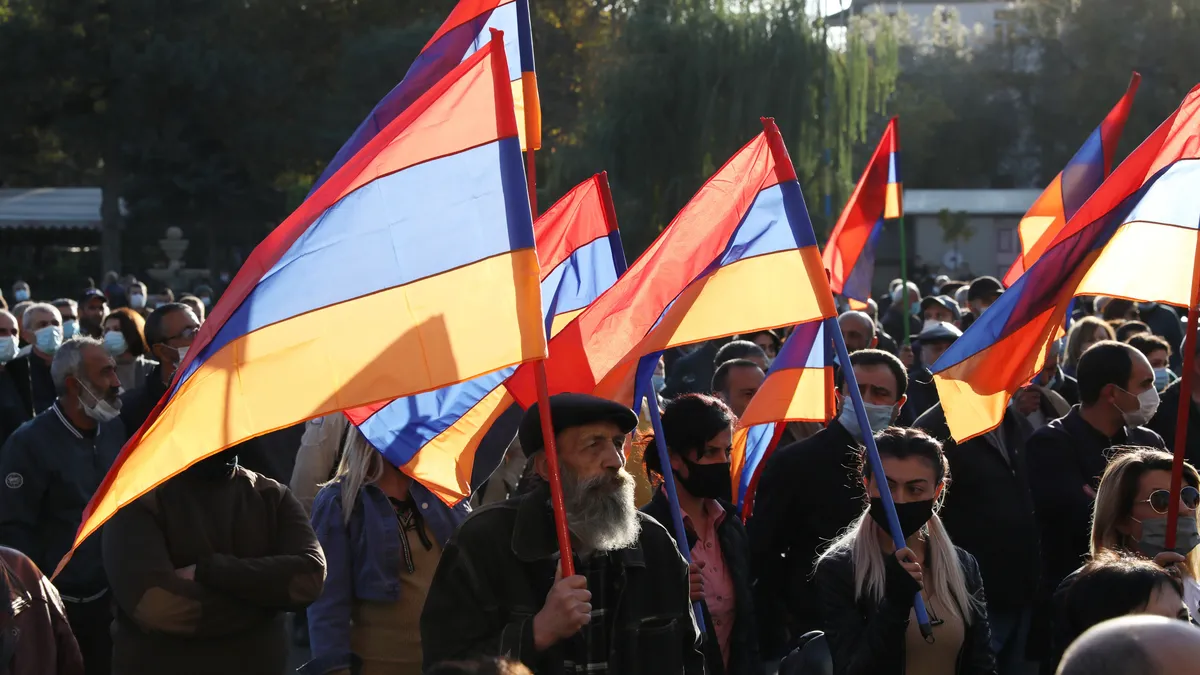
By contrast, Armenia maintained close ties with Russia, not least to secure military support in its conflict with Azerbaijan over the disputed territory of Nagorno-Karabakh, where both Azerbaijanis and Armenians lived during Soviet times. Following the Soviet Union’s collapse, the two groups went to war over the territory, with the Armenian side ultimately securing de facto control.

In 1992, Armenian separatists established the Nagorno-Karabakh Republic, and in 1994, a Russia-brokered ceasefire brought relative peace, at least for a while.

Since then, Russia has acted as a kind of guarantor of Armenian security, including during the brutal ground war that broke out in Nagorno-Karabakh in 2020.

The ceasefire deal that followed — which Russia also brokered — put Russian peacekeepers in charge of guarding the region for five years.

But when violence again erupted in Nagorno-Karabakh in September 2023, Russia did not intervene — a decision that partly reflected the need to direct limited military resources toward the war in Ukraine, though Azerbaijan’s status as a key energy supplier probably also made a difference.

As a result, Azerbaijan was able to seize control of the enclave, with Russia subsequently withdrawing its peacekeepers. What Azerbaijan perceived as French support for Armenia further encouraged it to move away from Europe, toward both Russia and Turkey.

Leaving Russian orbit
читайте также

Leaving Russian orbit

After losing Nagorno-Karabakh, Armenia is struggling to make new allies as it attempts to pivot away from Russia

Of the South Caucasus’s three post-Soviet states, Georgia embraced the West most fully — and paid a heavy price when Russia invaded in 2008 and backed two breakaway regions. Though relations with Russia normalised over time, Georgia remained wary and applied for European Union membership in 2022. But last month — just six months after receiving EU candidate status — Georgia’s parliament decided to push through a controversial “foreign agents” law, which mimics Russian legislation that has been used to target Kremlin critics.

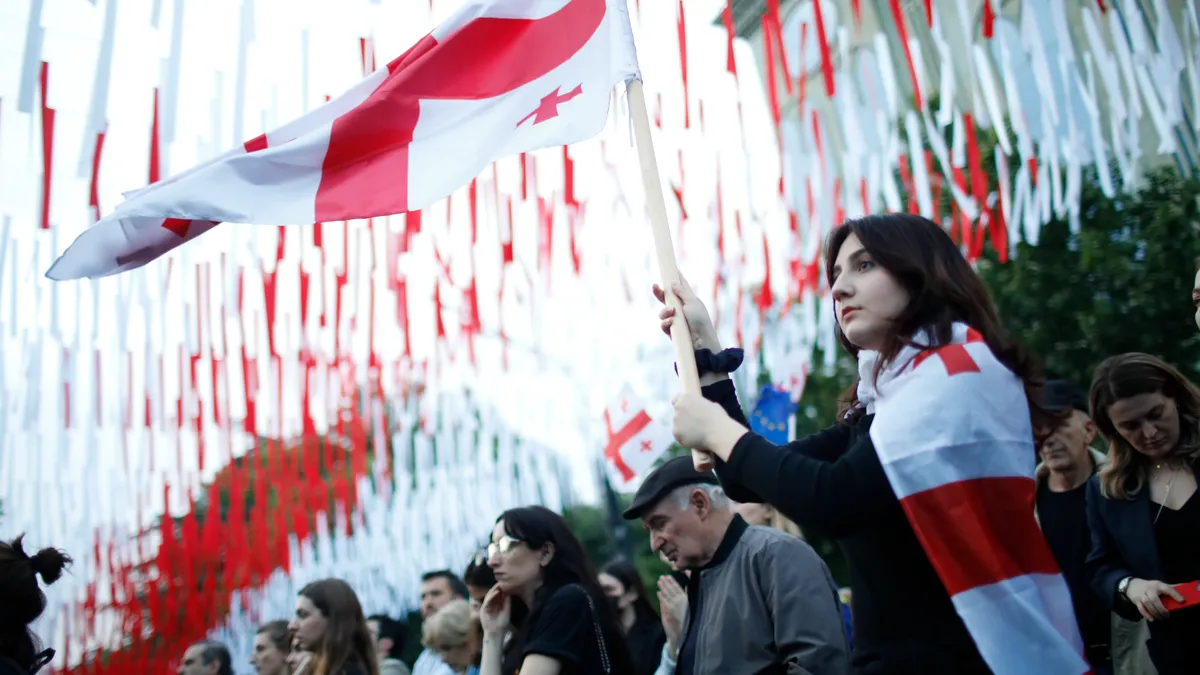
The law — which requires NGOs and independent media that receive more than 20% of their funding from abroad to register as organisations “bearing the interests of a foreign power” — sparked massive popular protests, drew sharp Western criticism and was initially vetoed by Georgian President Salome Zourabichvili before parliament voted to overturn her veto and forced the bill into law.

Since then, the EU has suspended Georgia’s accession process to the bloc, while the United States, for its part, has announced visa restrictions on Georgian government officials and a review of bilateral cooperation.

Georgian leaders’ stance reflects the fear that if they bow to Western pressure to join its anti-Russian alliance — or even maintain a pro-Western strategic orientation — Georgia could be the next Ukraine.
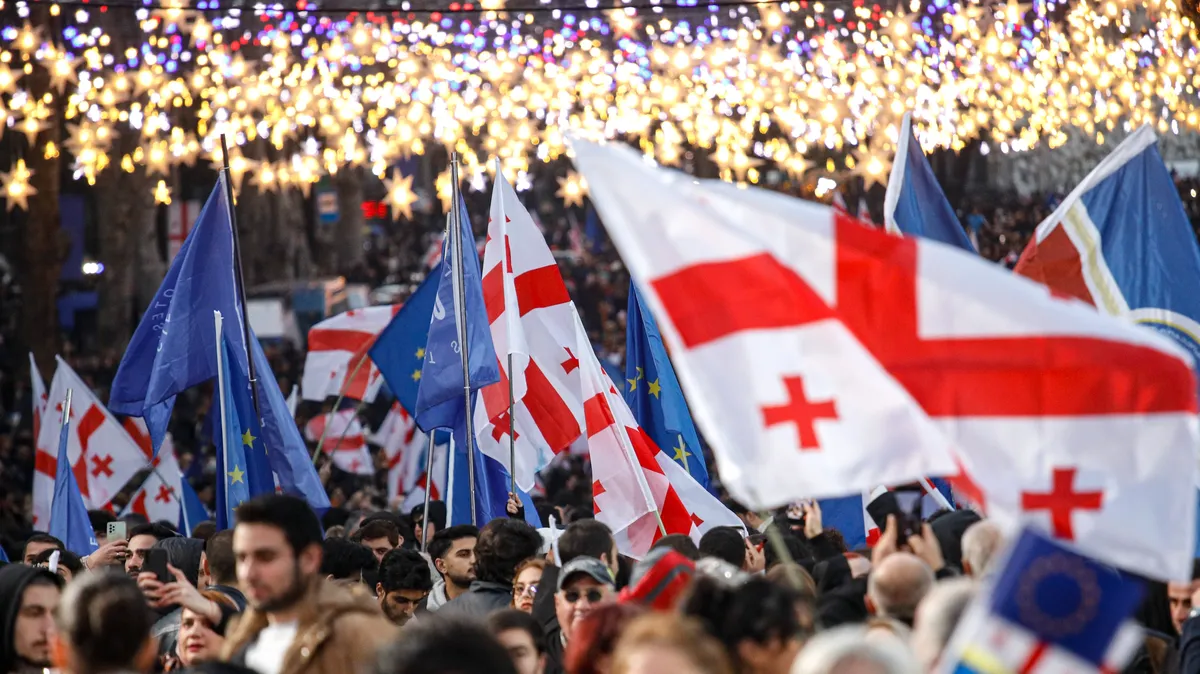
As Prime Minister Irakli Kobakhidze recently put it, “some” want a Georgian version of Ukraine’s 2014 Maidan uprising, which culminated in the ouster of the pro-Russian President Viktor Yanukovych, or a “second front” in the war against Russia.

Georgian leaders’ stance reflects the fear that if they bow to Western pressure to join its anti-Russian alliance — or even maintain a pro-Western strategic orientation — Georgia could be the next Ukraine.
But Georgia’s interests extend beyond staving off a Russian invasion, especially given how long the war in Ukraine has dragged on and how desperate Russia is for support. Georgian Dream might also be hoping to secure the return of the two breakaway regions of South Ossetia and Abkhazia. The announcement that the government had “restored Georgia’s territorial integrity” would certainly give Georgian Dream a boost in this October’s general election.

Russia, too, would benefit from such an arrangement. Georgia’s strategic location between Europe and Asia makes it a valuable logistics and transit hub — useful, for example, for transporting oil from the Caspian Sea to Europe. Closer relations with Georgia would also create opportunities for Russia to organise railway communications to its ports, as well to Iran and Armenia.

Georgia’s zero hour
читайте также

Georgia’s zero hour

The country’s pivot away from Europe is playing right into the Kremlin’s hands

Russia is not the only Western rival with which Georgia is deepening ties. The country is also pursuing closer economic cooperation with China, as exemplified by plans for a Chinese-led consortium to build and operate a deep-sea port in Anaklia, on Georgia’s Black Sea coast. While the Georgian opposition warns that the project will further strain relations with the West, the ruling party appears committed to moving forward.

Ultimately, however, it is China’s “no-limits” partner Russia that is making the greatest inroads in the South Caucasus. Even Armenia, which resents the Kremlin’s lack of support in the 2023 Karabakh war, is likely to turn back toward Russia, as it increasingly finds itself surrounded by hostile countries (Azerbaijan and Turkey) and Russian allies (Iran and Georgia).

Ironically, given its efforts to seize large swaths of Ukrainian territory, Russia now appears to be the only entity capable of ensuring the security and territorial integrity of the countries in the region. As a result, Azerbaijan, Armenia, and Georgia appear set to become part of Russia’s new-old sphere of influence — and to be lost to the West.

This article was first published by Project Syndicate. Views expressed in opinion pieces do not necessarily reflect the position of Novaya Gazeta Europe.

Поделиться
Больше сюжетов
Я повсюду иностранец

Я повсюду иностранец

Что такое кризис идентичности в эмиграции и почему он особенно силен на третий-четвертый год. Рассказывает психолог

Что Украина и США обсуждали в Берлине

Что Украина и США обсуждали в Берлине

Компромисс по «мирному плану» до сих пор не найден: американская сторона требует, чтобы Киев уступил Донбасс, Зеленский это отвергает

Похищение игрока, провал Карпина и сенсация из ниоткуда

Похищение игрока, провал Карпина и сенсация из ниоткуда

Российский футбол даже в изоляции оказывается в центре внимания. Что в нем произошло за последние полгода?

Палачи и жертвы

Палачи и жертвы

В годы Большого террора чекистов, истязавших людей, часто тоже пытали и расстреливали. Это называется «экосистемой насилия»

Научный занавес

Научный занавес

Российским ученым усложняют сотрудничество с иностранными коллегами. Историк Рустам Александер вспоминает, как это работало в СССР

Евгения Хасис рассказала в интервью Собчак о подготовке к убийству Маркелова и Бабуровой, желании пойти на «СВО» и отношении к национализму сейчас

Евгения Хасис рассказала в интервью Собчак о подготовке к убийству Маркелова и Бабуровой, желании пойти на «СВО» и отношении к национализму сейчас

Главное из интервью

Великий выдумщик

Великий выдумщик

Умер Фрэнк Гери — один из самых известных современных архитекторов. Одни называли его работы революцией, другие — безумием

На языке пламени

На языке пламени

«Литературная политика Третьего рейха» — исследование о том, как Гитлер вел войну с книгами и что из этого вышло

Между самодержавием и самовластием

Между самодержавием и самовластием

Академик Юрий Пивоваров рассуждает о маятнике русской истории