“If the Belarusian opposition asked me for advice, I would tell them to agree to anything Lukashenko says in exchange for free parliamentary elections and parliamentary immunity,” Ukraine’s former Interior Minister Yuriy Lutsenko said in a recent interview with independent Belarusian media outlet Zerkalo.

Pavel Latushka
Pavel Latushka
Deputy leader of the United Transitional Cabinet of Belarus

Seeing such statements reminds me how strong faith in democracy is among those who have had the good fortune to see it in practice and to live in a democracy. How incontrovertible it is to people with a well-established democratic way of thinking. And how this belief can sometimes lead to an assumption that you can get regimes diametrically opposed to democracy to agree to a smooth transition to democracy of their own volition and agree to set the process of their own self-destruction in motion themselves.

Meanwhile, Belarus is into its fourth decade of Lukashenko’s dictatorial rule. And in this fourth decade, there are clear signs that the transformation of his regime from an authoritarian dictatorship to a totalitarian one is nearing its completion. Any signs of a loosening of his grip, a thaw, liberalisation or democratisation are conspicuous by their absence.

The Belarusian Doctor of Sociology Henadz Korshunau published the latest section of his Barometer of Repression study at the end of July. It is essential reading for anyone who really wants to understand the current scale of repression in Belarus. It gives us an accurate assessment of the situation based on facts, rather than subjective feelings or assumptions.

In its fourth decade of Lukashenko’s rule, there are clear signs that Belarus’s transformation from an authoritarian dictatorship to a totalitarian one is nearing its completion.
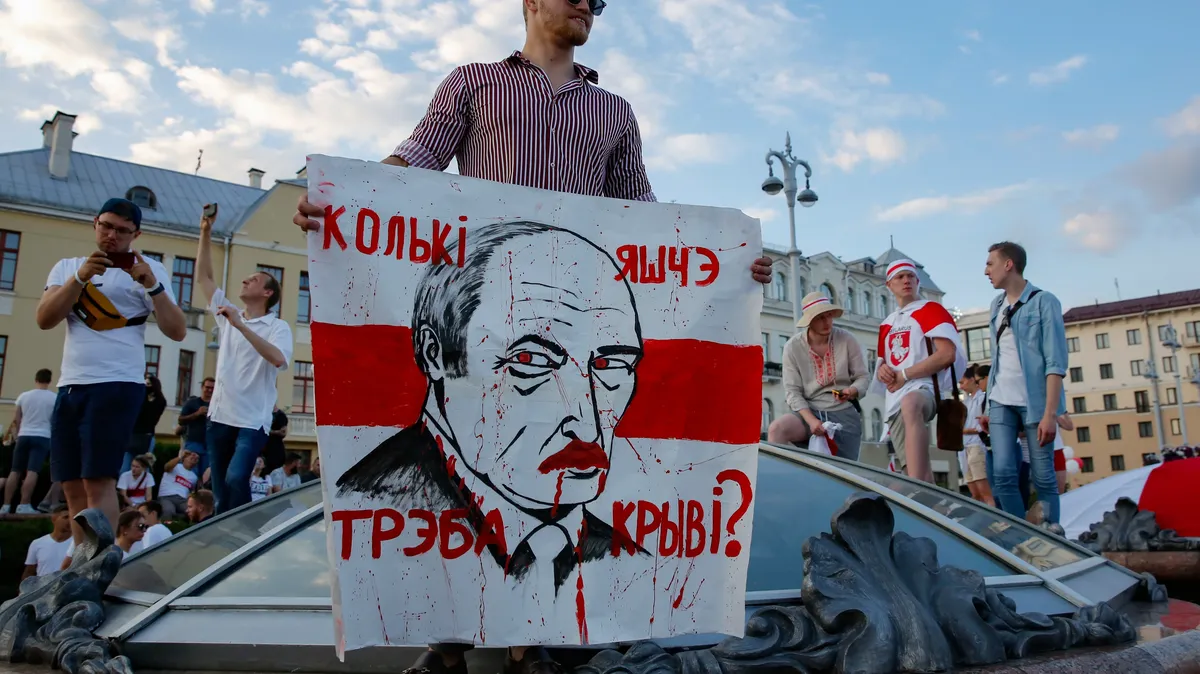
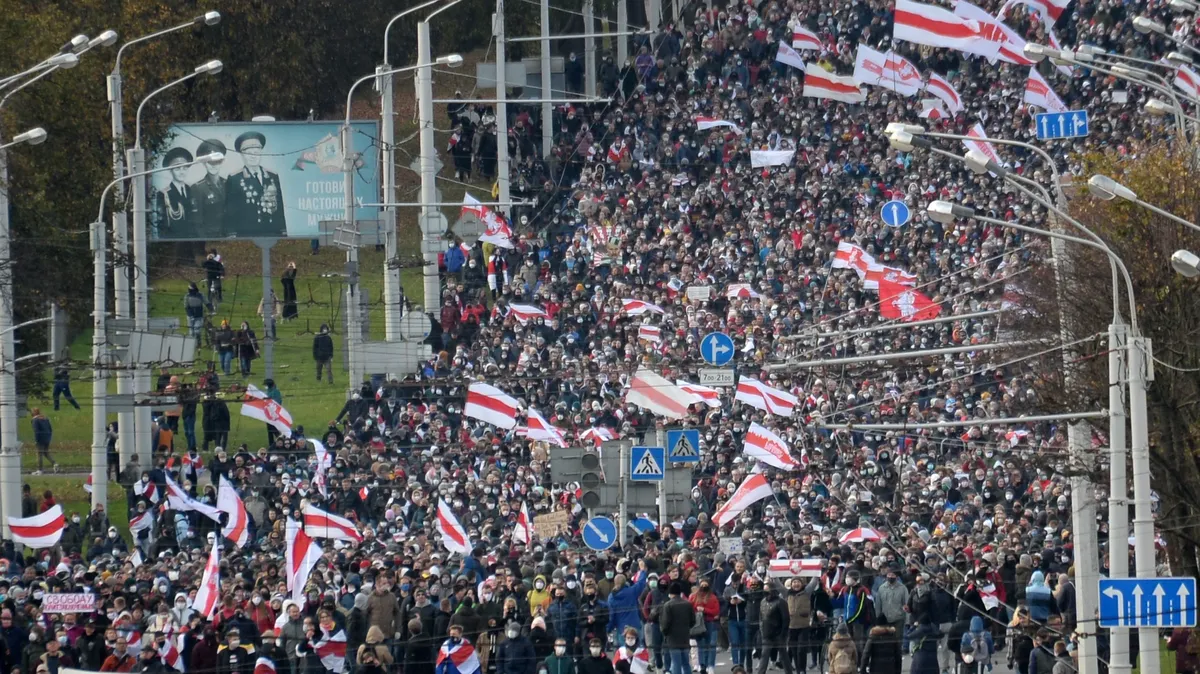
Namely, the number of political prisoners was up, the number of new criminal cases against Belarusians who disagree with the Lukashenko regime is at its highest in the last four years, 50,000 people have been detained since the start of the 2020 election campaign and more than 1,700 Belarusian nonprofits have been shut down since 2021, and these are conservative estimates.

Welcome to the reality of living in a dictatorship, democracy’s alternative reality, where democratic thinking often goes to die. Democratic thinking does not and cannot work in such an alternative reality, as reality in a dictatorship functions according to a completely different set of rules.

The rules are simple and the overriding principle is “crush or be crushed”. And all these years Lukashenko has been busy crushing his opponents, journalists, peaceful protesters or political prisoners. He crushes civil rights, freedoms, civil society and private business — anything that poses an internal threat.

His aggression has long since crossed Belarus’s borders too. In addition to the repression at home, the Lukashenko regime has nothing against external terror either: whether by hijacking a civilian aircraft, launching a hybrid migration war with the EU, sending spies and saboteurs to neighbouring European countries or complicity in the war against Ukraine. Crush or be crushed.

Europe’s lasting dictator
читайте также

Europe’s lasting dictator

Alexander Lukashenko’s 30 years in power have been a tragedy for the Belarusian people and a stroke of luck for Vladimir Putin

We all saw the invasion of Ukraine from Belarusian territory on 24 February 2022. The massacre in Bucha. More than 800 missile strikes launched from Belarus. At least 3,500 Ukrainian children deported directly by the Lukashenko regime. We see the assistance the Lukashenko regime has provided to Russia in circumventing sanctions. We see the mass transfer of weapons to Russia. We see the production of weapons for Russia by the Belarusian military-industrial complex. And who can forget the redeployment of Russian nuclear weapons to Belarus?

We see attacks on Polish border guards. We saw the murder of a Polish soldier on the border. We have seen sabotage and arson on Polish territory. And, forgive me for a personal take, but at the end of July I testified to the Polish Prosecutor’s Office in a case of incitement to murder. The target was me, and foreign secret services were to be used to take my life.

Yet we still see proposals suggesting we can come to some sort of agreement with Lukashenko. Or make concessions to him. Sadly, some proposals have even come from people who identify as members of the Belarusian democratic forces.

Proposals to recognise the regime as legitimate, to send European ambassadors, to review sanctions, to implement a “flexible policy” and compromise with Lukashenko. The proposals may look like they come from a parallel reality, but that is the reality of Lukashenko’s dictatorship, and the people making them are effectively calling for normalising and accepting the regime.

Despite being capitulation plain and simple, such proposals do have a certain basis in reality and are partly built on the West’s largely ill-defined and indecisive position towards the Lukashenko regime, which can hardly be called a strategy in its current form.

The position would appear to be one of applying pressure on the regime, but not too much. Impose trade sanctions, but don’t create too much of an economic shock. Harmonise sanctions against the Lukashenko regime and Russia for the war — but not completely. Declare at the highest level the need to bring the Lukashenko regime to book for crimes against humanity and war crimes — but don’t carry it through.

And what do regimes like Lukashenko’s see in such a stand? Weakness. A chance to go on committing their crimes, to pursue terror, to unleash aggression. Because the only language they understand is the language of power. They speak no other language. All they see in half-measures and attempts at diplomacy is a manifestation of weakness, room for manoeuvre and an opportunity to up the ante. And they exploit that.

‘Lukashenko has made it clear that there’ll be no free passes’
читайте также

‘Lukashenko has made it clear that there’ll be no free passes’

Belarusian opposition leader Sviatlana Tsikhanouskaya on her proposed alternative passport scheme, collective responsibility for the war and beating Alexander Lukashenko at the ballot box

What we are seeing is positional action, a reactive rather than proactive tactic. It is a tactic without a strategy. After all, a strategy implies clearly defined goals, and knowing exactly what you want to achieve. And tactics should bring you closer to that goal, tie into that strategy and actively contribute to it.

What should the West’s basic strategic goal towards Belarus be? I think it’s obvious — democratisation, followed by the integration of Belarus into the European community and European civilisation.

Is that possible while Lukashenko prolongs and cements his dictatorship? Of course not. Is it possible to achieve anything other than his further entrenchment with half-measures and concessions? By recognising the regime as legitimate? By lifting sanctions, absolving him of all legal liability? No, it is impossible. Lukashenko’s 30-year rule is proof positive of that, and objective facts clearly outline the trajectory of the regime’s evolution — a totalitarian dictatorship protected by the empire next door. North Korea 2.0.

You’d be hard pushed to find anyone willing to say that realpolitik as applied to dictators who unleashed bloody wars, mass repression and genocide has ever been a successful “strategy”.
To this end, the realpolitik approach, whose adherents propose compromises with Lukashenko, is no longer just a delusion, the self-deception of idealistic democrats who believe that gradual change in such a dictatorship is possible and that there is so much as a grain of sanity and flexibility within it. It is something else entirely. It is conceding the dictatorship’s right to exist.

But once you concede that a dictator living and ruling on the principle of “crush or be crushed” has the “rule of force”, there is only one conclusion he can draw — that he can be confident both of his power and his impunity.

History knows many such examples. And you’d be hard pushed to find anyone willing to say that realpolitik as applied to dictators who unleashed bloody wars, mass repression and genocide has ever been a successful “strategy”. And we can clearly see where this approach has led as regards Lukashenko. It’s as if we can see but don’t want to notice.

There is a concept of eyes on the prize, but when it comes to a strategy for Belarus, the opposite seems to be the case. Without identifying and setting a goal, it is impossible to move from tactics to strategy. The longer that takes, the longer the Belarusian question remains a bleeding wound.

Pavel Latushka is a Belarusian politician and former diplomat who served as the country’s culture minister from 2009 to 2012. He now heads National Anti-Crisis Management, a coalition of experts and professionals set up in response to the repression of civil society in Belarus, and is deputy leader of the United Transitional Cabinet. Views expressed in opinion pieces do not necessarily reflect the position of Novaya Gazeta Europe.

Поделиться
Больше сюжетов
Что Украина и США обсуждали в Берлине

Что Украина и США обсуждали в Берлине

Компромисс по «мирному плану» до сих пор не найден: американская сторона требует, чтобы Киев уступил Донбасс, Зеленский это отвергает

Похищение игрока, провал Карпина и сенсация из ниоткуда

Похищение игрока, провал Карпина и сенсация из ниоткуда

Российский футбол даже в изоляции оказывается в центре внимания. Что в нем произошло за последние полгода?

Палачи и жертвы

Палачи и жертвы

В годы Большого террора чекистов, истязавших людей, часто тоже пытали и расстреливали. Это называется «экосистемой насилия»

Научный занавес

Научный занавес

Российским ученым усложняют сотрудничество с иностранными коллегами. Историк Рустам Александер вспоминает, как это работало в СССР

Евгения Хасис рассказала в интервью Собчак о подготовке к убийству Маркелова и Бабуровой, желании пойти на «СВО» и отношении к национализму сейчас

Евгения Хасис рассказала в интервью Собчак о подготовке к убийству Маркелова и Бабуровой, желании пойти на «СВО» и отношении к национализму сейчас

Главное из интервью

Великий выдумщик

Великий выдумщик

Умер Фрэнк Гери — один из самых известных современных архитекторов. Одни называли его работы революцией, другие — безумием

«Вежливые люди» захватывают Финляндию

«Вежливые люди» захватывают Финляндию

Сериал «Конфликт» о повторении крымского сценария вышел в России. В версии с цензурой нет упоминания армии РФ

На языке пламени

На языке пламени

«Литературная политика Третьего рейха» — исследование о том, как Гитлер вел войну с книгами и что из этого вышло

Между самодержавием и самовластием

Между самодержавием и самовластием

Академик Юрий Пивоваров рассуждает о маятнике русской истории