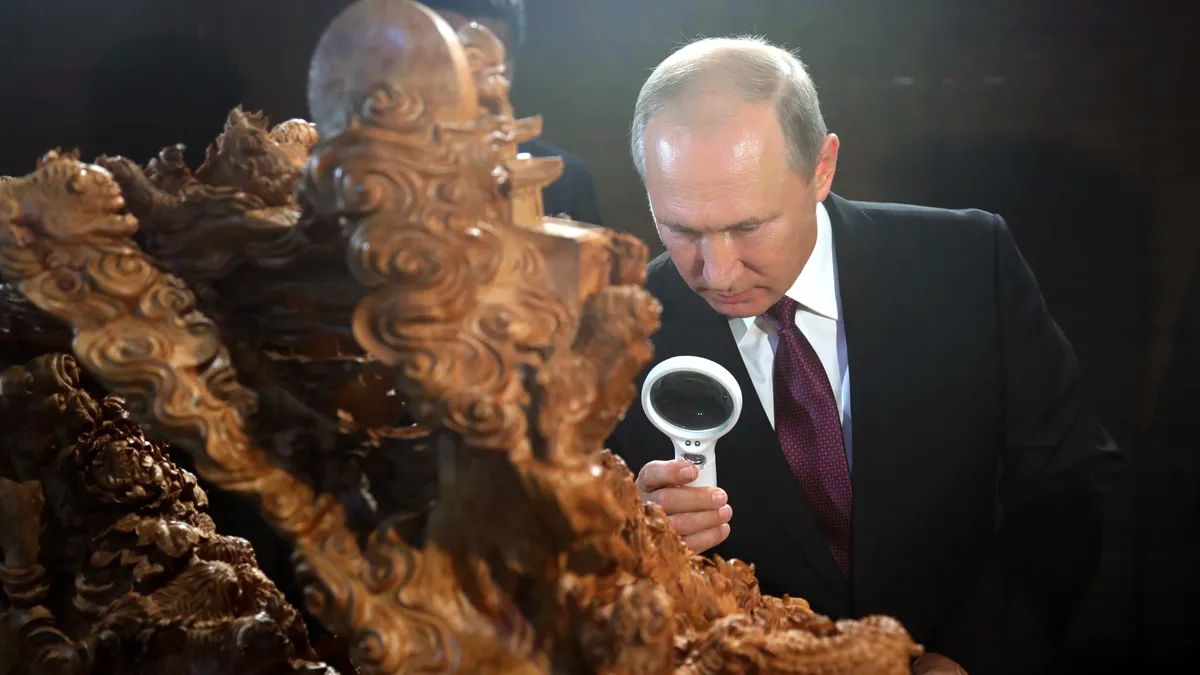
On Tuesday Vladimir Putin will host the 2024 BRICS (Brazil, Russia, India, China and South Africa) summit. It will be the first annual meeting to include the four new members — Egypt, Ethiopia, Iran, and the United Arab Emirates — that joined last year, and many other countries also reportedly will participate. But what will come of it?
Jim O'Neill
Jim O'Neill
Former UK treasury minister

The BRICs were originally an acronym that I used, in 2001, to describe what I saw as the world’s key emerging economies. But former Russian Foreign Minister Igor Ivanov and his Brazilian counterpart, Celso Lafer, had the idea of building on my coinage, and the BRICs turned themselves into a political club, adding South Africa in 2009.

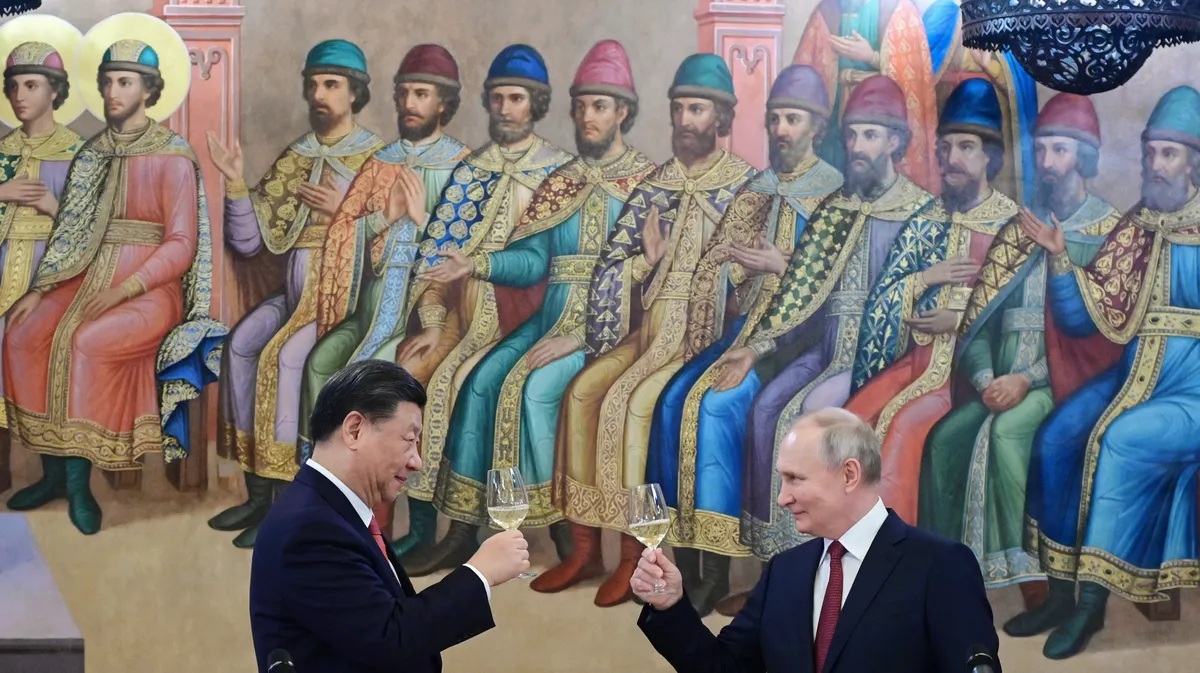
Putin undoubtedly will use this year’s summit to signal to the world that he is not as isolated as Western governments want him to be. It is an ideal occasion for him and other leaders to promote a vision of a world that the US does not lead.

But it is worth noting that two other countries that were expected to join the expanded BRICS have not done so. After originally accepting the invitation, Argentina reversed course following Javier Milei’s election as president in 2023; and Saudi Arabia still has not decided what it will do.

One can guess why the kingdom would be reluctant to join. It still prizes its defence and security alliance with the US, and those ties will grow even stronger if it ever normalises relations with Israel. More to the point, it is not clear what the Saudis, or any others, stand to gain from BRICS membership.

To be sure, there are photo ops. BRICS+ leaders can stand alongside Putin and decry their countries’ underrepresentation in many of the big global governance organisations. They do this every year, and it appears to be one of the only real achievements that comes out of each meeting.

Meanwhile, the BRICS have done nothing to effect meaningful organisational or structural change within international institutions. In fact, they have done exactly the opposite. Owing to the evolving geopolitics around Ukraine and the rise of more nationalistic leaders in the West and within the BRICS, international institutions have been rendered even less effective.

Pulling the strings
читайте также

Pulling the strings

Russia’s economic dependence on Beijing has given China the power to end the war in Ukraine

The fact is that truly global challenges cannot be addressed through narrow groupings like the BRICS, or the G7 for that matter, and this will remain the case no matter how many members they add.

What we really need is a rejuvenated G20, which proved highly effective in its earliest days, following the 2008 financial crisis. Despite being rather large —it includes all members of the G7 and the BRICS — it best reflects today’s world in all its complexities.

Moreover, it is not clear to me that the BRICS had ever shared a purpose beyond symbolism. There are many areas where it could pursue collective action to benefit its members and the rest of the world. These include, but are not limited to, advocating freer trade among themselves — and others — and making stronger commitments to fight climate change and infectious diseases.

Until the two most important members, China and India, can agree to cooperate on joint initiatives, the BRICS will have almost no chance of delivering on its stated ambitions.
True, the launch of the New Development Bank, which was originally called the BRICS Bank, was a positive development, but the institution has never had a clear, powerful mandate linked to shared goals.

The 2024 summit will surely include plenty of lofty statements about creating an alternative to challenge the US dollar-based global monetary system. But until the key members, namely China, are serious about opening up their own capital accounts and financial markets, this is not going to happen.

Similarly, until the two most important members, China and India, can agree to cooperate on joint initiatives, the BRICS will have almost no chance of delivering on its stated ambitions. As matters stand, these two major powers remain historic rivals, and have been engaged for years in military skirmishes along the Himalayan border.

For all these reasons, BRICS+ will come to little. The hodgepodge of new members appear to have been selected not for any long-term strategic reasons, but because they can be cajoled.

Egypt, Ethiopia and Iran may be among the 12 largest emerging economies in terms of population, but they are hardly the most dynamic; equally, the UAE is much wealthier than the others, but it is a very small country. Where are Mexico, Indonesia, and the other exciting Asian economies from the top 12?

The answer hardly matters. Even if they — along with Bangladesh, Nigeria, Pakistan, the Philippines, Turkey, South Korea and Vietnam — did join, the result would be little more than larger summits. The G20 would still be the more appropriate and effective vehicle for multilateralism.

Friends like these
читайте также

Friends like these

Putin’s mutual defence pact with Kim Jong Un presents an opportunity for the West

This article was first published by Project Syndicate. Views expressed in opinion pieces do not necessarily reflect the position of Novaya Gazeta Europe.

Поделиться
Больше сюжетов
Что Украина и США обсуждали в Берлине

Что Украина и США обсуждали в Берлине

Компромисс по «мирному плану» до сих пор не найден: американская сторона требует, чтобы Киев уступил Донбасс, Зеленский это отвергает

Похищение игрока, провал Карпина и сенсация из ниоткуда

Похищение игрока, провал Карпина и сенсация из ниоткуда

Российский футбол даже в изоляции оказывается в центре внимания. Что в нем произошло за последние полгода?

Палачи и жертвы

Палачи и жертвы

В годы Большого террора чекистов, истязавших людей, часто тоже пытали и расстреливали. Это называется «экосистемой насилия»

Научный занавес

Научный занавес

Российским ученым усложняют сотрудничество с иностранными коллегами. Историк Рустам Александер вспоминает, как это работало в СССР

Евгения Хасис рассказала в интервью Собчак о подготовке к убийству Маркелова и Бабуровой, желании пойти на «СВО» и отношении к национализму сейчас

Евгения Хасис рассказала в интервью Собчак о подготовке к убийству Маркелова и Бабуровой, желании пойти на «СВО» и отношении к национализму сейчас

Главное из интервью

Великий выдумщик

Великий выдумщик

Умер Фрэнк Гери — один из самых известных современных архитекторов. Одни называли его работы революцией, другие — безумием

«Вежливые люди» захватывают Финляндию

«Вежливые люди» захватывают Финляндию

Сериал «Конфликт» о повторении крымского сценария вышел в России. В версии с цензурой нет упоминания армии РФ

На языке пламени

На языке пламени

«Литературная политика Третьего рейха» — исследование о том, как Гитлер вел войну с книгами и что из этого вышло

Между самодержавием и самовластием

Между самодержавием и самовластием

Академик Юрий Пивоваров рассуждает о маятнике русской истории