The lightning-fast collapse of the Assad regime in Syria has sent shock waves through the Middle East as the removal of the dictator whose family had ruled the country with an iron fist for more than half a century triggers a potentially seismic shift in the regional balance of power.

Stefan Wolff
Stefan Wolff
Professor of International Security, University of Birmingham

But there are also important repercussions beyond Syria and its neighbourhood, with Russia one of the more significantly affected powers.

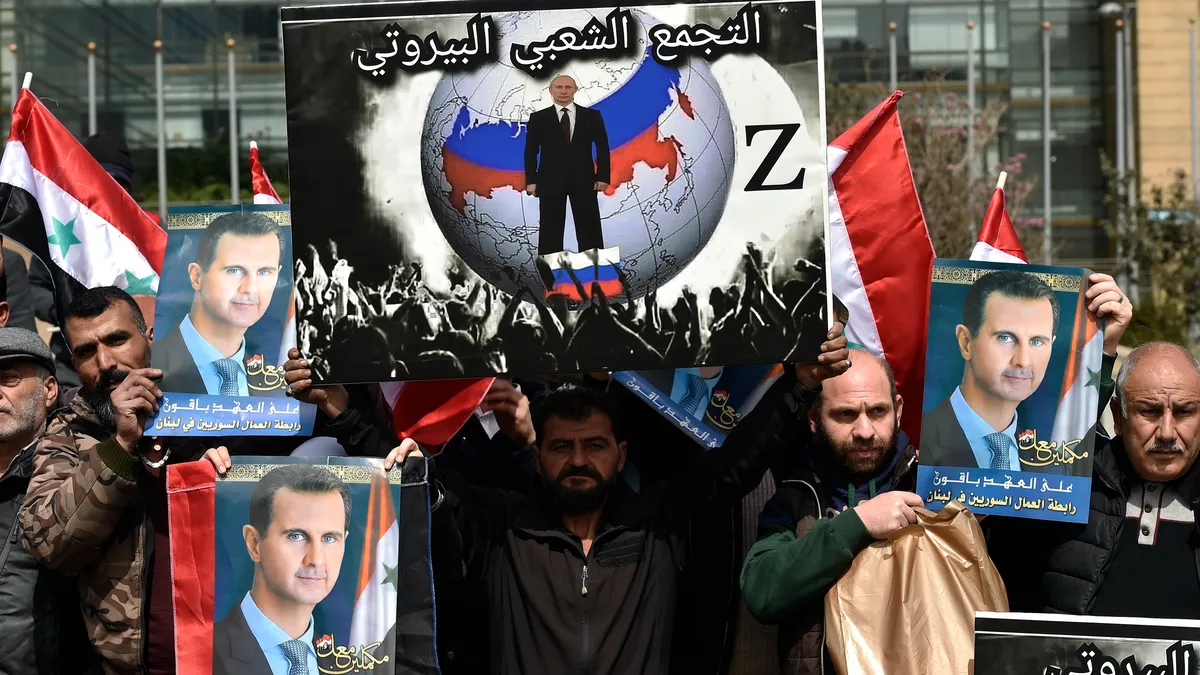
Back in 2015, when Assad’s regime was on the brink of collapse, it was saved by Russian military intervention, with support from Iran and Hezbollah. Launched in the context of a growing threat from Islamic State, Russia enabled Assad’s regime to push back other rebel forces as well.

Over the years that followed, Moscow enabled Assad to consolidate control over the capital and other key cities, and, in particular, in the coastal region where Russia had two military bases.

The fact that Moscow was unable to save an important ally like Assad exposes critical weaknesses in Russia’s ability to act, rather than just talk, like a great power.

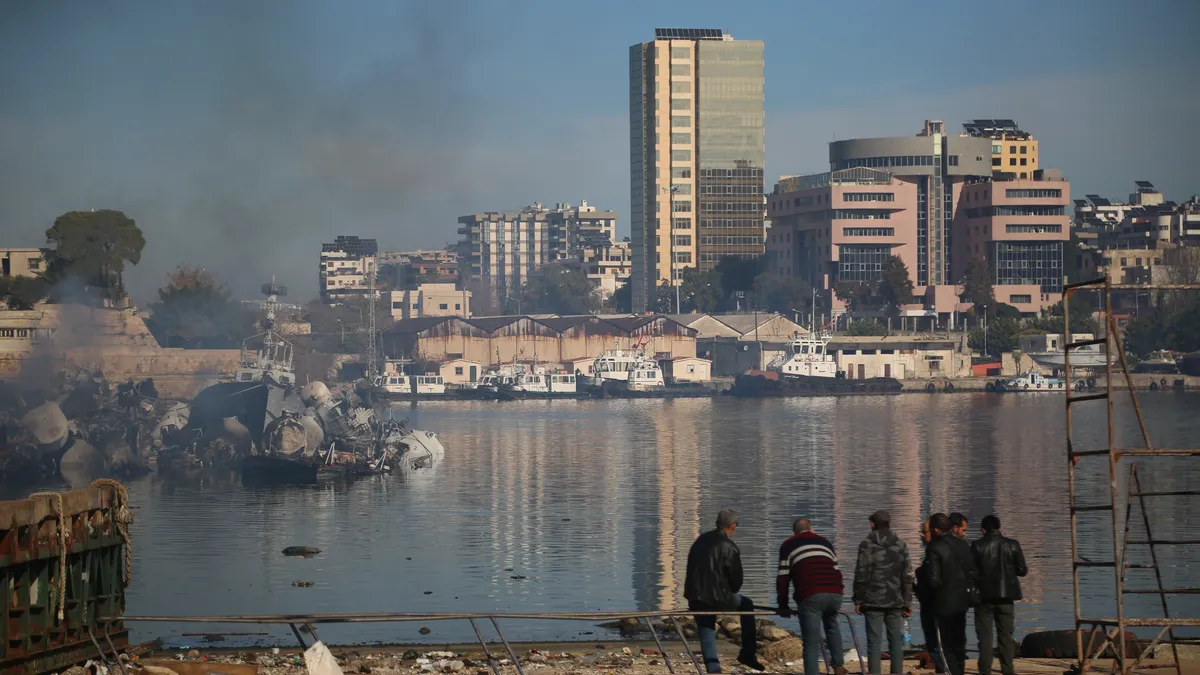
The future of these bases is now uncertain. The Russian naval base in Tartus — which dates back to Soviet times — as well as an air base at Hmeimim, established to the southeast of Latakia in 2015, were vital assets for Russia to project military force in the Mediterranean sea and bolster the Kremlin’s claim to Russian great-power status.

Given the importance of the bases for Russia and the significant investments made over the years propping up the regime, Assad’s fall reflects badly on Russia’s capabilities to assert credible influence on the global stage.

Even if Russia somehow manages to negotiate a deal with Syria’s new rulers over the future of its military bases, the fact that Moscow was unable to save an important ally like Assad exposes critical weaknesses in Russia’s ability to act, rather than just talk, like a great power.

There are clear intelligence failures that either missed or misinterpreted the build-up of anti-Assad forces by Qatar, with Turkey’s tacit support. These failures were then compounded by diminished Russian military assets in Syria and an inability to reinforce them at short notice. This is, of course, due to Russia’s ongoing war against Ukraine.

The depletion of the military capabilities of two other Kremlin allies in the region — Iran and Hezbollah — further compounded the difficulties for Assad and exacerbated the effect of Russia’s overstretch. This also raises the question of whether Russia strategically misjudged the situation and underestimated its vulnerability in Syria.

But even more so, it highlights Russia’s own dependence on allies who do not simply acquiesce to Moscow’s demands — as Assad did when he provided Russia its military bases — but who actively support a wannabe great power that lacks some of the means to assert its claimed status — as Iran and Hezbollah did in 2015.

For all the talk of a “no limits” partnership between Moscow and Beijing, China ultimately did nothing to save Russia from an embarrassing defeat in Syria.
Missing from this equation is China. While Beijing had sided with Assad after the start of the Syrian Civil War, this support was mostly of the rhetorical kind. It was mainly aimed at preventing a UN-backed, Western-led intervention akin to the one in Libya that led to the fall of Gaddafi and has plunged the country into chaos ever since.

A high-profile visit by Assad to China in September 2023 resulted in a strategic partnership agreement, which seemed to signal another step towards the rehabilitation of the Syrian regime, in Beijing’s eyes at least. But when push came to shove and Assad’s rule was under severe threat, China did nothing to save him.

This raises an important question about the Chinese judgment of the Syrian regime and the evolving crisis, but there is also a broader point here regarding Russia’s great-power ambitions.

For all the talk of a “no limits” partnership between Moscow and Beijing, China ultimately did nothing to save Russia from an embarrassing defeat in Syria. Where Russia needed a military presence to bolster its claims to great-power status, Chinese interests in the Middle East are primarily about economic opportunity and combatting the perceived threat of Islamist terrorism.

This clearly limited Beijing’s appetite to become more involved, let alone to bail out Assad.

Russia’s position in the Middle East now is in peril. Moscow has lost a key ally in Assad and its other main allies, Iran and Hezbollah, are significantly weakened. By contrast, Israel and Turkey, with whom the Kremlin has not had easy relations over the past few years, have been strengthened.

This exposes the hollowness of Russian claims to great-power status. It is also likely to further diminish Russian prestige and the standing that it has in the eyes of its other partners — whether that be China, North Korea, its fellow BRICS members, or countries in the Global South that Russia has recently tried to woo.

The consequences of that for Ukraine — arguably the main source of Russia’s over-stretch — are likely to be negligible. On the one hand, the ease with which Assad was deposed demonstrates that Russia is not invincible and that its support of brutal dictatorships has limits. On the other hand, there should now be no expectation of anything other than Russia doubling down in Ukraine.

Putin needs a success that restores domestic and international confidence in him — and fast. After all, Donald Trump does not like losers.

This article was first published by The Conversation. Views expressed in opinion pieces do not necessarily reflect the position of Novaya Gazeta Europe.

Поделиться
Больше сюжетов
Что Украина и США обсуждали в Берлине

Что Украина и США обсуждали в Берлине

Компромисс по «мирному плану» до сих пор не найден: американская сторона требует, чтобы Киев уступил Донбасс, Зеленский это отвергает

Похищение игрока, провал Карпина и сенсация из ниоткуда

Похищение игрока, провал Карпина и сенсация из ниоткуда

Российский футбол даже в изоляции оказывается в центре внимания. Что в нем произошло за последние полгода?

Палачи и жертвы

Палачи и жертвы

В годы Большого террора чекистов, истязавших людей, часто тоже пытали и расстреливали. Это называется «экосистемой насилия»

Научный занавес

Научный занавес

Российским ученым усложняют сотрудничество с иностранными коллегами. Историк Рустам Александер вспоминает, как это работало в СССР

Евгения Хасис рассказала в интервью Собчак о подготовке к убийству Маркелова и Бабуровой, желании пойти на «СВО» и отношении к национализму сейчас

Евгения Хасис рассказала в интервью Собчак о подготовке к убийству Маркелова и Бабуровой, желании пойти на «СВО» и отношении к национализму сейчас

Главное из интервью

Великий выдумщик

Великий выдумщик

Умер Фрэнк Гери — один из самых известных современных архитекторов. Одни называли его работы революцией, другие — безумием

«Вежливые люди» захватывают Финляндию

«Вежливые люди» захватывают Финляндию

Сериал «Конфликт» о повторении крымского сценария вышел в России. В версии с цензурой нет упоминания армии РФ

На языке пламени

На языке пламени

«Литературная политика Третьего рейха» — исследование о том, как Гитлер вел войну с книгами и что из этого вышло

Между самодержавием и самовластием

Между самодержавием и самовластием

Академик Юрий Пивоваров рассуждает о маятнике русской истории