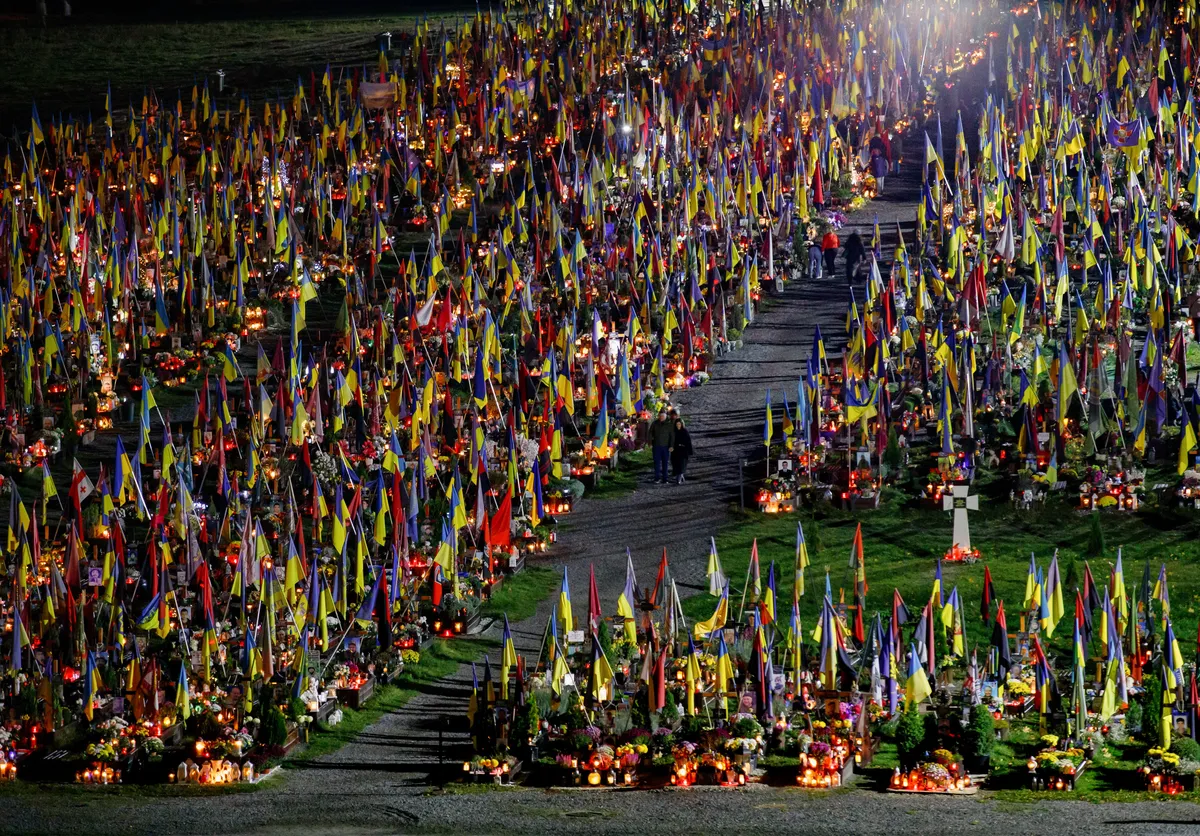
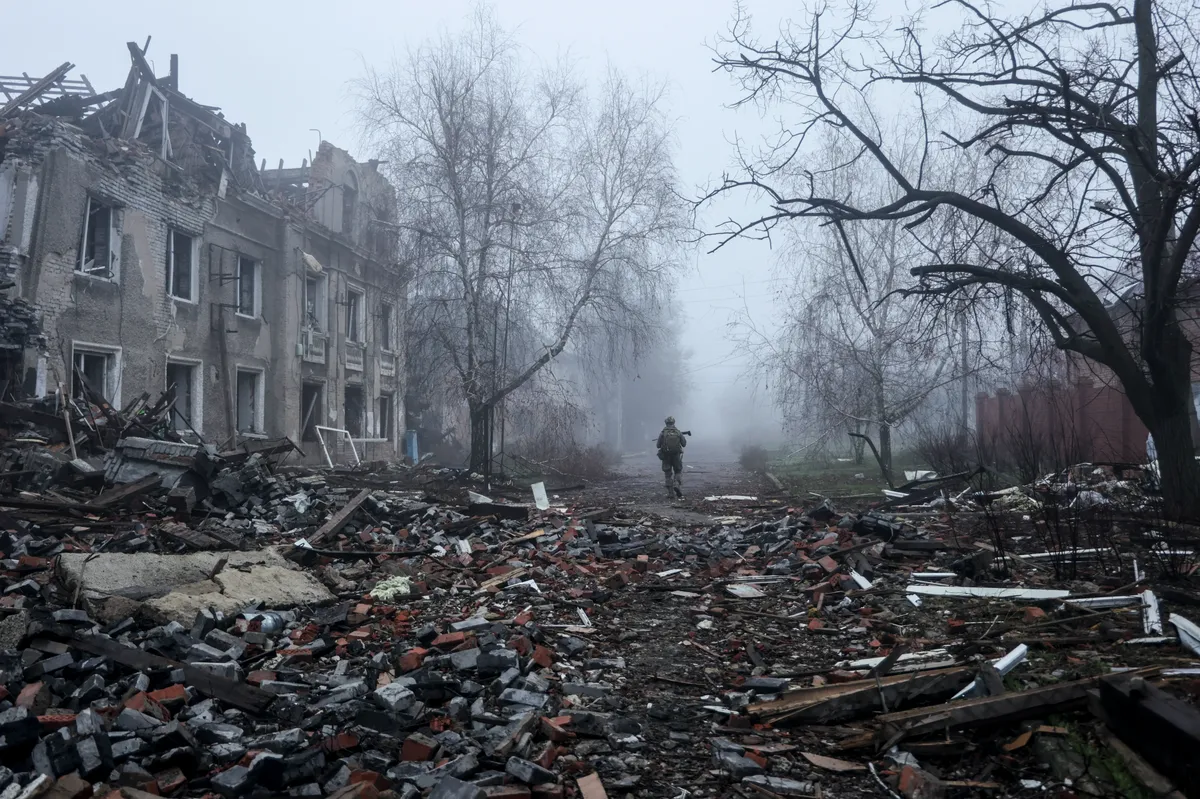
The past year has been the most challenging for Ukraine since the full-scale Russian invasion began on 24 February 2022, with Donald Trump’s return to the White House throwing the continuation of years of Western military and financial support for Kyiv into doubt.
Trump’s deep-held belief that might is right has further emboldened Vladimir Putin, both on the battle field and at the negotiating table, and has led him to step up both his punishing military campaign in Ukraine as well as his provocations against Europe.

This, in turn, has left Ukrainian President Volodymyr Zelensky in his weakest position since the beginning of Russia’s full-scale invasion almost four years ago, having lost the support of Washington, once his staunchest and most generous ally, and with his European allies in NATO thrown into disarray by Trump’s undisguised disdain for both the post-war consensus and Transatlanticism.

Novaya Gazeta Europe’s English editorial team has selected 12 images that best tell the story of the past difficult year.

January

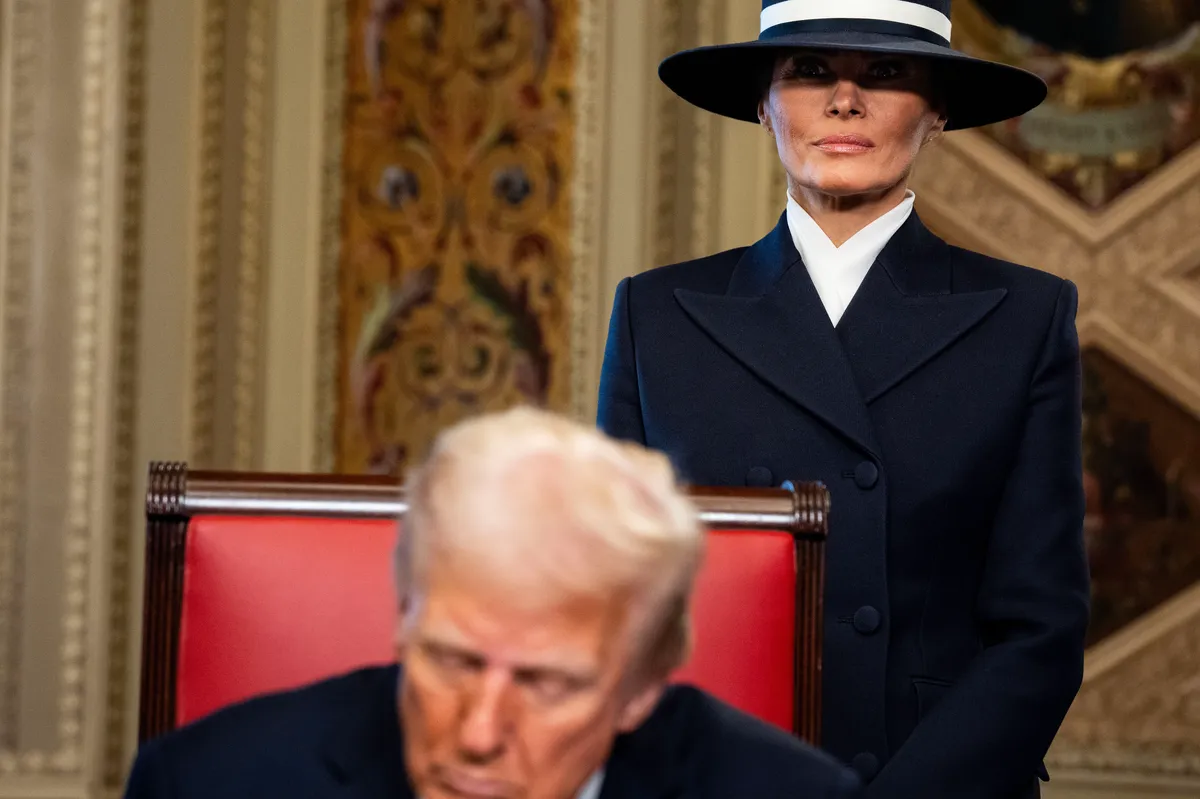
Donald Trump took the oath of office to become the 47th president of the United States on 20 January, heralding a return to the unpredictable geopolitics of his first term, in which Washington’s historic allies were often sidelined while autocrats and dictators were treated with flattery and favour.

Having made ending the war in Ukraine as quickly as possible one of his key campaign pledges, Trump set himself a goal of ending the conflict within six months, despite having repeatedly bragged while on the campaign trail that he could end the conflict within 24 hours of taking office.

For Ukrainians, any hopes that Trump could bring a swift resolution to the almost three-year war were overshadowed by fears that he would demand Kyiv make territorial concessions in any peace deal with Russia.

February

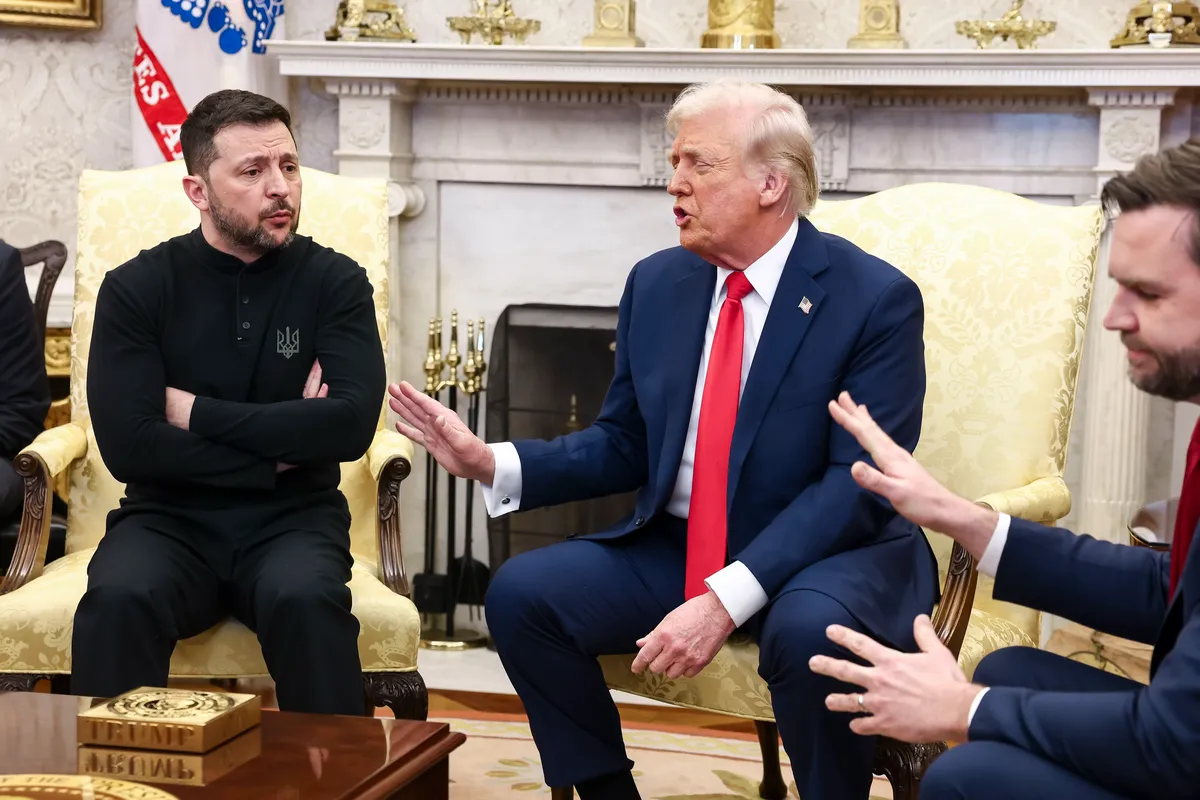
Perhaps the most notorious international incident of the year took place in full view of the world’s press on 28 February, when a meeting between US President Donald Trump and Ukrainian President Volodymyr Zelensky deteriorated into an undignified shouting match, thanks largely to the ad hominem attacks on the Ukrainian leader being launched by US Vice President JD Vance.

“Have you said thank you once?” Vance asked Zelensky, while Trump berated the Ukrainian leader for his reluctance to accept ruinous Russian terms to end the war, claiming he had “no cards” in the peace negotiations and was “gambling with the lives of millions of people” and potentially risking the start of “World War III”.

Though Zelensky subsequently managed to get his relations with the Trump administration back on track through careful management of Trump’s ego, Ukraine still remains the underdog in the still-ongoing attempts by US diplomats to fashion a peace plan that would be acceptable to both Kyiv and Moscow, and the disastrous February meeting served to show the world just how far Washington’s thinking on Ukraine had shifted since Trump’s return to office.

March

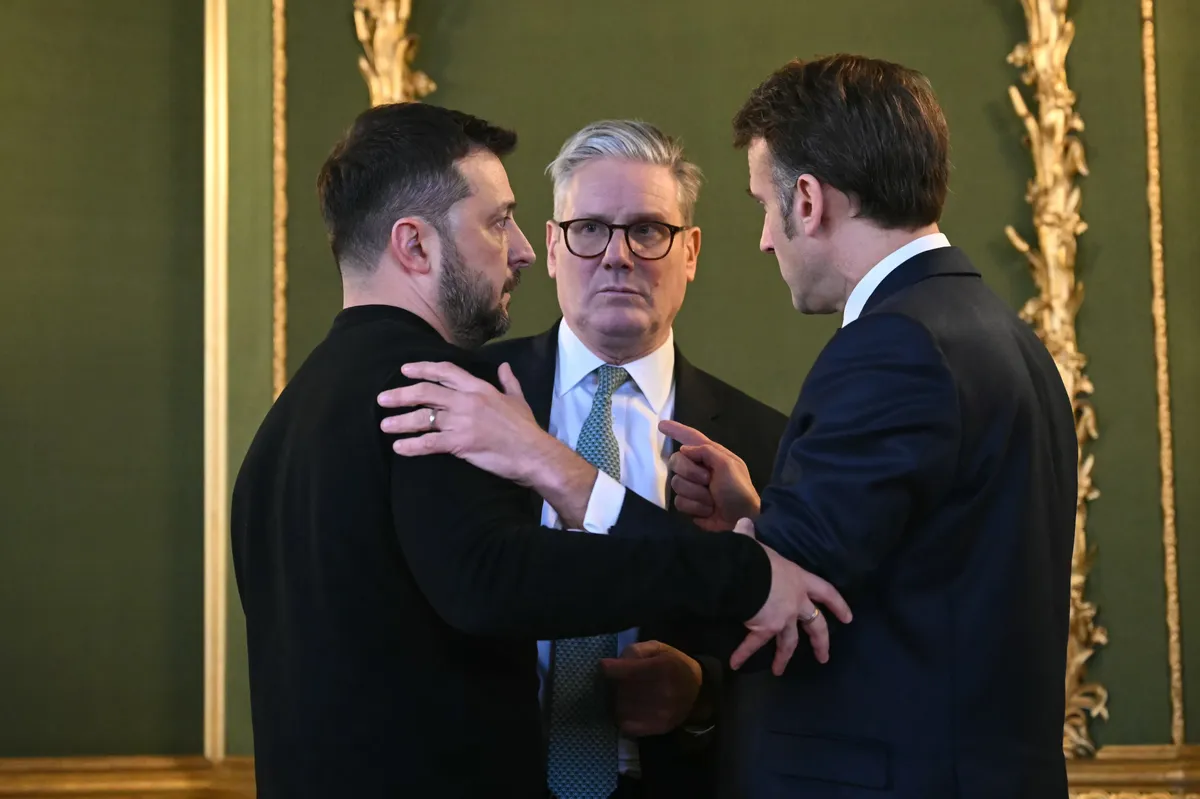
Just two days after the unprecedented clash at the White House, Zelensky attended a summit in London, where other world leaders, including British Prime Minister Keir Starmer, German Chancellor Olaf Scholz, French President Emmanuel Macron, and Canadian Prime Minister Justin Trudeau reaffirmed their support for Ukraine.

Europe has remained a steady ally to Ukraine throughout the year, with seven European leaders travelling to Washington in August to show their support for Zelensky as he met again with Trump at the White House. European NATO members also pledged to purchase US weapons for Ukraine in July, while EU leaders agreed to lend Ukraine some €90 billion in December to support its ongoing war effort and plug deep holes in the country’s budget.

However, it remains to be seen just to what extent European support can influence Ukraine’s position amid Washington’s inconsistent support and Moscow’s apparent desire to exclude Europe from peace negotiations.

April

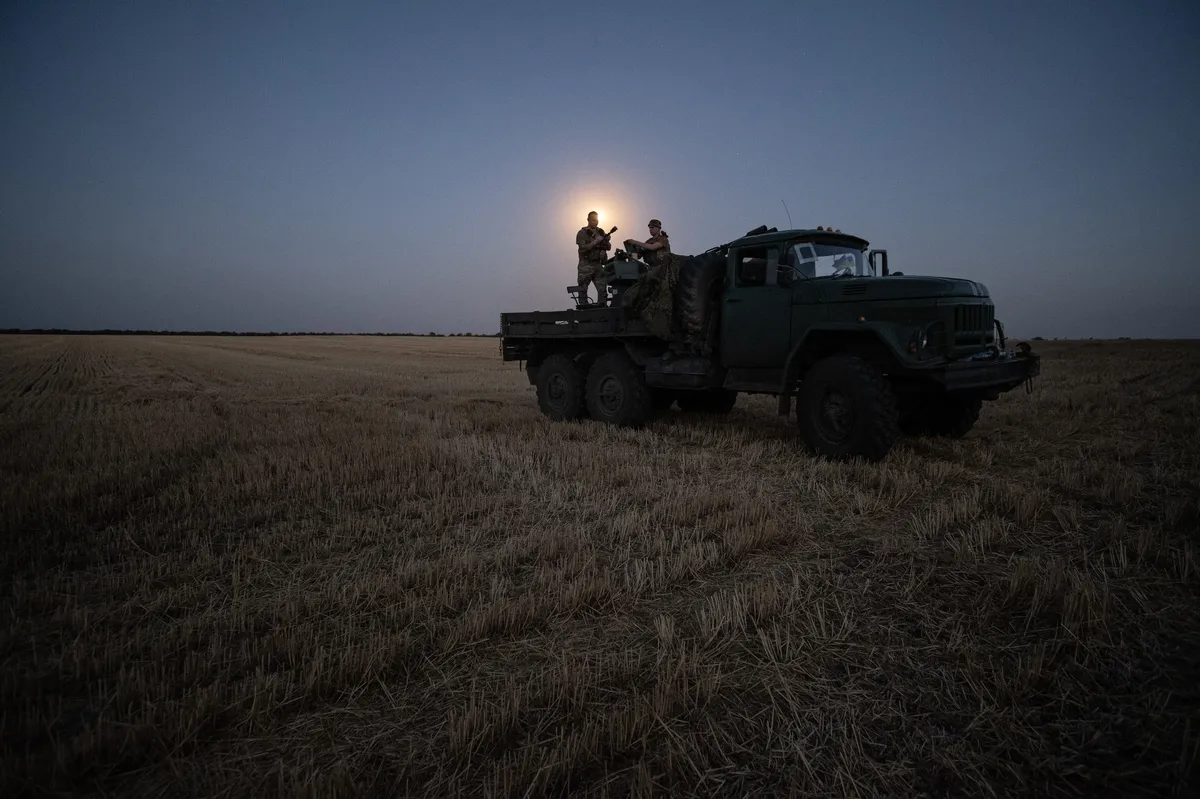
The balance of power on the frontline in Ukraine visibly shifted following Russia’s recapture — with the help of North Korean troops — of its western Kursk region, which Ukraine seized in mid-2024 and somehow managed to hold onto until April.

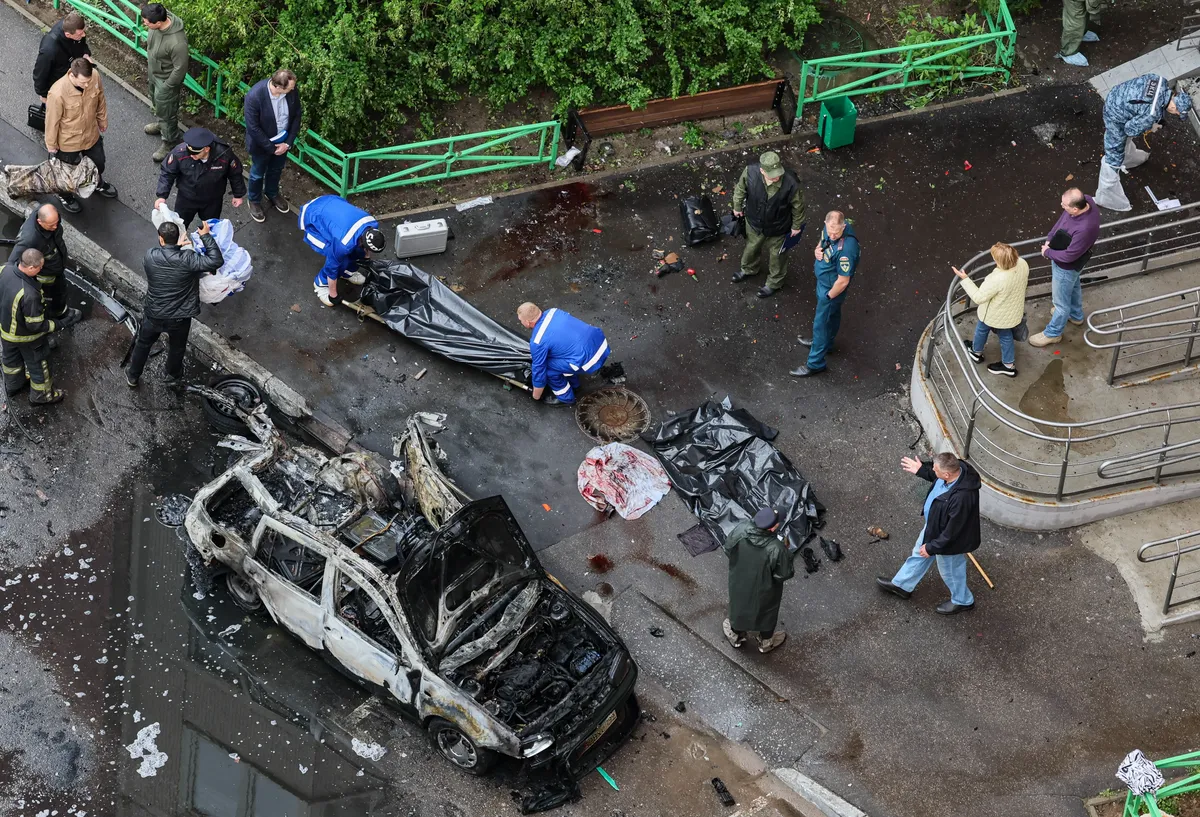
Nevertheless, there were still flashes of Ukrainian military genius this year, such as the targeted assassination of Yaroslav Moskalik, the deputy chief of the Main Operations Directorate of the General Staff of the Russian Armed Forces on 25 April, and Operation Spider’s Web, an unprecedented coordinated strike by the Security Service of Ukraine on multiple military targets deep inside Russia, which gave Ukrainian morale a much-needed boost and dealt the Kremlin a bloody nose in June.

May

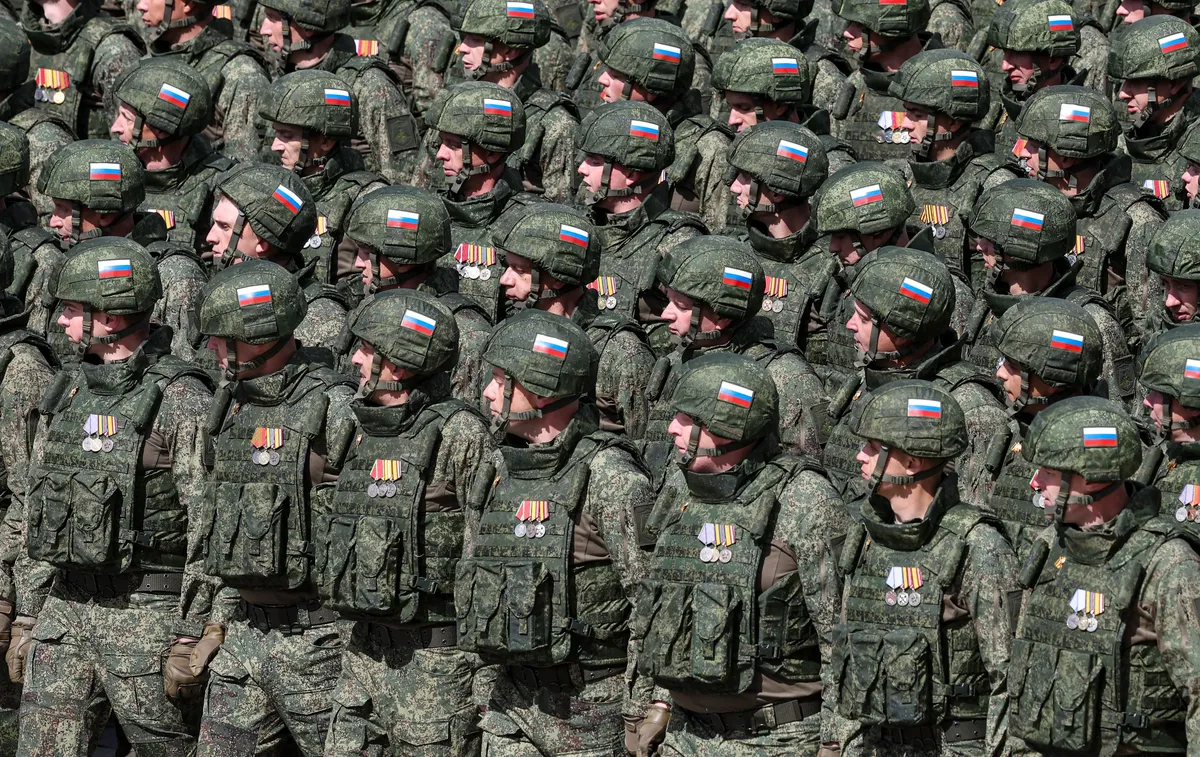
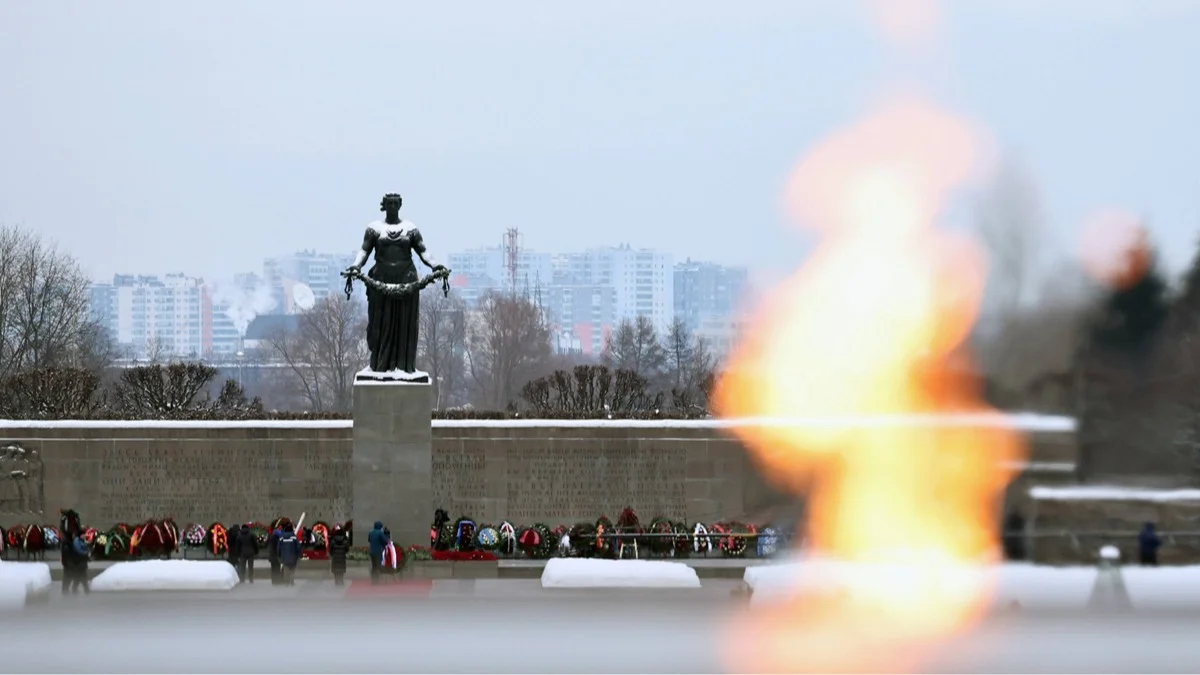
In May, Russia celebrated the 80th anniversary of the Soviet Union’s victory in World War II by holding a military parade on Moscow’s Red Square, which was attended by some 20 foreign leaders, whose presence was cited by Russian state media as evidence of the Kremlin’s thriving foreign relations.

The celebrations were somewhat marred by massive Ukrainian drone strikes in the run-up to the parade, which prompted Russian authorities to introduce mass cell service outages across the country for the first time this year. The Russian authorities shutting down mobile data services became common practice over the following months, and by July, Russia had set a new world record for sheer number of localised Internet shutdowns and restrictions it had introduced.

June

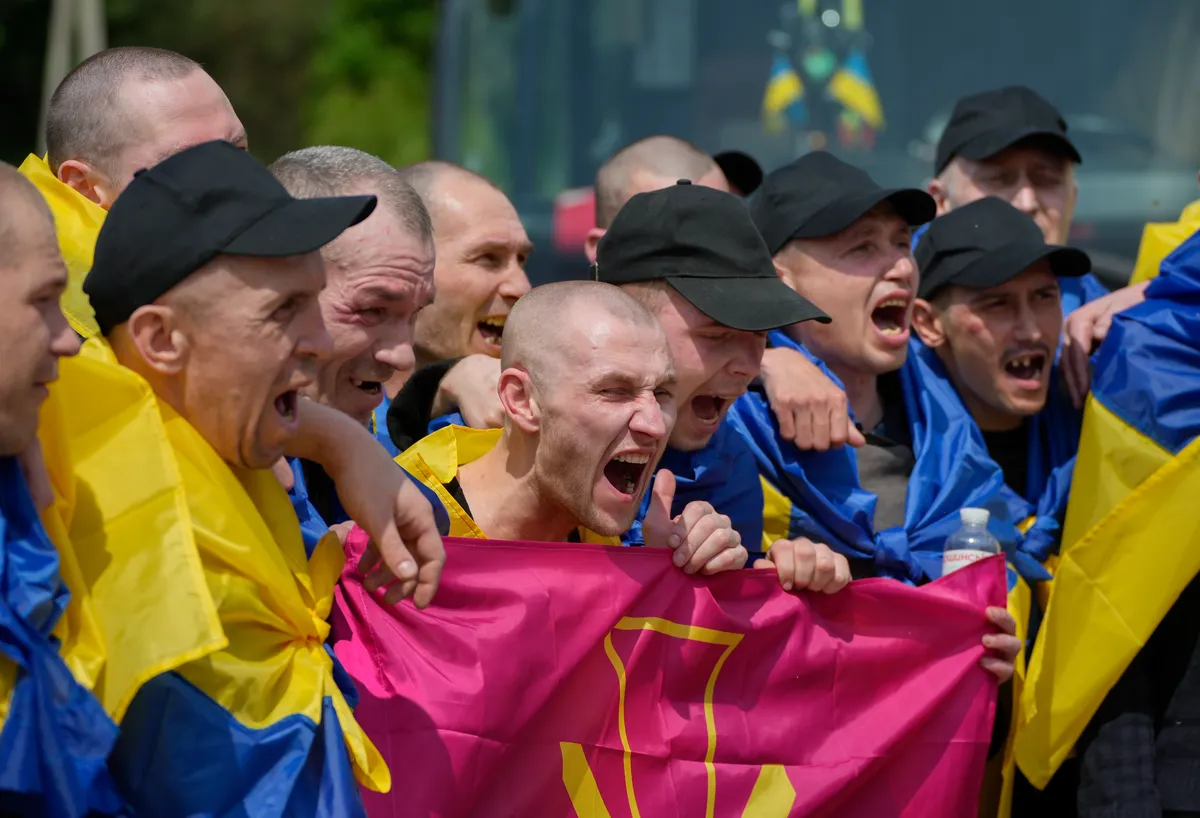
Although the first direct talks between Russian and Ukrainian delegations in three years in Istanbul did not bring peace in Ukraine any closer, negotiators agreed to a “1,000-for-1,000” prisoner of war (POW) exchange, which was carried out in May, and an “all-for-all” exchange for severely wounded and young soldiers, in which about 1,200 POWs were released by each side.

July

By July, however, Trump’s patience with Putin was clearly all but exhausted, with no progress made towards a ceasefire — something not even Trump’s umpteenth ultimatum to the Russian leader could change, leading him to approve the resumption of US arms deliveries to Ukraine.

August

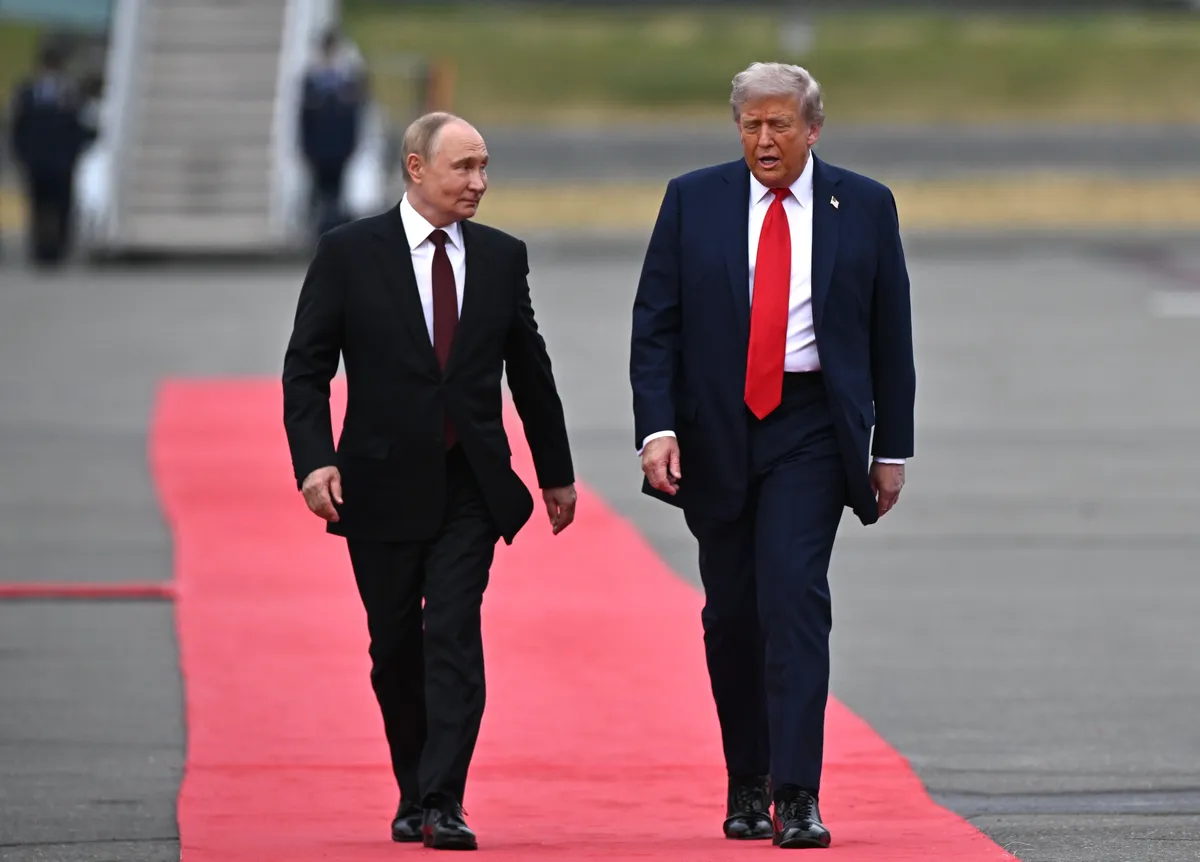
August saw the world’s attention focused on Alaska, where a now rather desperate Trump rolled out the red carpet for Putin on US soil for the beaming Russian leader, who clearly enjoyed what he saw as his readmission to the global statesman club. Despite the fact that Trump claimed “great progress” had been made, neither Putin nor Trump even mentioned a ceasefire in Ukraine in their remarks to the press afterwards, and neither took questions from the press.

The Alaska travesty was followed by Zelensky and Trump’s first Oval Office meeting since their public spat in February, only this time half of NATO’s leaders cleared their schedules at short notice to offer the Ukrainian leader their support. In the end, they needn’t have bothered, as by August Zelensky had become a master at handling Trump, and later hailed the encounter as his “best” meeting with the US president to date.

September

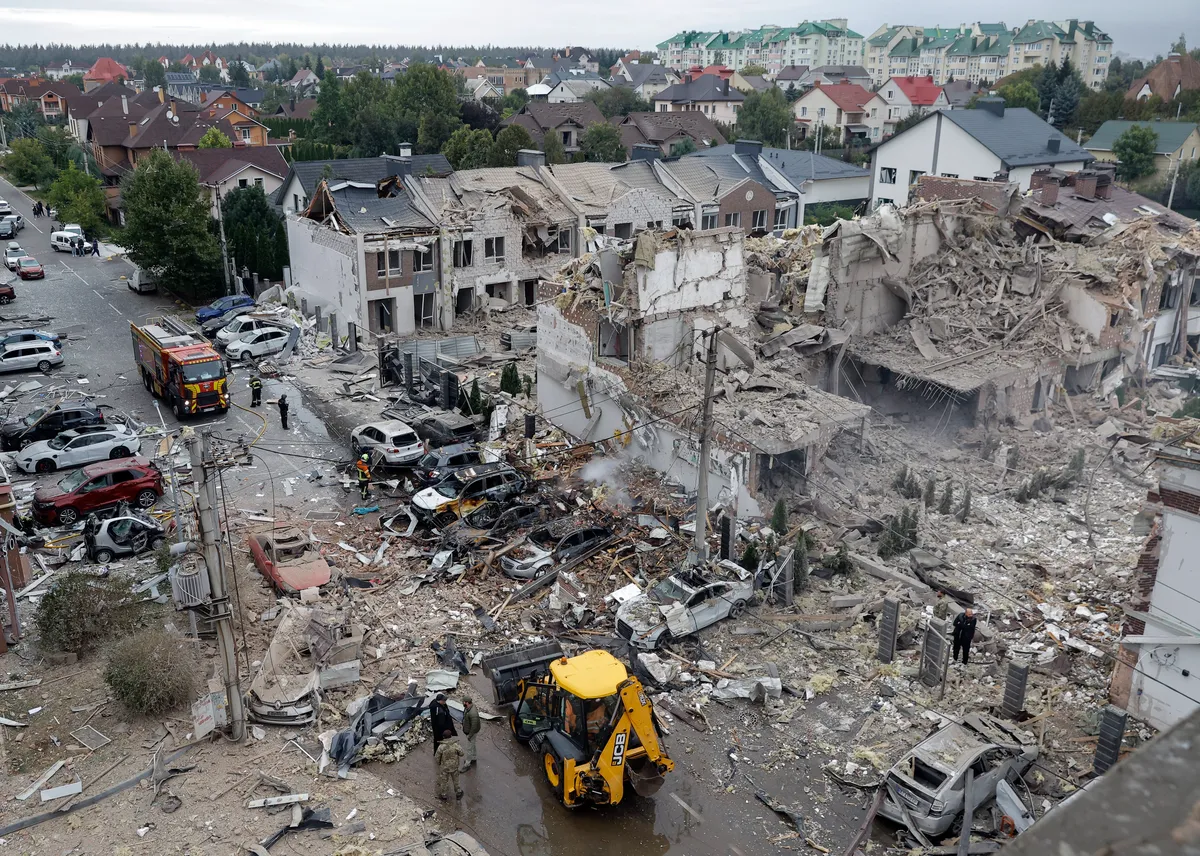
September saw a significant change in Russian tactics against Europe, with its military making multiple incursions into NATO airspace using drones, missiles and even aircraft, beginning with a 12-drone incursion into Poland that led Polish Prime Minister Donald Tusk to warn that the country was closer to military conflict with Russia than at any time in its post-war history.

Dozens of other similar provocations followed, while airports and military bases all over Europe were also subject to rogue drone use that most security analysts linked to Russian hybrid warfare tactics. Meanwhile, Russia continued to pummel Ukrainian cities, while Ukraine stepped up its campaign of drone strikes against Russian energy facilities.

October

Throughout the autumn, Trump continued to vacillate about supplying Kyiv with Tomahawk missiles, one of the few concrete steps the US could have taken to change the balance of power on the ground in Ukraine. Any hope that he would eventually choose to do so was wiped out in October following the US-brokered ceasefire agreement for Gaza, which saw Trump acquire a taste for being hailed as a peacemaker.

Since then, Trump has done little but schedule more and more meetings about ending the war in Ukraine, each of which inevitably led to undisclosed “great progress” towards a peace deal being made, despite none of Moscow and Kyiv’s diametrically opposed positions being even remotely altered. Meanwhile, the excrutiatingly slow and costly Russian advance in eastern Ukraine continued.

November

November saw Kyiv rocked with its biggest corruption scandal since the Russian invasion began almost four years ago, which led to the resignation of two ministers, the arrest of a former deputy prime minister, and, perhaps most significantly, the decision of Andriy Yermak, Zelensky’s close confidant and right-hand man, to step down as chief of staff after he had his own home and office searched by Ukraine’s powerful anti-corruption agencies.

December

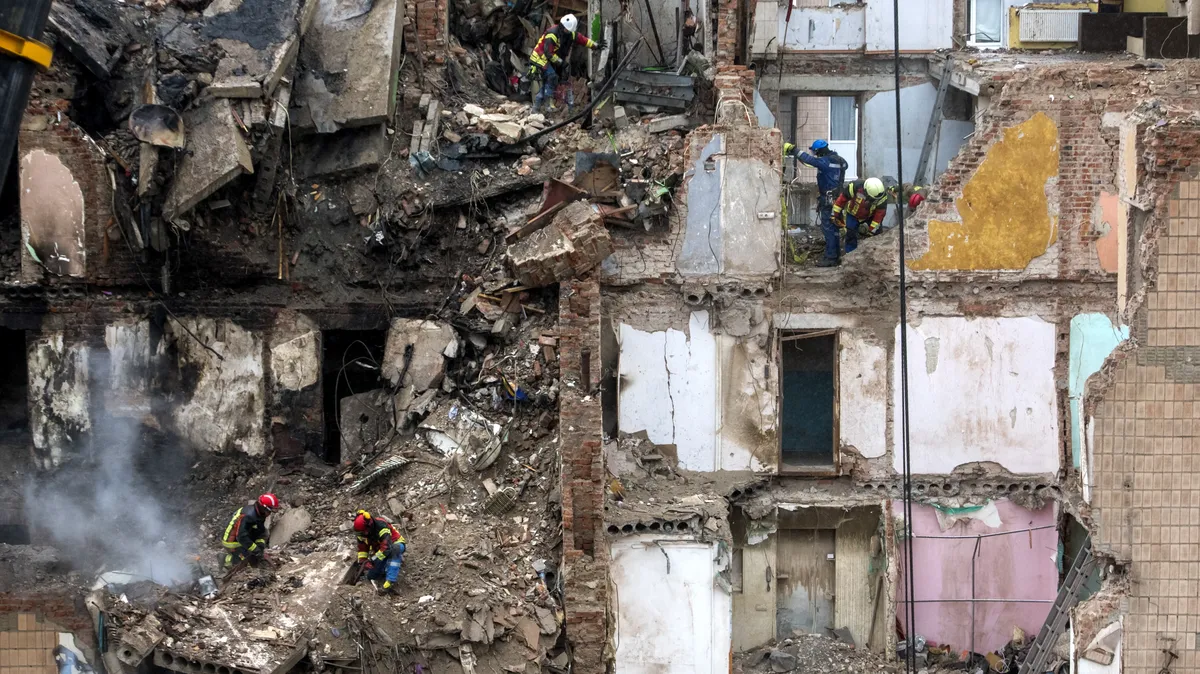
Russia continued to make significant progress in its bone-crushing advance in Donbas, with the Russian military announcing the fall of three key Ukrainian cities in December alone. This coupled with maximalist demands from Russia that Ukraine give up the entire Donbas to secure a peace deal, as well as the growing frustration (not to mention total indifference to justice) felt by Trump over Ukraine, leaves Zelensky in the weakest position he’s been in since the war began.

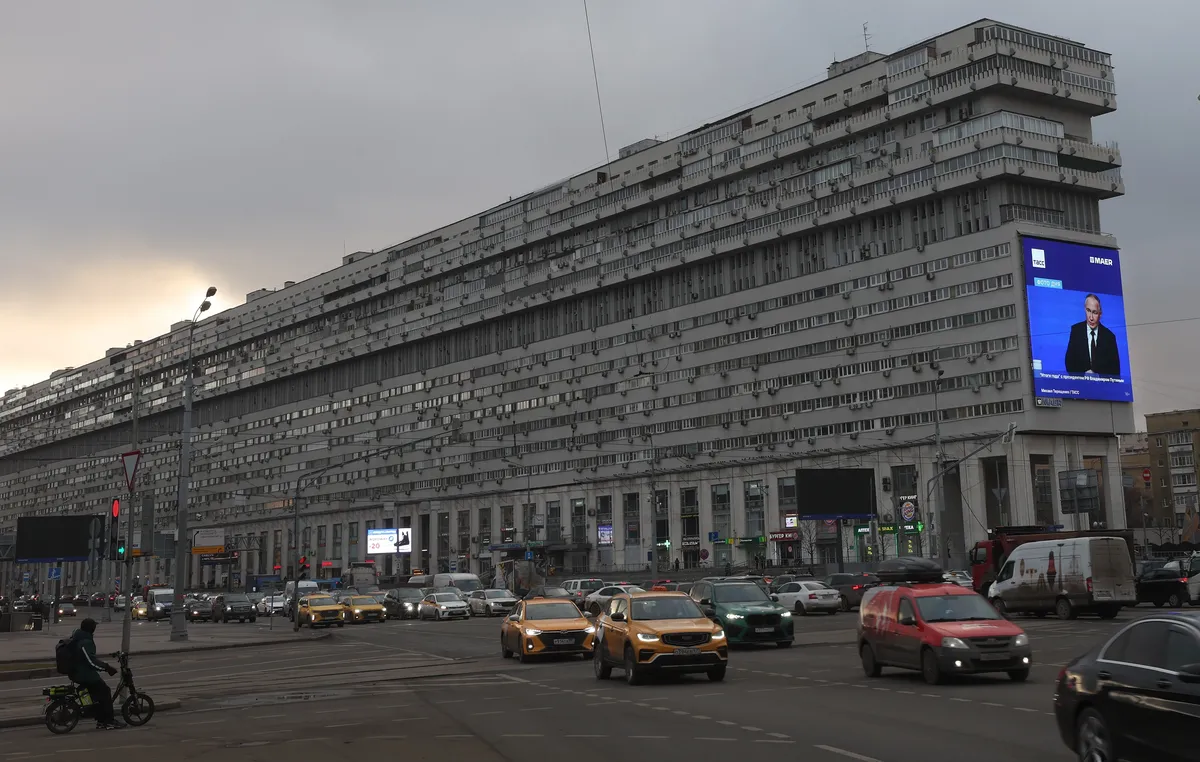
Meanwhile, Putin has managed to retain his iron grip on Russian politics, unchallenged domestically and with most of his political opponents either now dead, in prison or living in exile. As if to underline that fact, on 19 December, Putin took heavily vetted questions from members of the public live on Russian television for several hours, looking confident and relaxed in the 22nd such broadcast since 2001.

Поделиться
Темы
Больше сюжетов
Как хотят наказывать за «отрицание геноцида советского народа»

Как хотят наказывать за «отрицание геноцида советского народа»

«Новая-Европа» разбирается в новом законопроекте, жертвами которого могут стать журналисты, историки и учителя
Джей Ди Вэнс едет на Южный Кавказ

Джей Ди Вэнс едет на Южный Кавказ

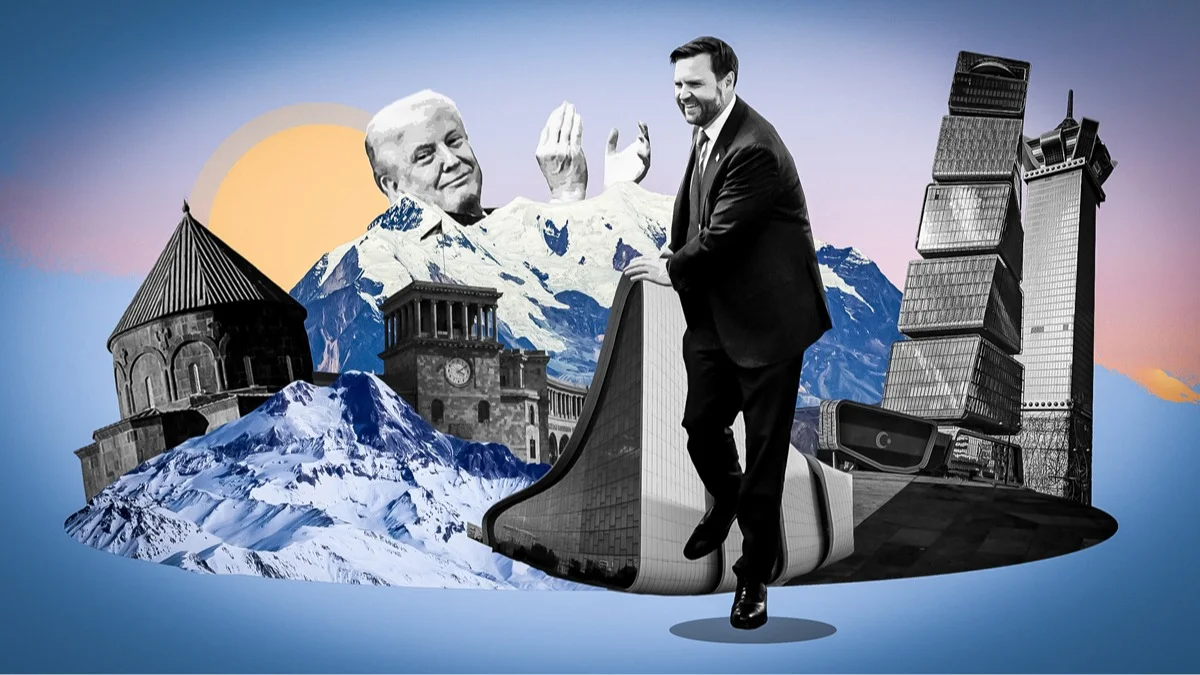
Каковы интересы Америки и какие новые геополитические смыслы обретает регион?
Маменькин сынок

Маменькин сынок

История «сибирского потрошителя» Александра Спесивцева
Разведка в Абу-Даби

Разведка в Абу-Даби

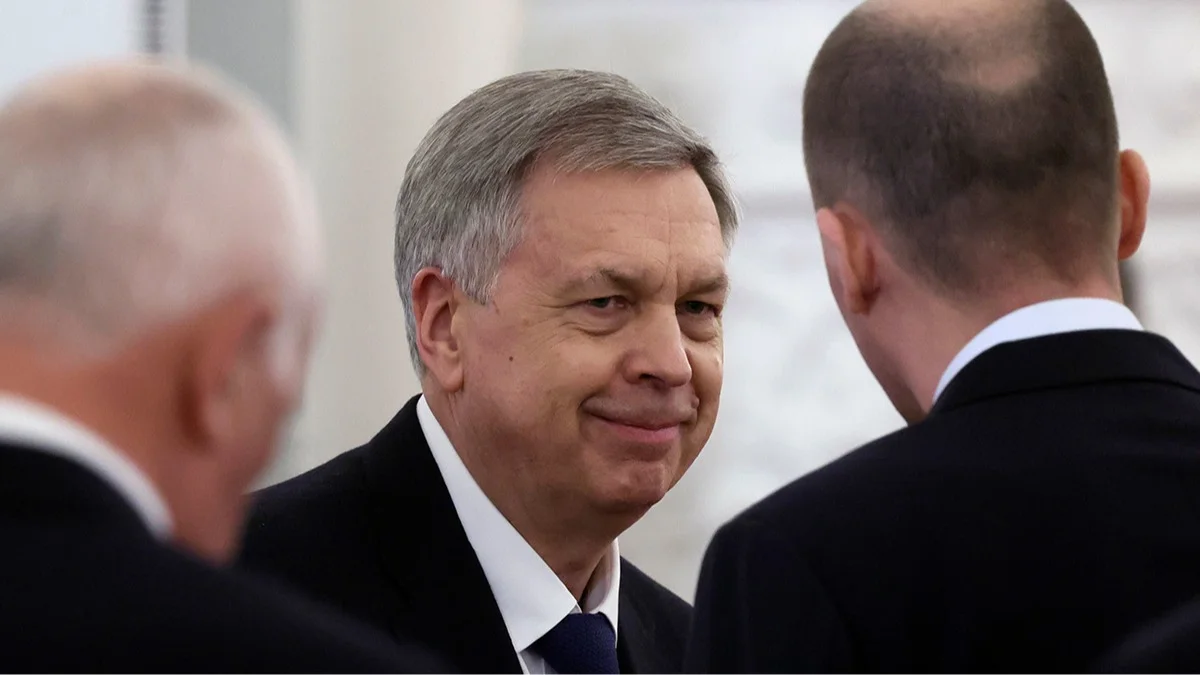
Кто такой Игорь Костюков — начальник ГРУ, возглавивший российскую делегацию на переговорах по Украине
Друзьям — деньги, остальным — закон

Друзьям — деньги, остальным — закон

Кто получает путинские гранты: от больницы РПЦ до антивоенных активистов
Три миллиона файлов по делу Эпштейна

Три миллиона файлов по делу Эпштейна

Трамп и другие контакты: что удалось обнаружить в новом и, возможно, последнем крупном массиве документов?
Поймай меня, если сможешь

Поймай меня, если сможешь

«Марти Великолепный» с Тимоти Шаламе — один из лучших фильмов сезона, рассказывающий историю об игроке в пинг-понг как криминально-авантюрную сагу
«Отношение к ним в Европе жестче, чем в первый год войны»

«Отношение к ним в Европе жестче, чем в первый год войны»

Что сейчас происходит с российскими дезертирами?
Что известно о ПНИ Прокопьевска, где из-за вспышки гриппа умерли девять человек

Что известно о ПНИ Прокопьевска, где из-за вспышки гриппа умерли девять человек

Сотрудники там жаловались на условия содержания пациентов: холод, испорченную еду и отсутствие лекарств