Cast off the lines!
Russia’s oligarchs have travelled Europe on their superyachts for years and now seek to avoid the war sanctions. We looked into their latest travels
A large portion of Russia’s establishment was sanctioned by the EU, the UK and/or the US. The West has declared a hunt for the assets of Russian oligarchs, including their yachts. A total of 16 yachts linked with people who are believed to be close to the Kremlin have been seized since 24 February. We have analysed almost 5 million km worth of travels made by 27 yachts de-facto owned by Russian oligarchs over the past 14 years. We found out how they tried to avoid the Ukraine War sanctions, where they loved to spend time before the war began and where do the “blind spots” in their routes come from.
The United States, as well as the United Kingdom and the European Union, imposed their third package of sanctions on 28 February, putting 160 Russian businesspeople and MPs on the list. The yachts of Russian oligarchs have started leaving the Seychelles and the Maldives in a hurry since 1 March to avoid potential seizure.
You may point your mouse on the anchor icon on the map for details.
Deripaska’s Clio headed for the Red Sea and reached the shores of Turkey via the Suez Canal. The crew switched off the ship’s transponder in the port of Lapseki near Istanbul on 18 April. The yacht was spotted in Sochi later in early May.
Nirvana, owned by Vladimir Potanin who was sanctioned by Canada, left the Maldives on 2 March, and headed for Dubai where it dropped its anchor on 8 March and has remained there ever since.
Abramov’s Titan left the Maldives for Dubai on 12 March as well. The ship set off for Turkey’s Bodrum on 25 April. It is now cruising along the Aegean shore of Turkey.
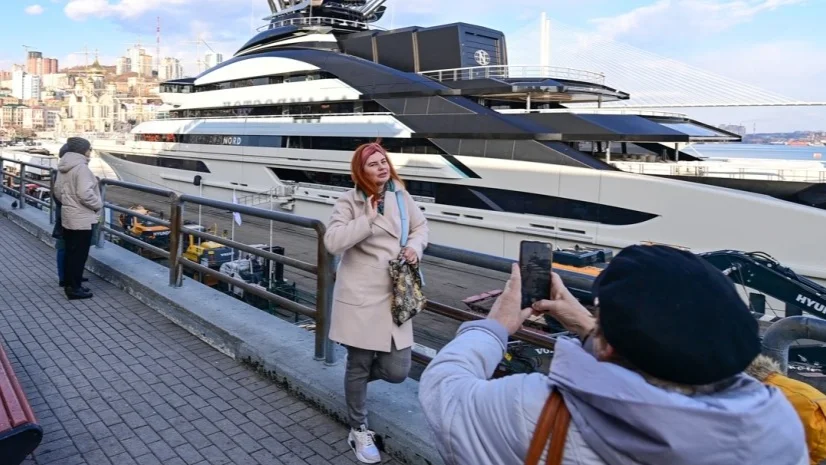
Nord departed from the Seychelles on 13 March and arrived in Russia’s Vladivostok on 31 March. It covered a distance of 10,300 km in just 18 days as it sailed through Malaysia, the South China Sea, went round Taiwan, then crossed the East China Sea and the Sea of Japan before reaching the Russian Far East. A crowd of photographers welcomed the superyacht in Vladivostok’s Golden Horn Bay. The luxurious ship quickly became a local attraction with people coming from other cities to take photos with it.
A few other billionaires also managed to save their yachts from seizure. Two ships owned by Roman Abramovich, Eclipse and Solaris, are now in the Turkish ports of Marmaris and Bodrum, respectively. Eclipse was forced to cross the Atlantic to reach the safe haven in Turkey. It departed from the Dutch island of Sint Maarten in the Caribbean on 4 March. Abramovich was seen in Turkey in person where he took part in the last session of face-to-face negotiations between Russia and Ukraine.
Galactica Super Nova, a 73 m yacht linked with Vagit Alekperov, the founder of Lukoil, was docked in Barcelona as of 24 February. It was planning to find shelter in Montenegro as the crew switched off the transponder on 2 March as the ship was approaching the port of Tivat. It is unknown where the ship is at the moment.
We did not manage to track the rest of the sanctioned yachts where transponders were switched off before setting sail. Rashnikov’s Ocean Victory disabled its transponder on 1 March near Malé, the Maldivian capital.
Alfa Nero, linked with Andrey Guryev, the former head of FosAgro, last transmitted its data on 1 March near Puerto Rico. Sky, linked with Igor Kesaev who owns Russia’s biggest tobacco distributor, stopped transmitting its location on 1 April near Panama.
However, many Russian yacht owners failed to avoid the sanctions and had their ships seized. Axioma, allegedly owned by Dmitry Pumpyansky of TMK, was one of such yachts.
When the invasion began, Axioma was leisurely cruising near Saint Barthélemy and Antigua & Barbuda in the Caribbean. The boat set sail on 7 March and headed for the Mediterranean. As it travelled across the Atlantic, Pumpyansky was sanctioned by both the EU and the UK. As a result, the yacht was seized by Gibraltar, a British Overseas Territory, on 21 March.
Amadea, a 106 m superyacht linked with Suleyman Kerimov, the former owner of Anzhi Makhachkala FC and currently a member of the Federation Council, Russia’s upper house of parliament, was also located in the Caribbean on 24 February, but opted for a different escape route. It started off the shore of Antigua and Barbuda and headed east. The yacht made it through the Panama Canal on 18 March, made a stop in Mexico and headed for Australia.
The ship reached Fiji in April and was ready to set sail for Vladivostok. This, however, never happened as the ship was seized upon the request of the United States on 14 April. The local court decided to hand the ship over to the US on 7 June as the ship’s maintenance drained too much money from the state budget. Amadea’s annual maintenance fee is believed to be between $25 and $30 million, according to the FBI.
The EU, US and UK seized a total of 16 superyachts linked with Russian billionaires. The estimated overall cost of the seized vessels is believed to be around $4 billion. 11 ships were seized in the ports of Spain, Italy and France. Two more yachts were seized in Germany where they underwent scheduled repair. The United Kingdom, Gibraltar and Fiji seized one vessel each. They will remain officially detained until their real owners are found.
How we managed to find out all of this
We analysed the routes the yachts have been following since 2008 and their “meeting points” using the coordinates provided by MarineTraffic. Then we superposed their routes on top of the territorial waters map. (The territorial waters area is an area 22 nautical miles away from the country’s shore). We also looked into where the yachts were on the first day of the Ukraine War and what escape routes those picked.
Additionally, we analysed when and where the yachts’ transponders were switched off. We counted areas where the yachts had their transponders switched off for longer than two days as the “blind spots” later in the text.
Where the Superyachts meet
Italy’s island of Sardinia is a hot spot for the Russian billionaires. Ten Russian oligarchs visited the island in the summer of 2016: Potanin, Abramov, Mikheev, Pumpyansky, Rashnikov, Timchenko, Chemezov, Mikhelson, Alekperov and Mordashov were all there.
Usmanov’s and Guryev’s yachts are Sardinia’s most frequent visitors, appearing there two years in succession at the same time. Usmanov’s ship appeared near the island together with Rashnikov’s and Mordashov’s yachts three years in a row.
Russia’s politicians and oligarchs are also keen on the Adriatic shore of Croatia and Montenegro. Their most popular destinations, judging by their yachts’ travels, are Dubrovnik, Cavtat and Plat, all in Croatia’s Dubrovnik exclave, as well as the Dalmatian Islands. The yachts on our list have entered the port of Dubrovnik on 134 occasions, spending at least 96 days there. Tivat is the oligarchs’ beloved location on the Montenegrin shore. The town has a huge marina for cruise ships. The yachts on the list have reached Tivat at least 183 times and spent a total of 1724 days there.
Croatia and Montenegro were the oligarchs’ beloved meeting location; they frequently switched off their transponders there.
Viktor Vekselberg and Roman Abramovich have had a “summer summit” in Dubrovnik almost every year; their yachts appeared there together in 2015, 2016, 2019 and 2020. Yachts linked with Deripaska, Alekperov, Abramov, Mikheev and Pumpyansky also joined them over the years. Scheherazade, linked with Vladimir Putin, joined the company in 2020 and 2021.
The Mediterranean Sea is the top priority for all the oligarchs. France, Italy and Spain have the best infrastructure for yachting, including the world’s best marinas, says Maria Moshkina of the Russian Yachts magazine. These countries have a jagged coastline and many isles; Europe’s noble high life is concentrated ashore.
The other options are Greece, Montenegro and Croatia. These countries offer cheaper maintenance and a rapidly developing yachting infrastructure.
Palma de Mallorca is the top destination for the Russian oligarchs. Located in the heart of the Balearic Sea, this port city is the capital of Spain’s autonomous community of the Balearic Islands. Lady Anastasia, linked with Aleksandr Mikheyev, director of Rosoboronexport, is a most frequent visitor of Palma. This is the yacht a Ukrainian citizen tried to sink recently.
A total of 27 superyachts owned by Russian oligarchs and officials entered Palma’s port on at least 329 occasions between 2008 and 2022. They spent at least 1928 days there in total. The nearby island of Ibiza turned out to be slightly less popular among the Russian oligarchs: only 106 visits and a total of 100 days on the record.
The French Riviera follows the two Spanish resorts in terms of popularity. The city of Antibes, located between Cannes and Nice, is of special importance. It is not overcrowded with tourists and has restricted recreation zones. The city’s coastline is filled with luxurious vacation homes.
This is where Cap-Eden-Roc, a high-end hotel featured in Tender Is the Night, a novel by F. Scott Fitzgerald, is located. Ernest Hemingway, Marc Chagall and Marlene Dietrich all stayed in the hotel at some point. The Antibes marine was visited by the Russian superyachts a total of 229 times and; they spent at least 1618 days there altogether.
The European infrastructure is not only about the best hotels and parties, but also the top-tier yachting docks. The French commune of La Ciotat near Marseille has the third most popular marina in our ranking. It also has Europe’s biggest port for repairing and maintaining the most luxurious superyachts. The Russian vessels have visited La Ciotat 216 times over the past 14 years, spending a total of 3645 days.
Superyachts are as complex as aircraft in terms of their configuration. They usually have lots of equipment installed: engines, pumps, water distillers, air conditioners, fire-fighting systems and navigational gadgetry. All this requires regular maintenance. Besides that, the ships often face aggressive environments when they travel across the subtropics.
Intensive UV radiation and hypersaline water erode the ship’s body. Therefore, a yacht needs to be docked once in a while to have its bottom cleaned and its upperworks polished. The superyachts of the Russian oligarchs were all maintained in Europe.
The most prestigious dockyards are located in Germany and the Netherlands. This is where the superyachts for Russian oligarchs are constructed, launched, maintained and upgraded. Other places capable of repairing yachts are Barcelona, La Ciotat, La Spezia, Genoa and other coastal cities in Spain, France and Italy. This is why the yachts in question spent so much time in those locations.
Le Lavandou is another popular commune near Marseille. This place took the fancy of Gennady Timchenko and his yacht Lena, named after his wife who owns 55% of shares at the luxurious Le Club de Cavalière hotel in Le Lavandou. This property was seized by the French authorities in April, just like Hôtel Le Grand Cœur & Spa in Méribel, also owned by Elena Timchenko.
Monaco is another beloved country for the Russian billionaires. All yachts on our list, excluding those of Vladimir Putin and Igor Sechin, visited the principality’s port, adding 192 visits and 576 days to the record.
The importance of the Mediterranean for the Russian oligarchs cannot be overestimated. The yachts spend at least 71% of their time in the European waters, including those of Sweden and the UK. Given that their time in the neutral waters, as well as the time spent with a switched off transponder does not make it count, this number might be way higher. These areas became unavailable to the Russian yachts after the sanctions were imposed. They are marked in red on our map to the right.
It is, however, impossible to get the full picture of the oligarchs’ voyages. The International Convention for the Safety of Life at Sea only allows captains to switch off the ship’s transponders in exceptional cases when navigational information may harm the ship.
However, the yachts of the Russian officials and oligarchs often neglect this and switch off their transponders to conceal their location. This is where the “blind spots” come from. They do not only appear in Europe; such spots can be discovered between Russia’s Black Sea resorts of Sochi, Adler and Gelendzhik.
“There are no international sanctions for sailing with a switched off transponder; although certain ports may be against it. A yacht might be detained by the port’s officials to make sure it is safe for travel. It can also be searched,” says Konstantin Krasnokutsky, chairman of the Russian Maritime Law Association.
Spain tops the “blind spots” ranking. The Russian yachts switched off their transponders there for longer than two days on 226 occasions since 2008. Spain is followed by Italy (107 occasions) and France (76).
Russia’s oligarchs and officials may be switching off the transponders in order to conceal their real estate if they wish to keep their assets secret in order to avoid sanctions or for other reasons, experts believe.
Sometimes groups of vessels go off the grid simultaneously. There are huge blind spots near Croatia’s island of Mljet. Three yachts switched off their transponders in the same period in 2020: Abramovich’s Eclipse (28 June), Deripaska’s Lady Anastasia (1 August) and Pumpyansky’s Axioma (10, 17 and 18 July). The three most likely spent time together and wished to keep their meeting secret.
Who else tries to sail undetected
Amore Vera, also linked with Sechin, sailed 47% of the time with the transponder off, mostly in 2014 when it went off the grid in May near the isle of Elba and switched the transponder on after 133 days when it docked in La Spezia.
Amadea, linked with Suleyman Kerimov, spent 58% of the time since it was launched in 2017 with its transponder off. Lady Anastasia, allegedly owned by Aleksandr Mikheyev, was undetected 50% of its lifespan.
Endlessly offensive
Could recent military activity in Ukraine’s Zaporizhzhia region signal a fresh Russian advance?
A short history of hate
How Russia’s pro-government media learned to target ‘internal enemies’
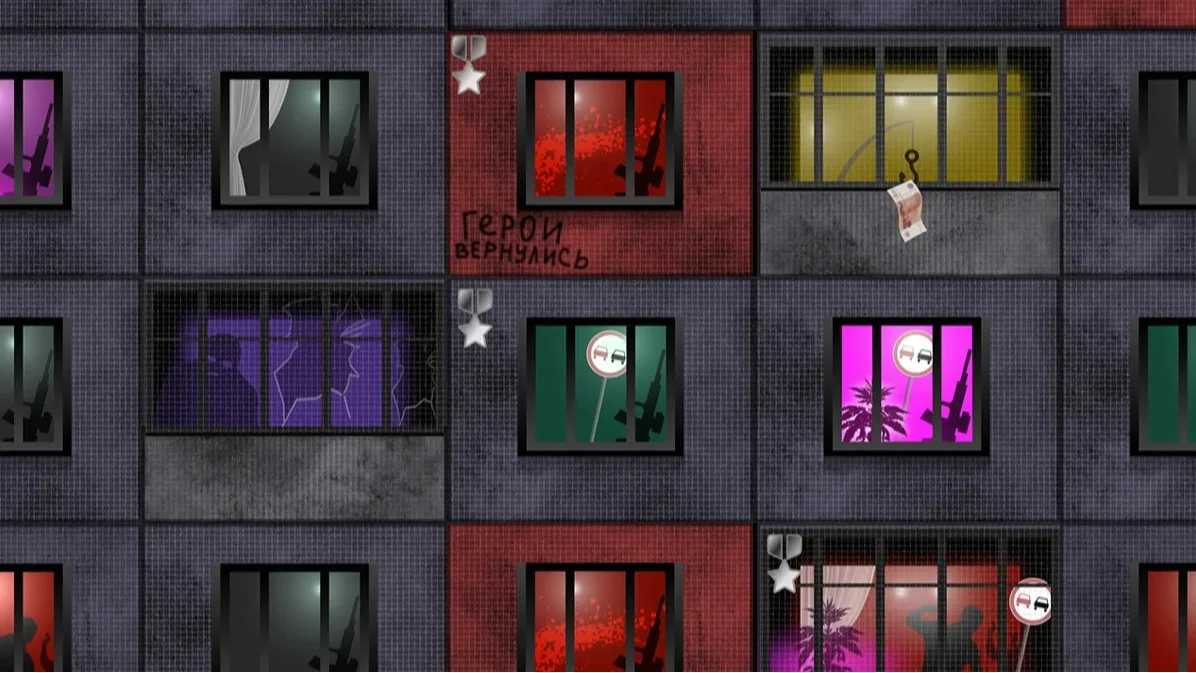
Coming home to roost
How veterans of the war in Ukraine are reshaping Russia’s crime statistics
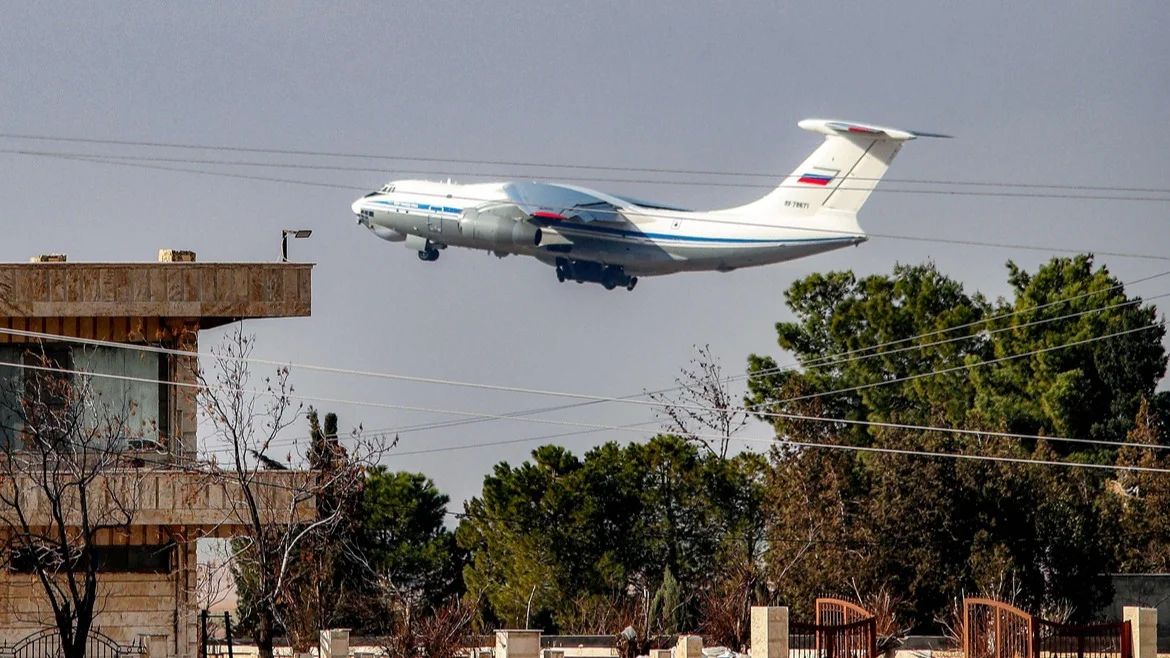
Road from Damascus
Why Moscow is scaling back its presence in Qamishli, a key military facility in northeastern Syria
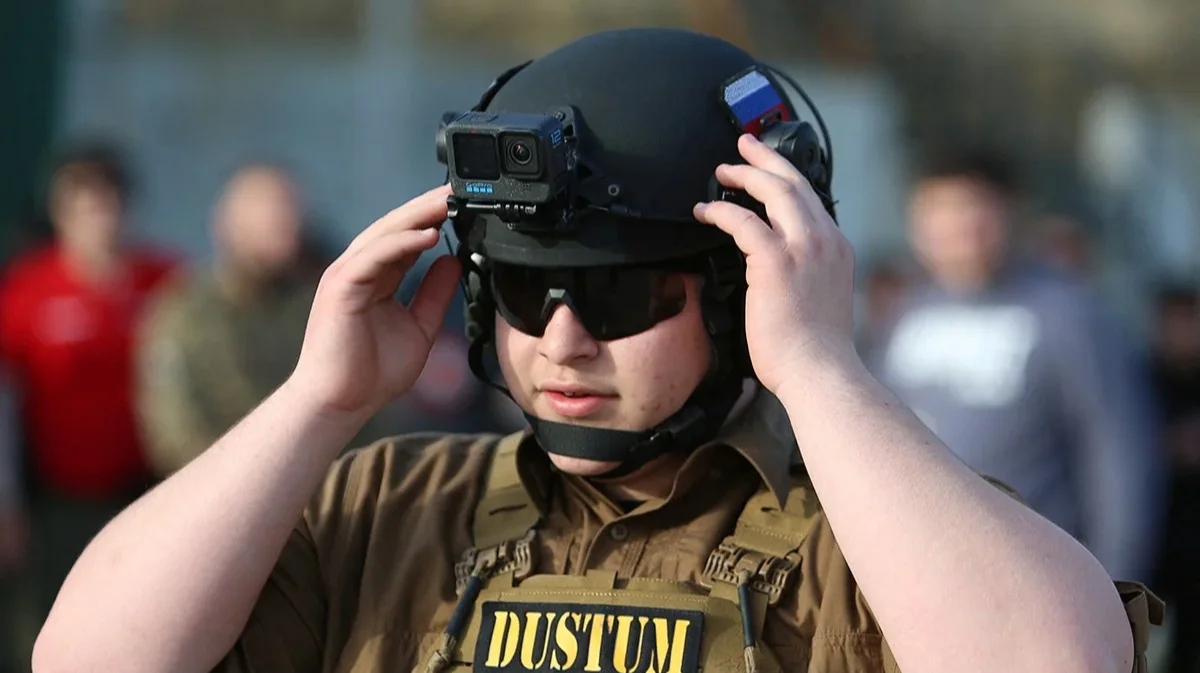
Heir abhorrent
A multi-car pile up in Grozny has provided rare insight into Chechen warlord Ramzan Kadyrov’s succession plans
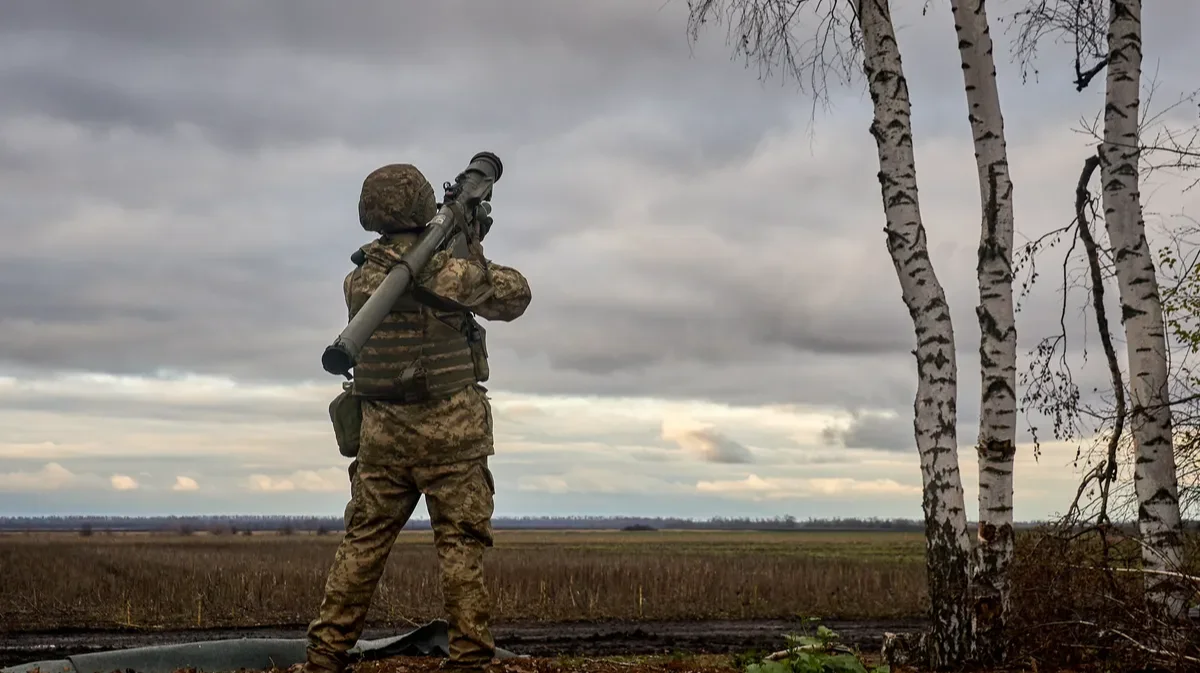
Flag fall
Ukraine is looking increasingly like the victor in the battle for Kupyansk
Fresh blood
What Zelensky’s appointment of Ukraine’s former military intelligence head as his chief of staff could signal for the country

Stolen youth
How Russia made young people’s lives worse in 2025
The war across Russia
Drone strikes on Russia’s regions reached record levels this year, with an average of 11 crashing or striking their targets daily