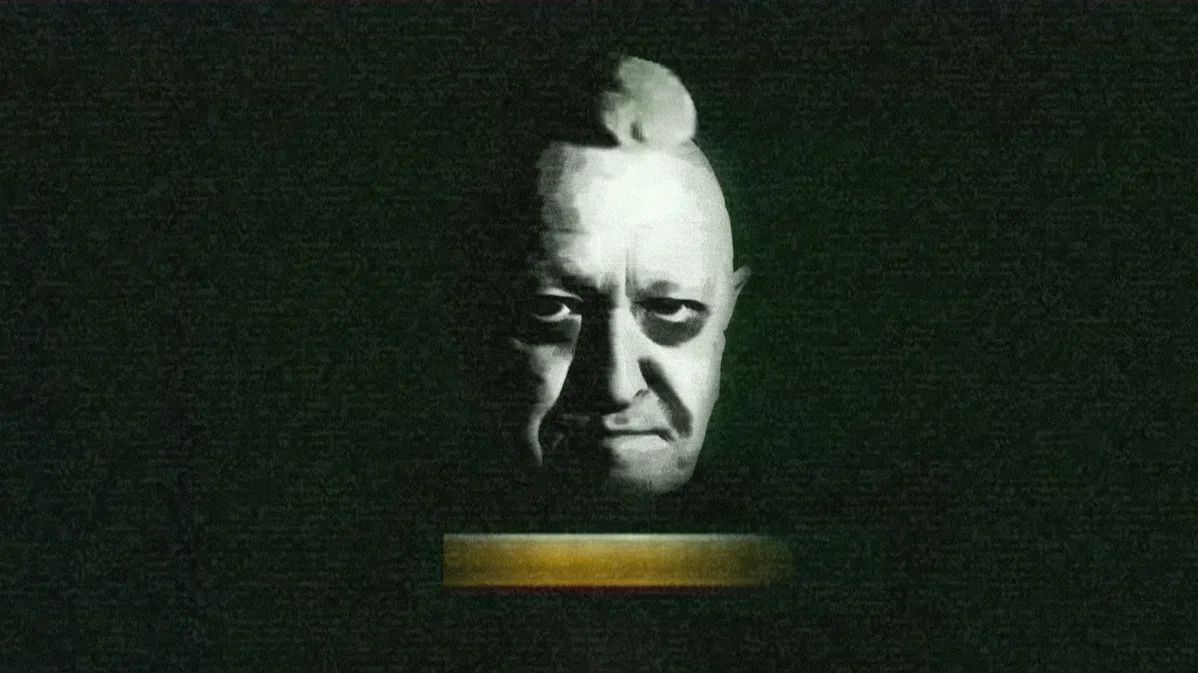
The events of the last few weeks in Russia — from Prigozhin’s rebellion to Girkin’s arrest — speak volumes about the country.
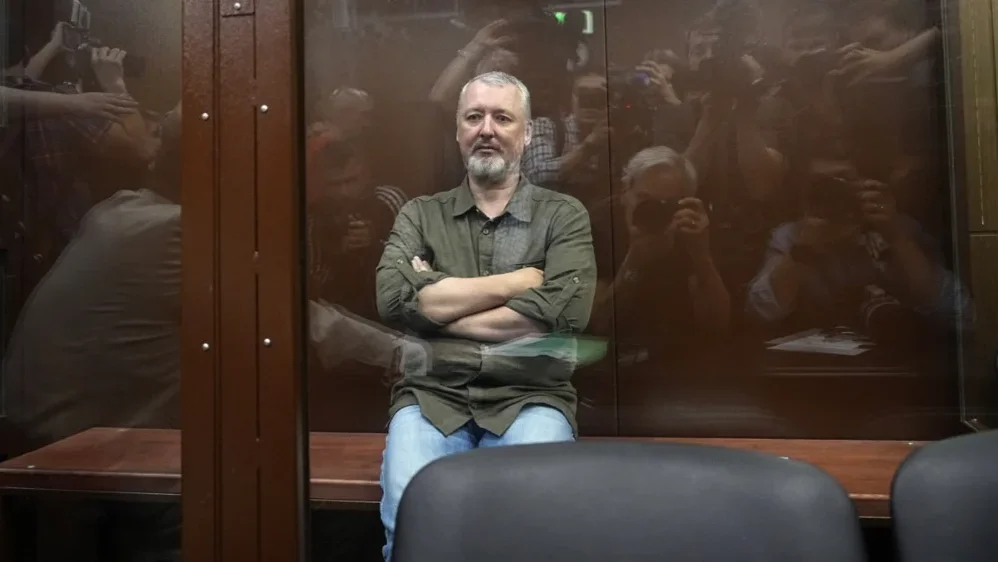
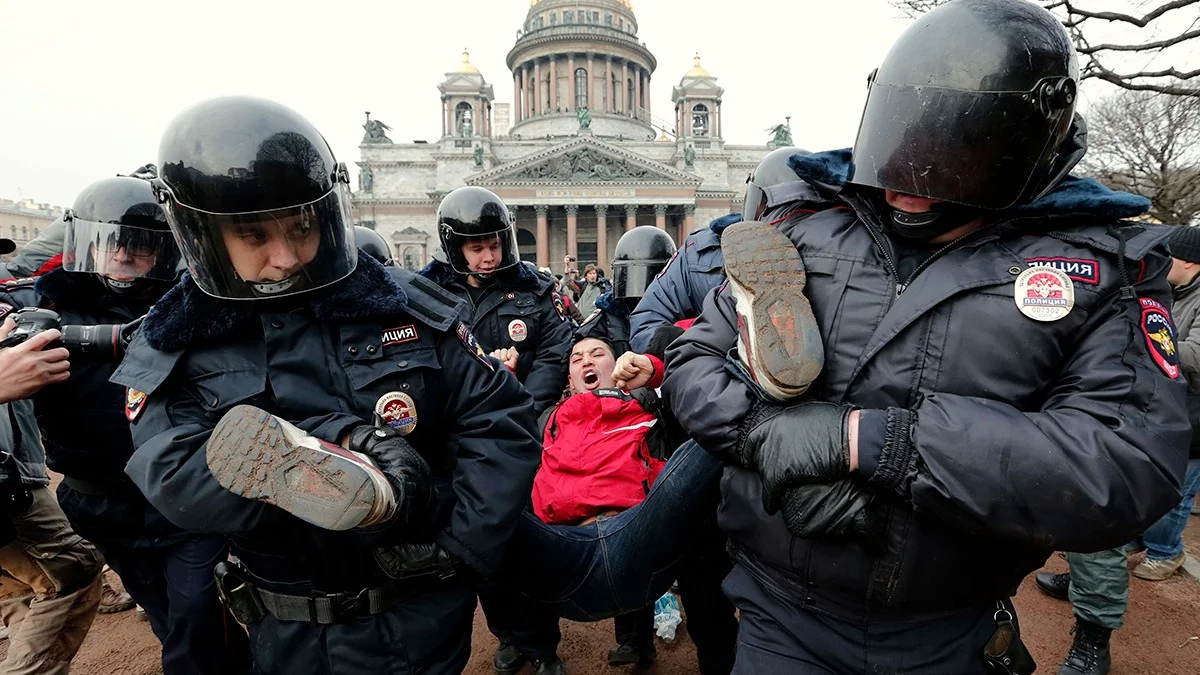
Not even a dozen people came out to the courthouse to support Girkin. And only one of them was brave enough to stage a one-man protest, a “people’s governor” of something, Pavel Gubarev. The rest scattered as soon as they were told to, saying that they are law-abiding citizens who will be fighting for Girkin’s freedom online. Thousands (hundreds of thousands even) of indignant patriots were nowhere to be seen.
This is, of course, the best news from the past few days. I believe it is much more significant and interesting than the arrest of someone who clearly plays the role of a tamed clown (his “clown-ness” does not absolve him from the fact that he is a monster and that the downing of the Malaysian Boeing and murders of 289 people, which he was slapped with a lifetime in prison in The Hague for, only make the top of a long list of his horrible crimes).
This passive nature of the “patriotic public”, which gives grounds to doubt that it exists in the first place, was a joy for many, especially those who are scared that the post-Putin era will be even worse.
In my opinion, if we consider real rather than theoretical scenarios, it cannot get any worse, so there’s no point in fearing the future. However, it is still gratifying to look at pictures of the square in front of the courthouse, keeping in mind that these squares were filled with people when real opponents of the regime went on trials.
The fact that the “patriots” could only muster this “reaction” to the arrest of one of their most ardent spokespersons, requires both an analysis and efforts to rethink some ideas about Russia’s society that emerged in the past few years.
The first theory that comes to mind is that there is actually no such thing as the “patriotic public”, like there are no Armata tanks, the world’s second-best army, and many other things of this nature. It was the Kremlin that possibly invented this “public” like other myths to instil fear in Russians and the whole world. If we accept this theory, our worldview will become much more positive and the image of the future will become much more optimistic than what it is now. However, I am afraid it is not true: the “patriotic public” does exist in Russia.
Credible public opinion polls point it out (the claims that polling people in strict authoritarian regimes is impossible mainly come from those who never conducted a single one and have very little idea about how it’s done). The works of the few professional sociologists who remained in Russia need to be dissected and scrutinised, of course. However, there’s no need to brush these polls away just because we don’t like them.
Another piece of evidence that supports the theory that this “public” exists is the wide circulation of components that make up the “patriotic syndrome”: the faith that the whole world is against us, Anglo-Saxon, Jew and Freemason conspiracy plots, contempt for laws and treaties, disdain for other nations, faith in any nonsense that exonerates Russia and shifts all the blame onto others (some people still believe that it was Ukraine who committed atrocities in Mariupol and Bucha).
Finally, the euphoria that gripped Russia almost ten years ago over the annexation of Crimea also backs this theory up. The “patriotic syndrome” is a reality. The fact that it now failed to translate into protests, which are very near and dear to liberals, does not mean that it’s not there or that it’s not dangerous.
Of course, we can also draw another conclusion, which we will be whole-heartedly supporting. The “patriotic public” does exist, but they are weak and cowardly people, who are only capable of clicking the like button under posts written by mad criminals online and who are not ready to engage in any real struggles. Well, a notion is studied when we come in contact with it. We now see the result of this interaction: they were challenged and kept silent about it. We, the opposition, did protest — in August 1991 and in 2011-2012 when our friends were persecuted. Meanwhile, the “patriotic public” is just scared. And since they are scared, it means we should not be afraid of them — they pose no threat.
However, this is also not true. It’s not wise to discount some of the so-called patriots as people who are not able to produce bravery or self-sacrifices. Some of them do believe in their ideas, very weird ones to put it mildly. Some voluntarily travelled to Ukraine to fight, some even died there. Some of them — many more, naturally — will be excited to take up arms in a crackdown on who they do not like inside Russia. It is perilous and counterproductive to underestimate your enemy.
Of course, they are not as powerful as many thought. The Kremlin partially crafted the image of this public, and partially they did it themselves, however weird it may sound.
The belief of a part of Russia’s intelligentsia that the Russian nation is destructive and its commitment to crazy ideas as well as willingness to protect these crazy ideas — from the straits to Crimea — is not based on anything but justifies taking a passive stance in fighting those in power or even collaborating with them. It somehow emanates from people, therefore, you cannot go against it. It’s necessary to limit yourself to what can be improved, without destabilising the foundations. So, when you work for the authorities and collaborate with them, you are right, while those who oppose it, even though they might be good people, still fail to see the reality. Hannah Arendt put it down well: some German intellectuals were saying that there should not be any protests against the Nazis because people backed them up, which warranted listening to their truth and understanding it.
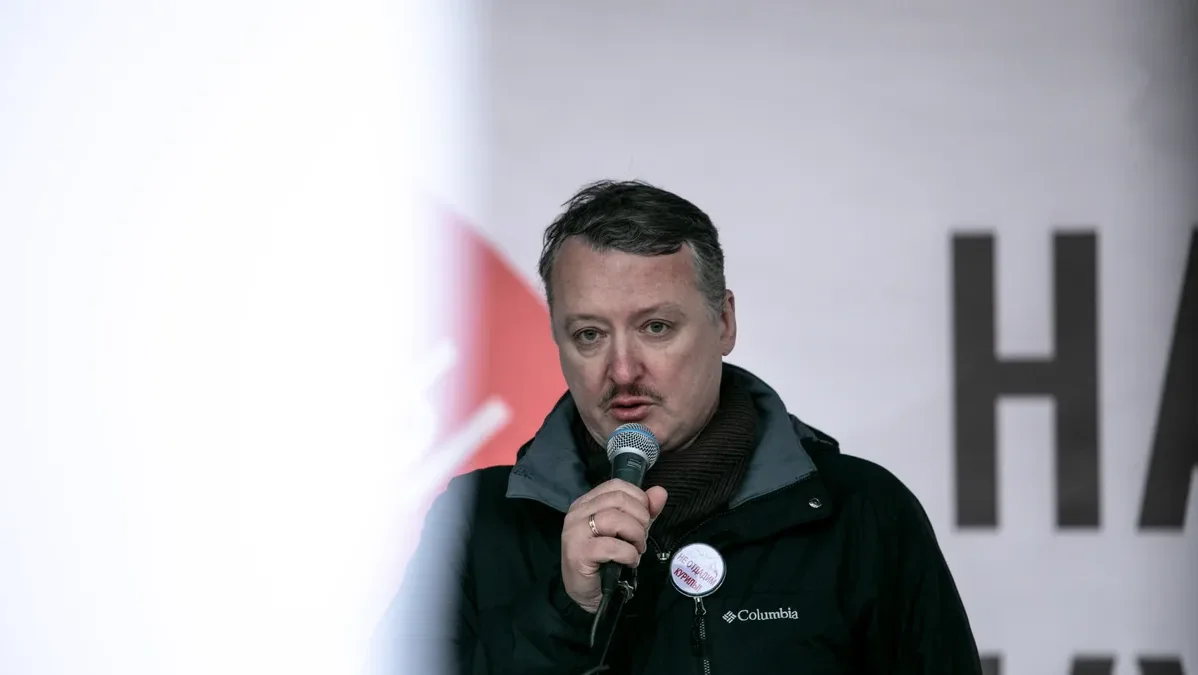
But why did the “brave patriots” fail to take to the streets? There must be at least a couple thousands of them that could make it to Strelkov’s court hearing. This event, in my opinion, shines a light on what they are and the difference between them and us.
We, the liberals, seek freedom, which means that we support people, individuality, and ourselves. Our dignity lies with our freedom and independent decision-making. We are guided by our principles rather than orders and calls. For instance, all my friends joined protest rallies because they made the most of a certain occasion, while being fully aware of the independence of their decisions, rather than being told to do so.
Since we represent and support ourselves, we can oppose the system even when we see it as generally correct and clash with those from our own camp. When Boris Yeltsin [first president of Russia — translator’s note] started the war in Chechnya, the Democratic Choice of Russia, political party of Yegor Gaidar [one of the key political figures in Russia in the 1990s — translator’s note], immediately opposed it. We were the first party who staged a public protest then. Yeltsin was our president, we voted for him and backed his reforms. But at that moment, every one of us told the head of state that we did not give him a war mandate. We understood the risks of such a stance (which, unfortunately, all materialised then), but none of us faced an internal conflict. We remained free, and this feeling was much more vital than feeling like a president’s enemy. Meanwhile, opposing the authorities who we see as alien to everything we are and what we believe in, poses no psychological issues whatsoever.
However, the “patriots” do not want freedom or individuality, they seek collectivism: state, national, or religious group. Their dignity lies with belonging. Their freedoms are limited by the loyalty of their community. They are the people of the state. Indeed, they can rise up against a tsar, but only if “the tsar is not real”, while remaining loyal to the true one. They can oppose the state, but only if their commonality is formed by religion or nation rather than the regime. But then they still have a real or imaginary leader of faith or nation, to which they remain loyal.
Russian “patriots” are stately people. They are not nationalists or religious nuts — they identify with the state (just like some of the intellectuals who, unfortunately, serve the state).
Girkin’s supporters seemingly either considered his escapades a pre-approved game, which was aimed at the “bad people” in the president’s entourage, or believed that Putin was no longer a tsar but, for instance, a hireling of the global clandestine network, while Girkin serves a true and more powerful tsar who will soon reveal themselves. However, when Girkin was arrested, they found themselves in a state of deep internal conflict: it seems like there is no tsar except for Putin or they are too weak to get his loyal soldier released, which means that they cannot be considered a tsar.
Their leader was arrested by the same state with which they identify themselves. They cannot protest in this situation: any form of protest would mean a revolt against themselves. They can only hope for a mistake and that their tsar will expose intrigues of the enemies who compelled him to oppose his loyal servant (indeed, a very loyal servant that one). They can sign petitions and pray for the wisdom, grace, and mercy of their leader. But no rebellions!
Their weakness at this stage lies precisely with this fondness of collectivity rather than individuality. But do not fool yourself — if someone comes out as a potential leader for this group, the “patriotic public” will rear their ugly heads.