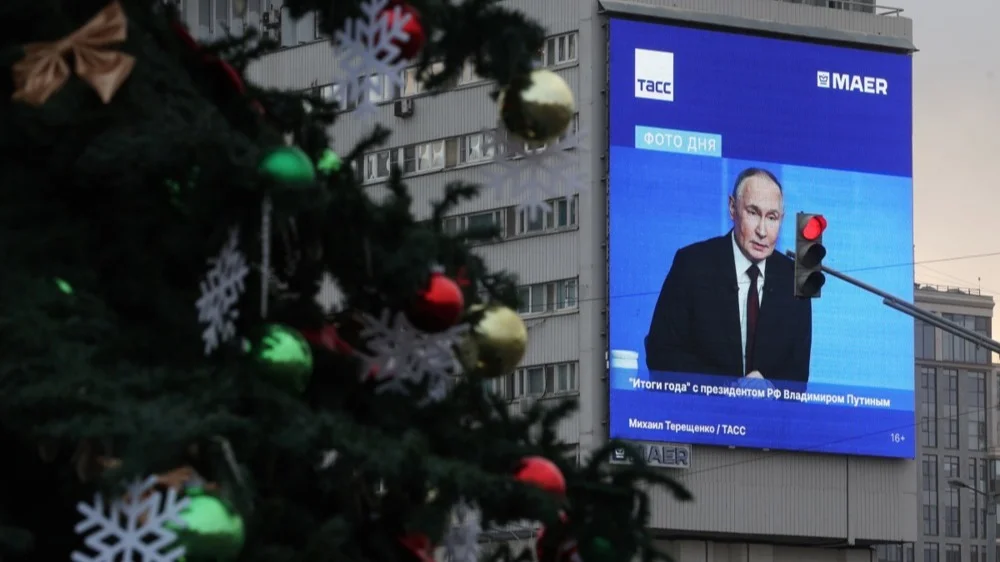
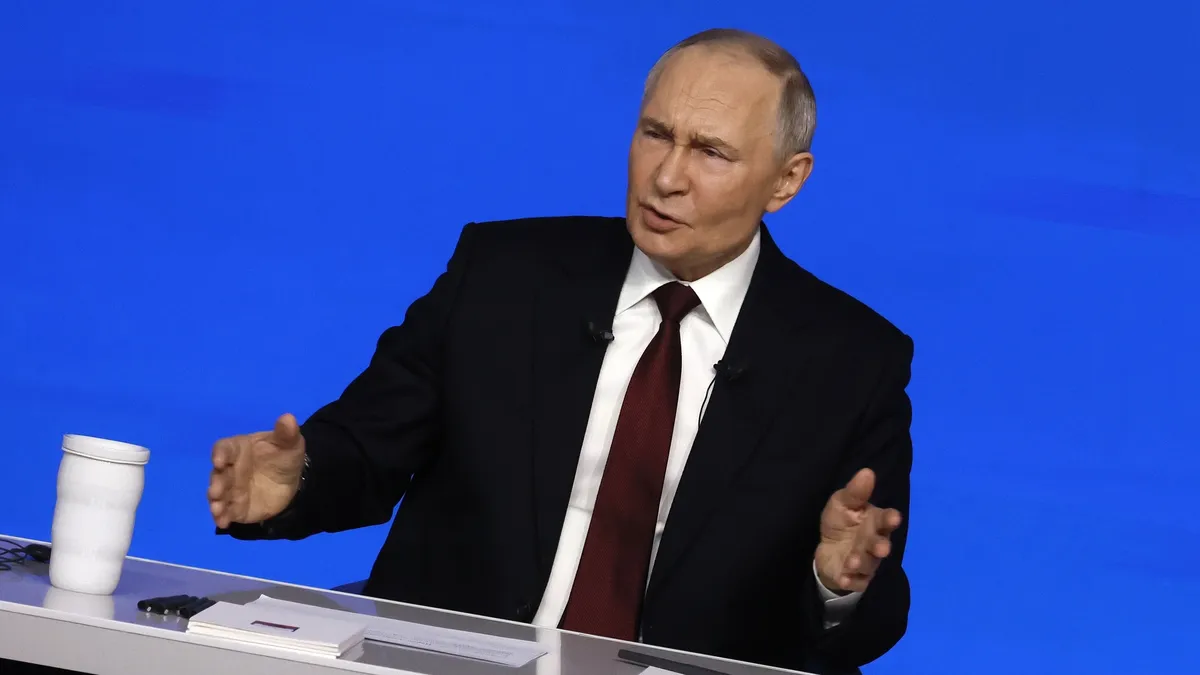
A screen displays a live broadcast of Vladimir Putin’s annual Direct Line call-in show in Moscow, Russia, 19 December 2025. Photo: EPA/MAXIM SHIPENKOV
Vladimir Putin used his annual Direct Line call-in show on Friday to restate his hardline positions on the war in Ukraine, criticise “the Kiev regime and its European sponsors” and respond to carefully vetted questions from members of the public and journalists.
Putin reiterated that Moscow does not believe Ukraine is ready for peace talks, touted Russian advances in eastern Ukraine and dismissed Ukrainian President Volodymyr Zelensky’s video message from the embattled city of Kupyansk — which Russia claimed to have captured in full — as staged.
Adding that Russia remained “ready and willing” to end the war in Ukraine only if “the root causes” of the conflict were addressed, Putin suggested that any peace deal would have to include Kyiv recognising Russian control over captured Ukrainian territory.
Putin’s view of quick battlefield success contrasts sharply with the real situation on the frontlines, however, with Ukrainian military expert Ivan Stupak telling Novaya Gazeta Europe that while the Russian army had doubtlessly been advancing, it had not captured “a single large regional centre” since the early months of the invasion.
The annual call-in show, the 22nd such broadcast since it was first held during Putin’s initial presidential term in 2001, was tightly managed by the Kremlin, with the only two questions from Western correspondents being used by Putin as a pretext to criticise the West and deny the widespread political repression in Russia.
When asked by NBC News correspondent Keir Simmons if he would accept his responsibility for further deaths in Ukraine should the war drag on into 2026, Putin deflected blame, telling him: “We do not consider ourselves responsible for people’s deaths because we were not the ones who started this war”.
Putin went on to reiterate his long-standing claim that the war was started in 2014 by “the Kiev regime” in eastern Ukraine, and placed the onus for reaching peace on Ukraine and Russia’s “Western opponents”, including the “heads of the Kiev regime and their European sponsors”.
Dismissing concerns over domestic repression in a response to a question asked by the BBC’s Steve Rosenberg, Putin falsely claimed that the “foreign agent” status applied to a wide range of Kremlin-critical public figures and individuals only required citizens to declare their sources of funding and did not include any other repressive measures.
“We do not engage in repression or criminal persecution,” Putin said, despite over 2,700 Russian citizens having been prosecuted on political grounds since the war began, according to Russian human rights organisation OVD-Info.
On the question of Ukrainian presidential elections, which President Volodymyr Zelensky indicated earlier this month could be held within 60 to 90 days, Putin said Russia was ready to “think about ensuring security” during the vote and “at least … refrain from striking deep into [Ukrainian] territory on election day”.
The call-in show wrapped up after 4 hours and 27 minutes and 80 questions, Russian news agency TASS reported.