On 1 November, regular autumn conscription begins in Russia, with 120,000 soldiers planned to be drafted for mandatory one-year service. It will not be an easy task for the draft boards to achieve the outlined goals: although officials assure citizens that conscripts will not be sent to the frontlines in Ukraine, Russian men are far from eager to serve in the army, especially after the invasion of Ukraine and the “partial” mobilisation order. The number of lawsuits filed against draft boards is rising every year. We have analysed 15,700 lawsuits filed by Russians against draft boards over the past six years to find out how military officials are violating the rights of conscripts to achieve the required quota by drafting men with chronic illnesses and dismissing the possibility of alternative civilian service (ACS).
The number of draft evaders in Russia has risen following the invasion of Ukraine. Draft boards were unable to achieve the outlined conscription goals: a third of the planned 134,500 conscripts were not drafted.
By 1 November, Russian draft offices will have received the new conscription quotas. The failure of their employees to draft the required number of conscripts may result in fines or even termination.
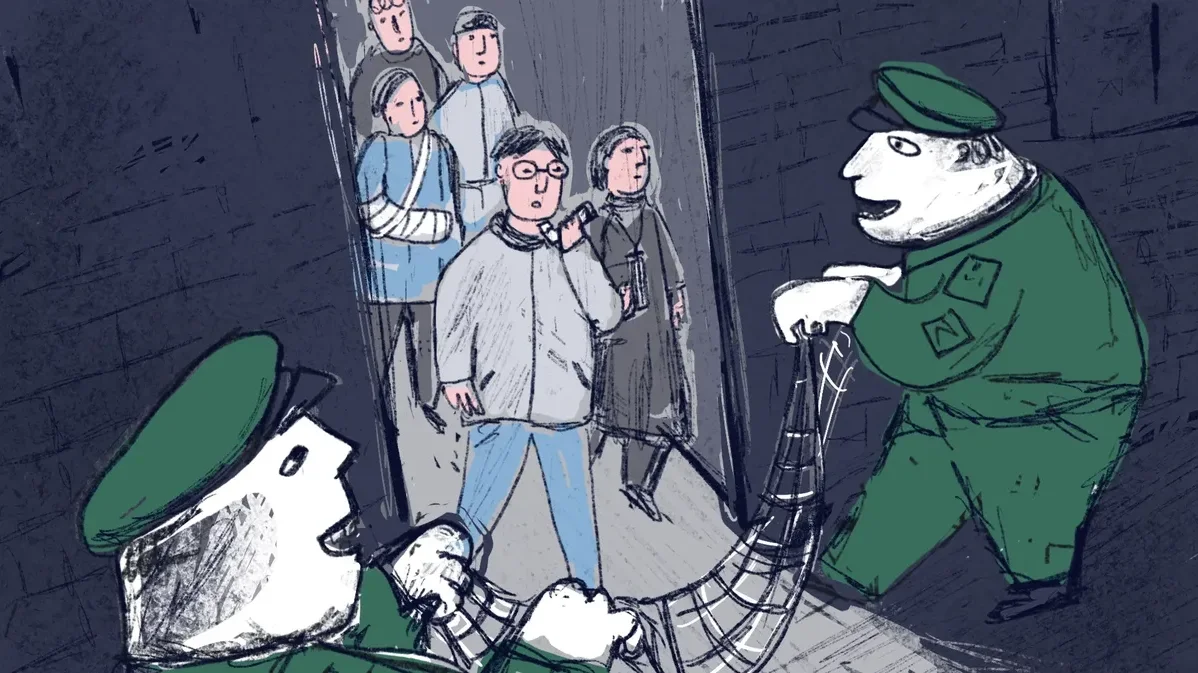
“If there aren’t enough people in a certain district, the draft board will try hard to fill the quota last minute,” attorney and human rights defender Sergey Krivenko says. “In late December and June, we tend to document blatant violations: people are snatched from the street, there are raids.”
It has become harder to fight against these violations over the past three years, human rights activists note.
“Now, the NGOs are under pressure, under threat of persecution. Some have been declared foreign agents. Meanwhile, the army is becoming even more closed off for public control,” Arseniy Levinson, an attorney who offers aid to conscripts refusing military service due to their beliefs, says.
“For ten years, we have been fighting tooth and nail against blatant violations of draft offices, against raids, and we practically eliminated this practice,” Krivenko says. “Now, when the persecution of human rights organisations is on the rise (in December 2021, the association protecting the rights of conscripts ‘Citizen. Army. Law’ led by the attorney was placed on Russia’s “foreign agent” list — editor’s note), and we practically lost control over the activity of draft offices, the raids are back. Even in Moscow, there were several cases of this kind in late December of last year.”
Last year, the European Court for Human Rights (ECHR) received the first claim regarding Russia’s practice of the so-called conscript raids. In December 2017, at the end of the autumn draft, St. Petersburg resident Sergey Pavlov came to his local draft office to undergo a medical exam. On the same day, the conscript was handed a call-up paper. Road police officers came to the draft office to escort Pavlov to the assembly point. The man was only allowed to see his relatives three days later, which was when he handed them his statement to the court.
In 2019, a week before the autumn draft ended, Ruslan Shaveddinov, an employee of Alexey Navalny’s Anti-Corruption Foundation, was drafted and sent to Novaya Zemlya, an archipelago in the Arctic Ocean. On 23 December, police raided his apartment and took him away for interrogation. In the morning, it was reported that Shaveddinov had been drafted into the army.
In July 2020, near the end of the spring draft, Ivan Konovalov, a spokesman for the Alliance of Doctors, was detained by police in Tula and sent off to serve in Arkhangelsk. Konovalov’s residence address is in Moscow. He had not previously received any draft notices there. His relatives and colleagues managed to reach him at the airport.
If a conscript disagrees with the decision of the draft board, he can file a complaint with the higher draft commission. As a rule, these complaints are overturned, but conscripts can still defend their rights in court.
Over the past six years, the number of lawsuits has been rising with each draft season: in July 2017, Russian courts considered 176 lawsuits against draft boards, while in 2022, this number hit 663.
Our methodology
We downloaded 15,700 court rulings on lawsuits filed against draft boards and draft committees from Russian court websites in 2017-2022.
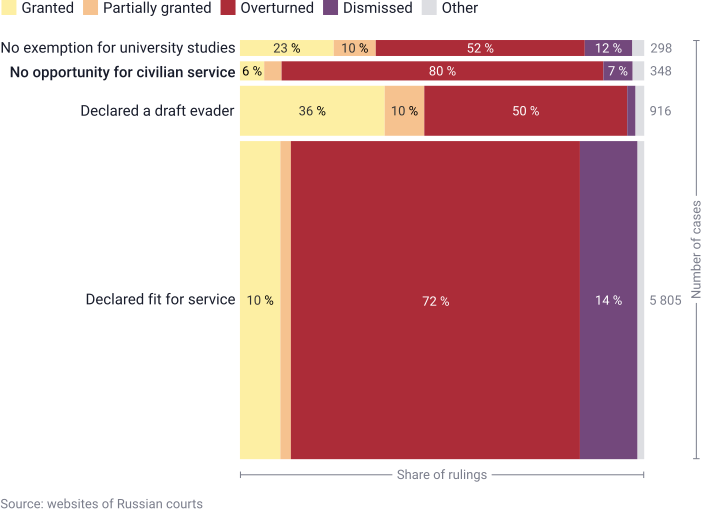
In order to find out what claims Russian conscripts filed, we separated the lawsuits into several categories using key phrases: for example, “alternative civilian service in lieu of military conscription service”, “draft exemption for the period of university studies”, “defendant did not complete conscript service without the corresponding legal grounds”, and so on.
The most popular category is disputing the so-called “category of fitness” determined by the draft board for people with chronic diseases. We decided to find out what are the illnesses that draft boards tend to ignore by separating diagnoses from court rulings.
“After 24 February, we were forced to restructure our work completely, because we started receiving many more claims, and their content has changed. The main question we receive is how to evade the draft, so the demand for alternative civilian service has risen,” attorney Sergey Krivenko says. “Before the war, we used to receive 500 claims a year. After the mobilisation order, the number grew hundredfold.”
Defending the rights of “conscientious evaders”, or conscripts whose beliefs go against serving in the army, is the hardest task. Military service can be replaced with alternative civilian service in accordance with Russian law, however, according to our data, only 6% of conscripts who request to undergo alternative civilian service manage to get a positive ruling in court.
Conscripts who disagree with their fitness category are also among those filing lawsuits against draft boards, as well as evaders without a military ID who are refused employment at government bodies, and students.
Lawsuits filed against draft boards and subsequent court rulings
Court rulings since 2017
Got asthma? Not a problem!
There are many diseases, including migraine and short-sightedness, that should allow potential conscripts to get a draft exemption. However, even if a person has a serious illness, it is difficult to prove it to the draft board: according to Arseniy Levinson, “the draft boards are involved in corruption when it comes to this issue, creating bureaucratic obstacles for those who are exempt from the draft by law and dragging the process out”.
About 10% of conscripts are drafted into the army even with diagnosed diseases, Sergey Krivenko says. They have to apply for early discharge for health reasons. What is more, army living conditions can do further damage to their health.
According to our data, conscripts with hypertension, osteochondrosis and scoliosis file the most lawsuits against draft boards: 20% of claimants refer to these diseases in their lawsuits. However, in some cases, even serious diseases like stomach ulcer or diabetes are dismissed by draft officials.
Daniil has asthma. The Saratov draft board tried to draft the young man four times disregarding his medical certificates. In November, he will be eligible for the draft for the fifth time.
“In late 2020, I got a call from the draft board. They wanted me to come there the next morning. It turned out that I am wanted as a draft evader. Despite the fact that I hadn’t gotten the draft notice even once during the draft season,” Daniil recalls. “They sent me to a medical examination at the draft board. I said I had trouble breathing, but the psychiatrist, surgeon and ophthalmologist all decided that I’m healthy, and I was given the A category.”
On the same day, Daniil was handed a draft notice and given 24 hours to pack his things.
“When I tried to complain and mention my right to a medical examination, the draft board chief told me: ‘What are you whining about? We’ll see if you’re a girl or a boy in the army.’ But I stood my ground: if you don’t annul my draft notice, I’ll go to the prosecutor’s office. I was sent to collect my medical certificates.”
In order to prove his diagnosis to the draft board, Daniil stayed at a hospital twice.
“By the spring of 2022, I had medical certificates issued by four pulmonologists and test results: my IgE was 5 times higher than normal. But this just annoyed the draft board further. They started threatening me with criminal charges, saying that the Investigative Committee suspects me of bribery.”
In May, Daniil got a six-month exemption. He has to return to the draft board in November.
“I hired an attorney in advance. I can’t even imagine what examinations they’ll have me do next. Asthma is a chronic illness, so there’s no point in exemptions for a limited period: I won’t get better in six months, and serving in the Russian army with this diagnosis is simply dangerous.”
In good faith
The Russian Constitution guarantees the citizens’ rights to choose alternative civilian service if serving in the army contradicts their beliefs. In practice, conscripts are unable to prove their anti-war beliefs to the draft board, with 80% of such claims overturned by conscription offices, Sergey Krivenko estimates.
“This is a psychological matter for draft board officials. Their job is to send people to the army. And suddenly there’s a guy who says this is wrong and he does not need it. The draft board employees start to have questions: what are we doing this for then? Is this necessary? Why is he alone in saying this? Meanwhile, the state does not promote ACS in any way,” the expert says.
In order to prove their beliefs, young men bring references from priests, quote the Bible and talk about the events that solidified their faith in God.
Ilya, a follower of the Lutheran church, decided back when he was 14 years old that he would never hold a gun in his hands. The draft board of the Kirov region dismissed his ACS application due to the fact that he does not follow Orthodox religious practices, such as wearing a cross and fasting.
The entire family of Igor from Bratsk are Jehovah’s Witnesses. During the Soviet era, their relatives were deported from Ukraine to Siberia, the Irkutsk region, due to their faith. Back when he was 16, the young man requested to do alternative civilian service in lieu of military service for the first time. Despite this, members of the draft board unanimously refused his request.
Konstantin is an altar boy and a church cantor at the Church of the Resurrection. He regularly attends church services and studies Orthodox literature. The young man brought a reference from the priest to the draft board, but it was dismissed.
Vlad, a parishioner with the Seventh-day Adventist Church, was refused alternative civilian service twice. His church’s teachings forbid its followers from doing obligatory conscript service and advises the potential draftees to choose units that do not participate in acts of violence or bloodshed.
“I decided not to wait for a call-up paper and filed a request in advance, in 2015, while I was at college. I hoped to do ACS right after finishing my studies, with no breaks,” Vlad recalls. “I’ve got a lot of religious friends from other cities who also requested alternative service using the same arguments, and they were granted this right without a hitch. But my request was dismissed. It all depends on the people working at a specific draft board.”
Next year, Vlad was christened. He filed another claim with the draft board, adding a reference from the local pastor. “From early childhood, Vlad has been attending weekly church services with his parents, classes on studying the Holy Scripture at Saturday school and community events.” The draft board rejected this claim, too.
Vlad appealed both decisions of the draft board in court, but to no avail.
“After I lost the second lawsuit, I decided to take time off college to continue suing them. It was difficult to get time off with two months left until presenting my thesis, but I had to get my way.”
The draft board sent Vlad to do a medical exam, which ruled that he was unfit for service.
“This was a surprise, because last draft season, the doctors told me I’m healthy. As if they just got tired of me and wanted me to back off. They deemed me unfit for service, but did not send me to do ACS out of principle.”
Requesting alternative civilian service for religious reasons is one of the most successful strategies. Conscripts who explain their unwillingness to serve with their pacifist views have it harder.
“They lied to us at school that you can only apply for ACS for religious reasons. The law says that having an anti-war stance is also considered a valid reason,” Gleb, who worked at a post office in lieu of military service back in 2008, notes. “I tried filing an application where I listed off my beliefs: anarchist — states should not exist, which needs to be said; economic — conscription army does not spend the money effectively and protects oligarchs; antimilitarist — I’ve got friends and relatives abroad, I won’t be able to use a gun against them; and pacifist — I do not condone violence.”
Draft board employees refused to consider his application and sent him to undergo a medical exam.
“They tried to degrade me in any way that they could at the draft board. They said I don’t have any beliefs and I just want to dodge the draft. I had to file a claim with the prosecutor’s office, and it worked.”
Human rights activists point out that before the war, conscripts did not show a lot of interest in ACS. Unlike military service, alternative civilian service lasts one year and nine months, and the pay is usually no higher than 20,000 rubles (€330). Fewer than 0.3% of conscripts choose ACS, the federal labour and employment service notes. During the 2022 spring draft, 383 conscripts were allowed to do alternative civilian service: deputy chief of the labour service Alexey Vovchenko says that “there hasn’t been a number like this in several years”.
Жизнь без цензуры
В России введена военная цензура. Но ложь не победит, если у нас есть антидот — правда. Создание антидота требует ресурсов. Делайте «Новую-Европа» вместе с нами! Поддержите наше общее дело.
Поддержать
Нажимая «Поддержать», вы принимаете условия совершения перевода
Apple Pay / Google Pay
⟶ Другие способы поддержать нас
Drafting students
All full-time students are exempt from the draft in accordance with the Russian law. Recent graduates who plan to continue their higher education are also granted an exemption for spring and summer.
In October 2016, conscription offices started handing out draft notices to graduate applicants who turned 18 before getting accepted into university. Draft officials said at the time that the men can only get two exemptions: the first one during their studies at school, and the second one after getting accepted into university, which means they are eligible for the draft right after they receive their bachelor’s degree. Two years later, the Constitutional Court supported the demand of human rights defenders to grant an exemption for all students. Nevertheless, students continued receiving call-up papers.
Nikita Belov, a former municipal deputy of a Moscow district, was told to come to the draft office right after he received a master’s degree. Six months before the draft, Nikita was elected to the council of the Yabloko party.
He notes that the increased attention from the draft offices might have been a result of his activity as a municipal deputy. “They told me directly at the administration: it’s time for you to go to the army,” Nikita recalls. “In spring, while I was still a student, they left me alone, but in mid-June, at the end of the draft season, I got a call-up paper. I handed the results of all my medical examinations to the doctors at the draft board: they either lost them or threw them away.”
Nikita’s attorney and witnesses, members of the Council of Municipal Deputies, were not allowed to come to the draft board hearing. Draft officials also refused to consider his request for alternative civilian service.
“I oppose military service and I think that everyone must have the right to replace it with civilian service, but the draft board simply ignored this, along with my diagnosis, a gallbladder polyp. We filed a lawsuit with the Nikulinsky court.”
The court hearing was scheduled on the same evening, and two days later, the judge ruled to overturn the lawsuit. Nikita did not appear in court, which was a good call: there was a police van waiting for him in the yard. After the hearing, police came to his house.
“They tried to draft me into the army before the court ruling entered into force. They even reported me to the Investigative Committee for allegedly failing to show up at the draft board after receiving the call-up card. We filed an appeal, where we found out that my antimilitarist views abuse the right to alternative civil service.”
While Nikita was defending his rights, the draft season ended, and he was accepted to a postgraduate program at Moscow State University.
***
Right now, the draft boards are at capacity due to the mobilisation. This is why the autumn draft was postponed from October to November. According to Vladimir Putin, mobilisation activities should wrap up in two weeks. However, it is not clear whether the draft boards will be able to separate the mobilised soldiers and those drafted for obligatory one-year service. Attorneys expect that the pressure on draft boards and the unwillingness of young men to do military service will provoke an unprecedented wave of conscripts’ rights violations.